Coast to Coast: Choosing a Team Cooking Class in New York or San Francisco This Fall

For companies whose people are spread across time zones, fall is gathering season. Once the summer travel lull lifts, the distributed team finally commits to the trip that puts everyone in one place — and with remarkable consistency, that place is one of two cities. New York anchors the East Coast; San Francisco anchors the West. Whichever coast your team lands on, the planning runs into the identical wall: once the working sessions wrap, what does the group actually do together that is worth the airfare?
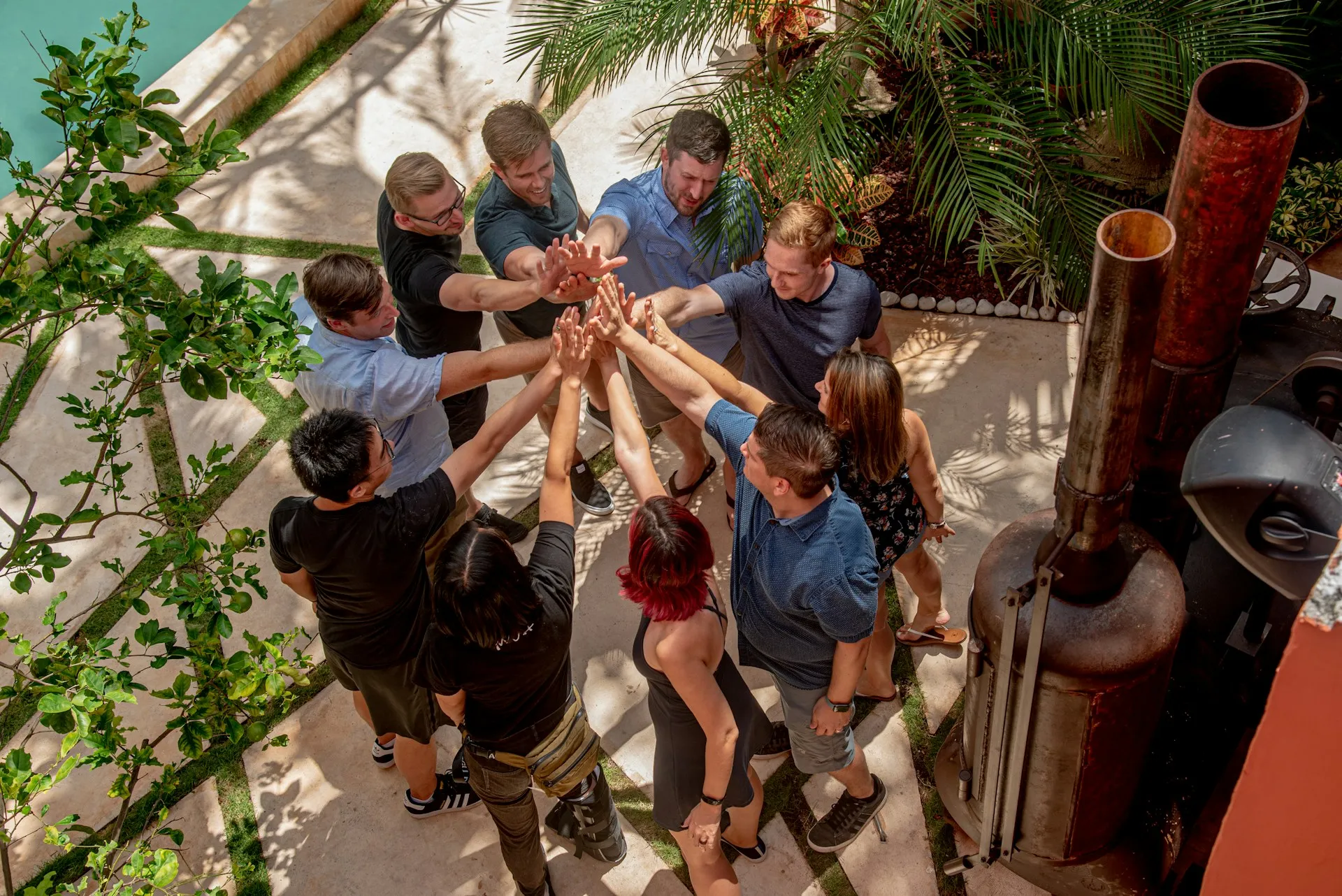
The stakes are higher than they seem. The sessions are not really why you flew everyone in — those could have happened on a call. You flew everyone in for the parts that cannot: the hallway conversations, the shared meals, the moment a team stops being a roster and starts being a group of people who know one another. The evening is where that happens or fails to, and the default plans are quietly rigged against it.
Why the Usual Plans Underdeliver
A group dinner seats everyone at a table where exactly one conversation thrives and the rest wither at the ends. A night out scatters the team and strands the quieter half. Both are expensive, both feel like something, and both leave the group roughly as connected as it started. The flaw is structural: these are activities you consume rather than ones you do. They ask nothing of the team, so they build nothing in it. For a group assembled from four different time zones, that is a wasted evening dressed up as a nice one.
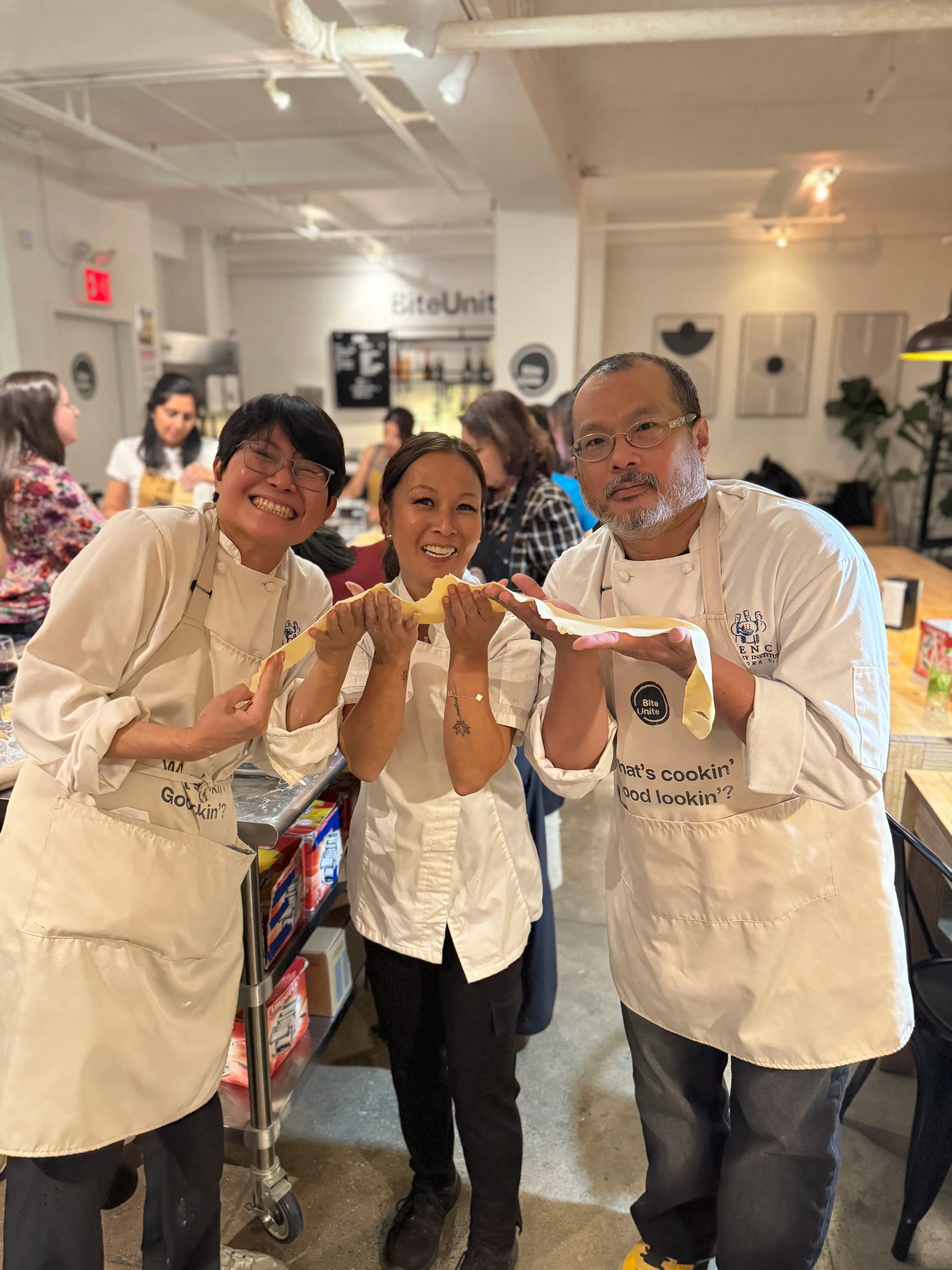
A hands-on cooking class solves the problem, and it does so identically on either coast — which is exactly what makes it the rare group activity you can plan without agonizing over the city. The value is in the doing, and the doing does not change between Manhattan and the Bay.
The Format Is the Point, Not the City
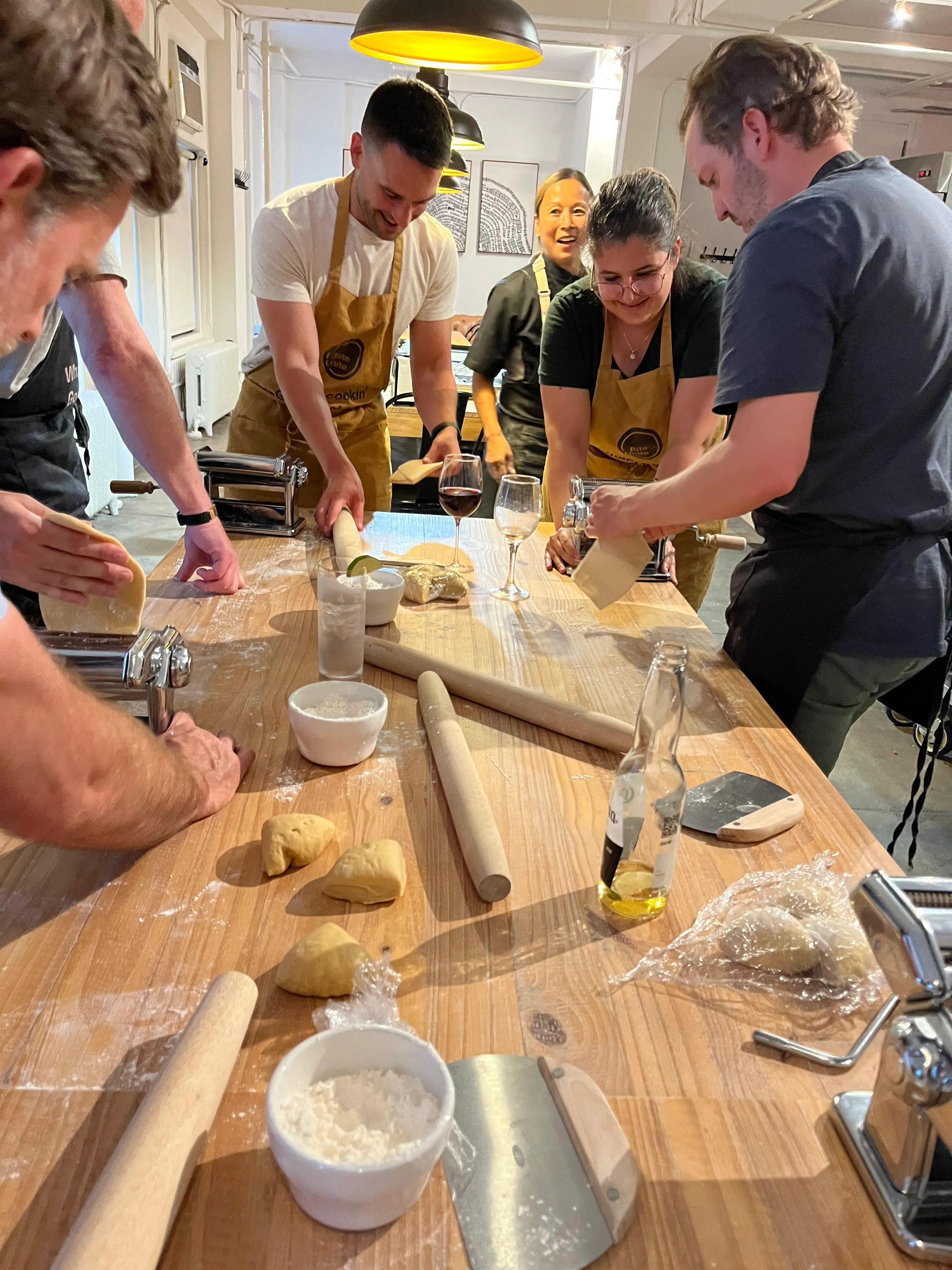
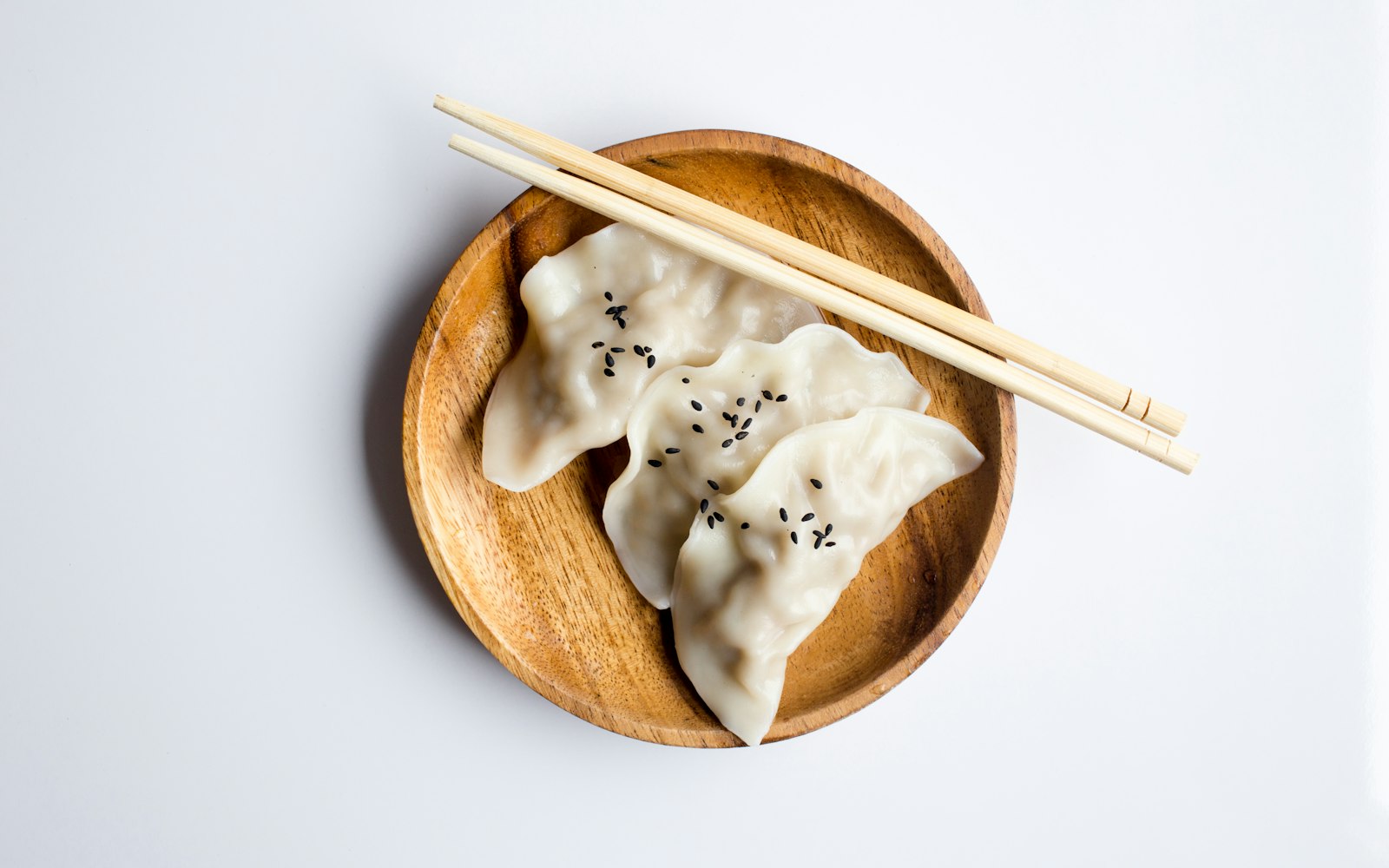
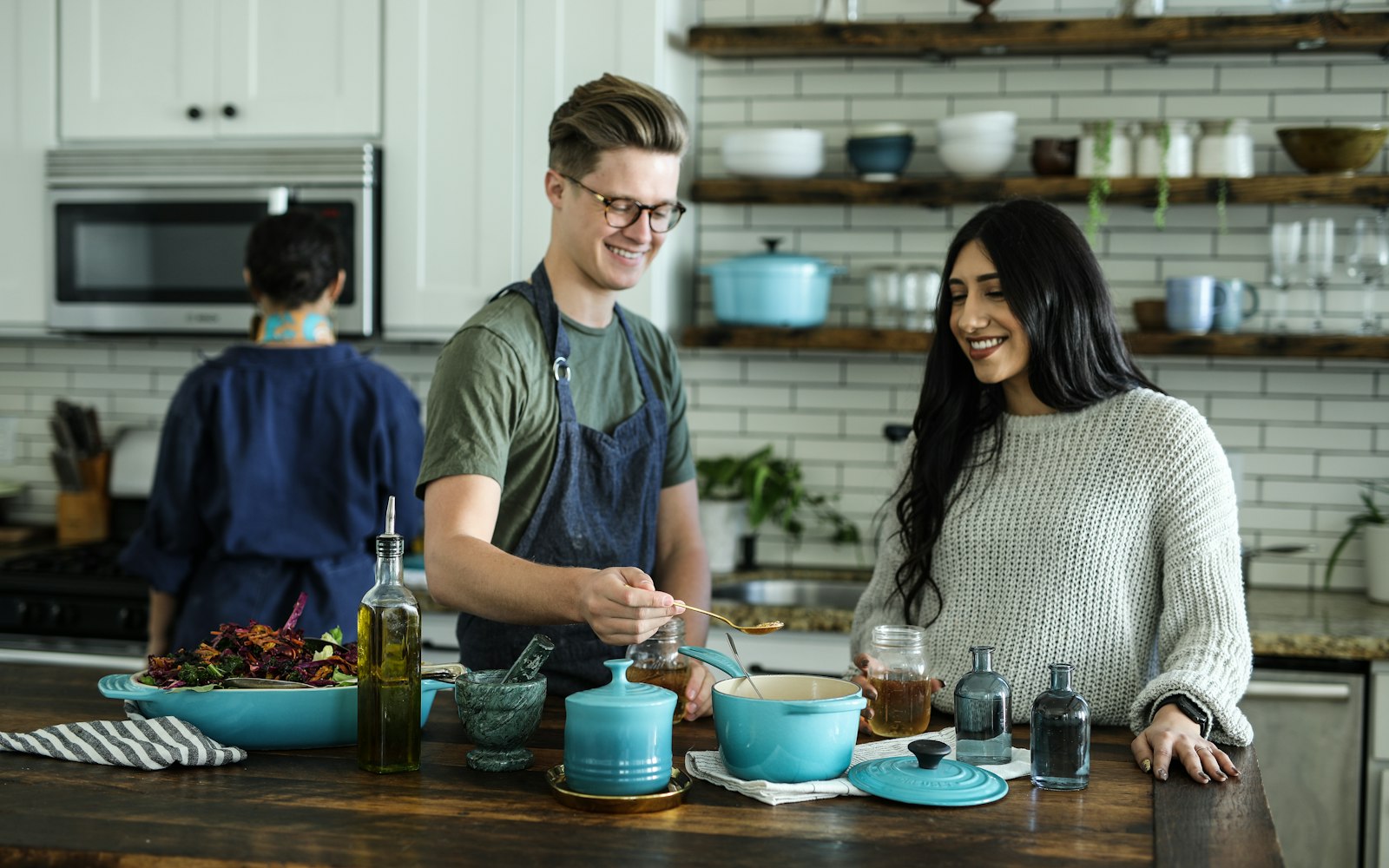
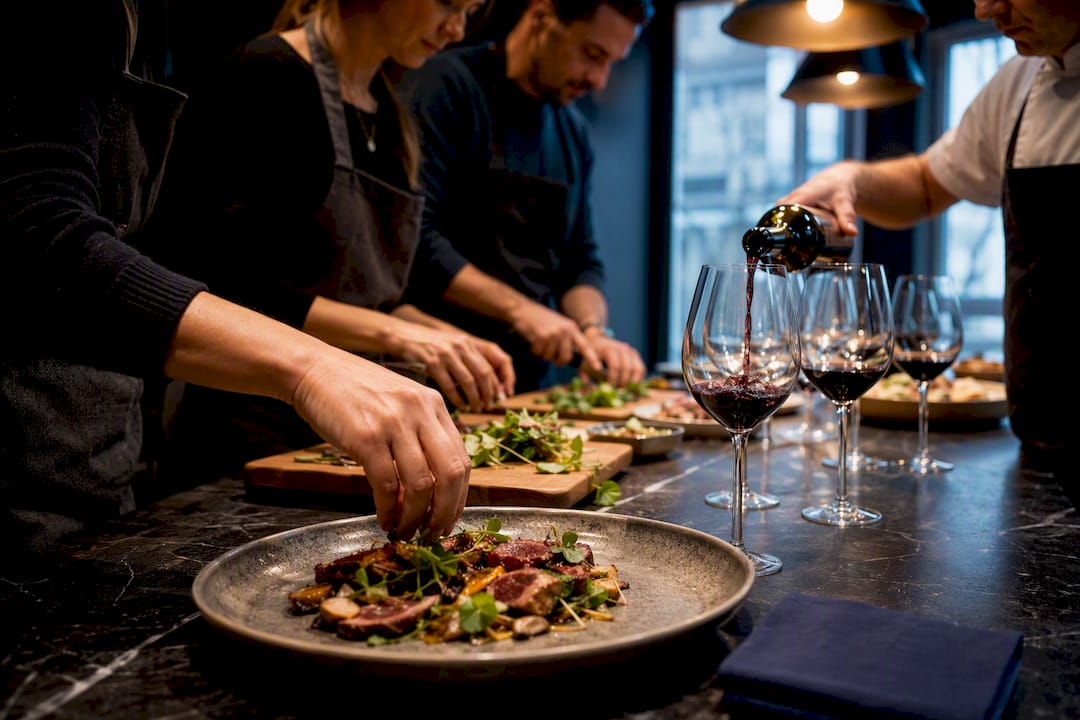
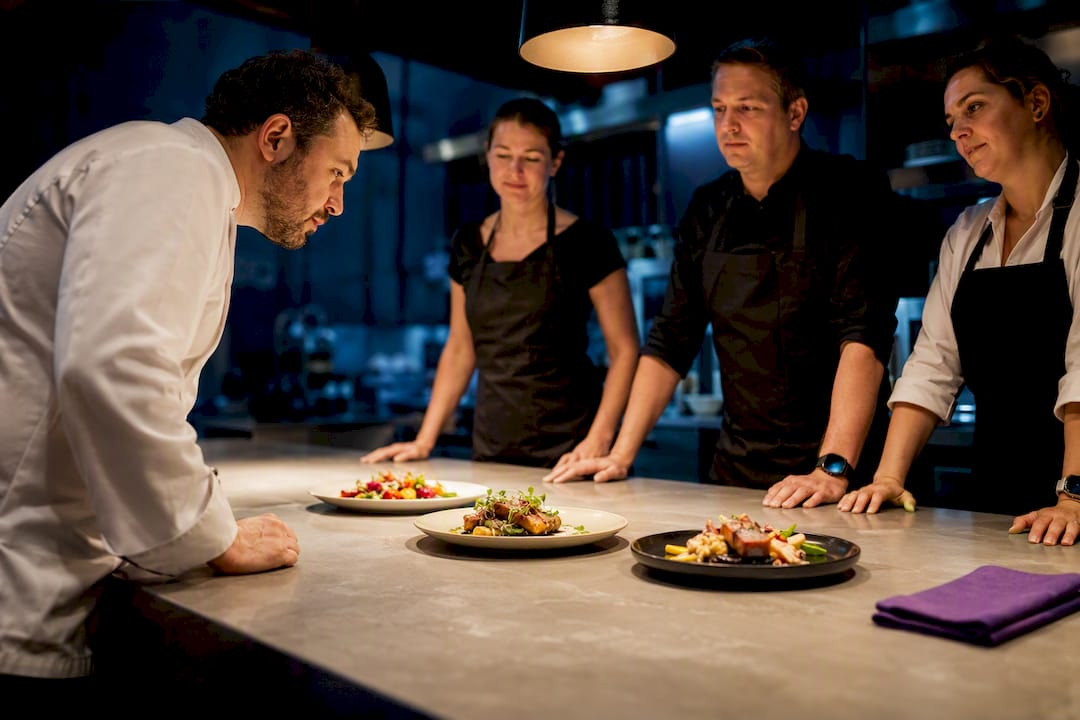
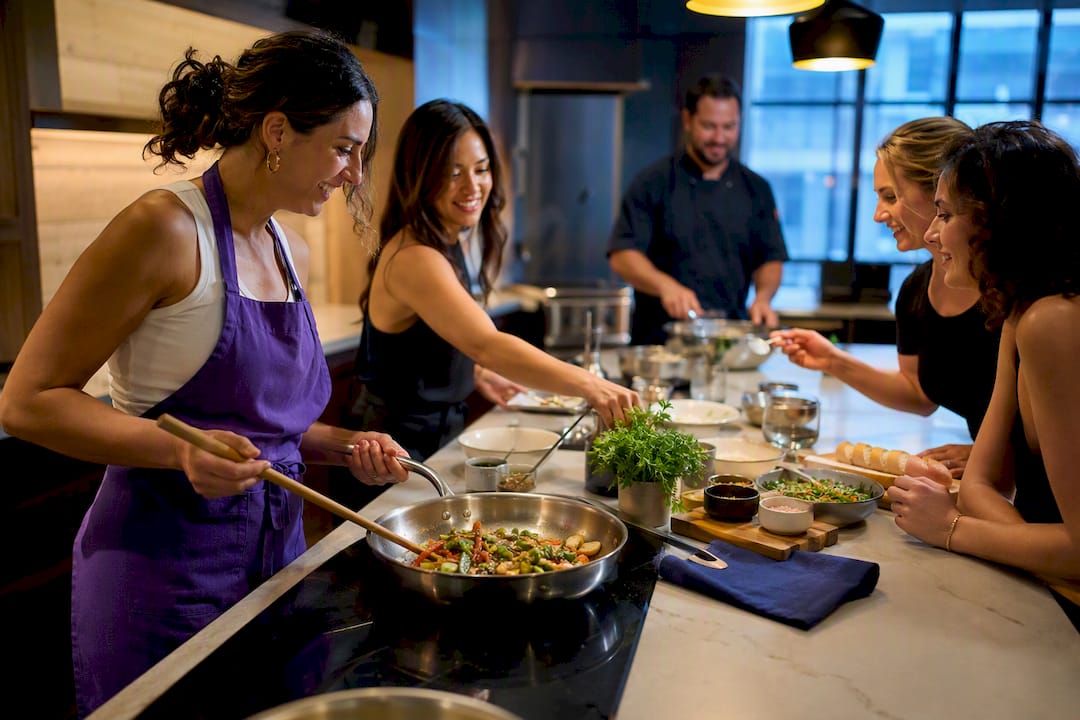
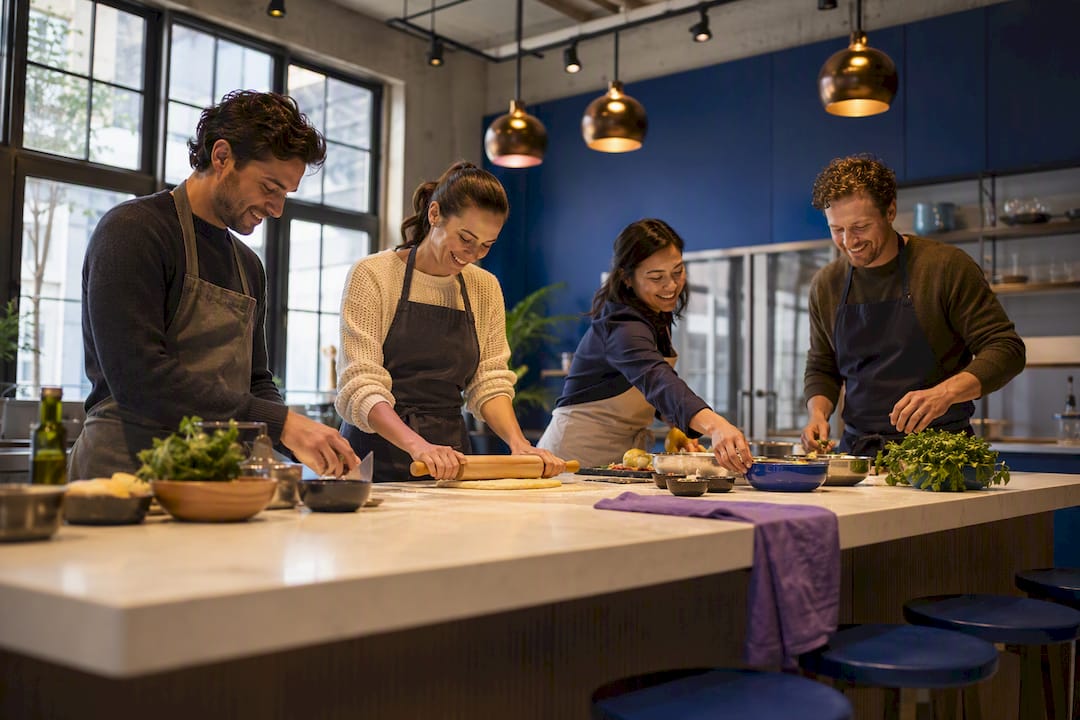
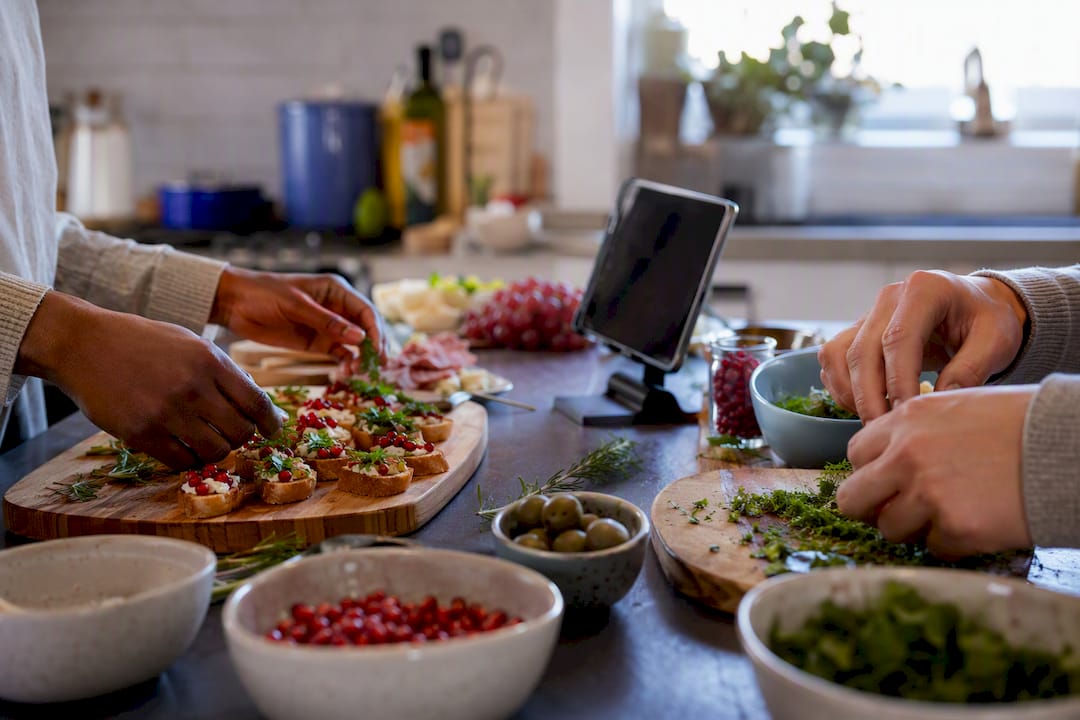
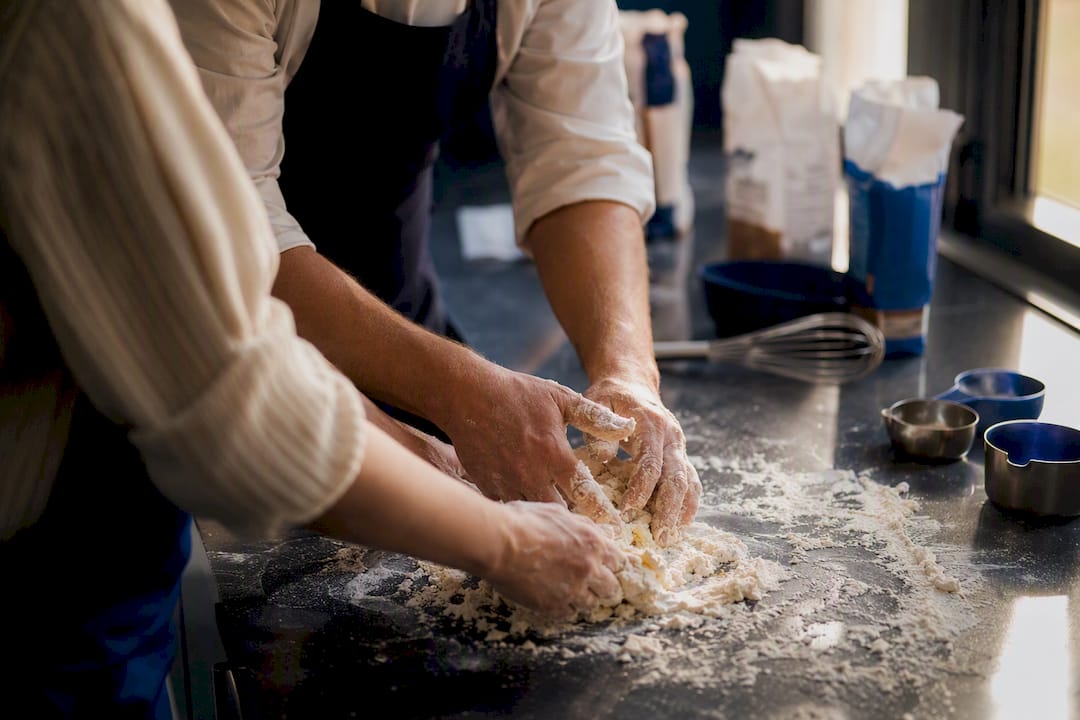
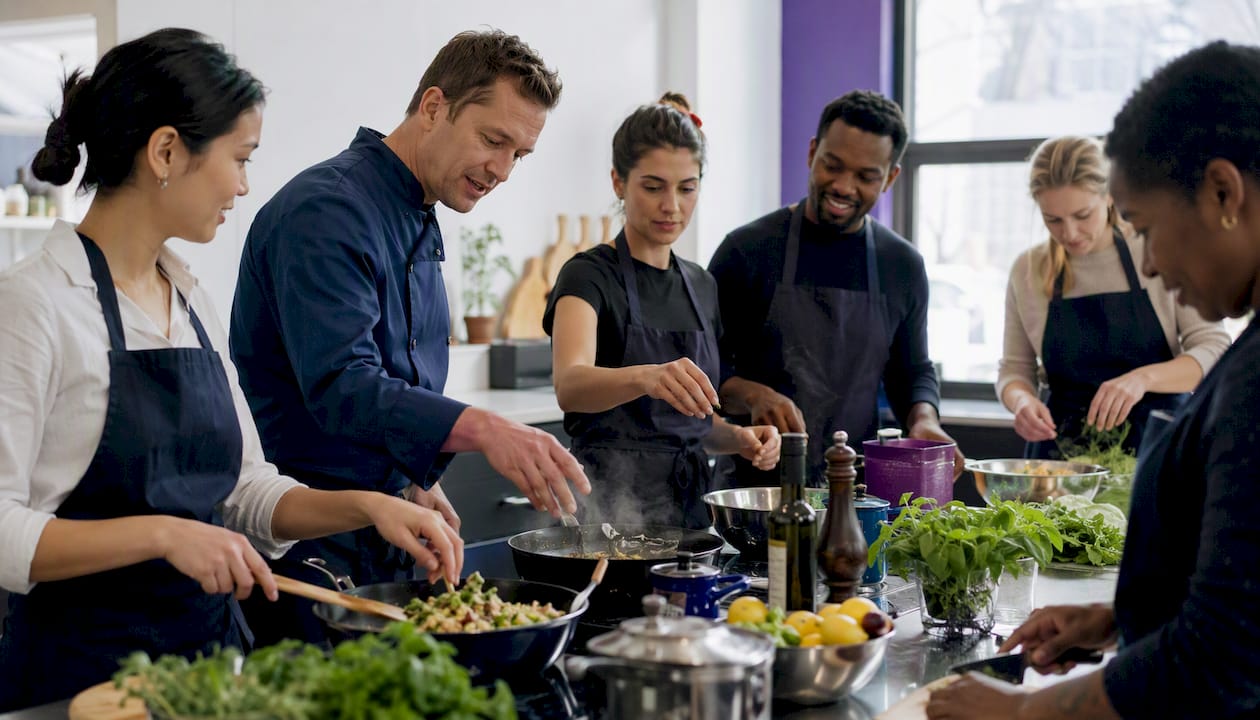
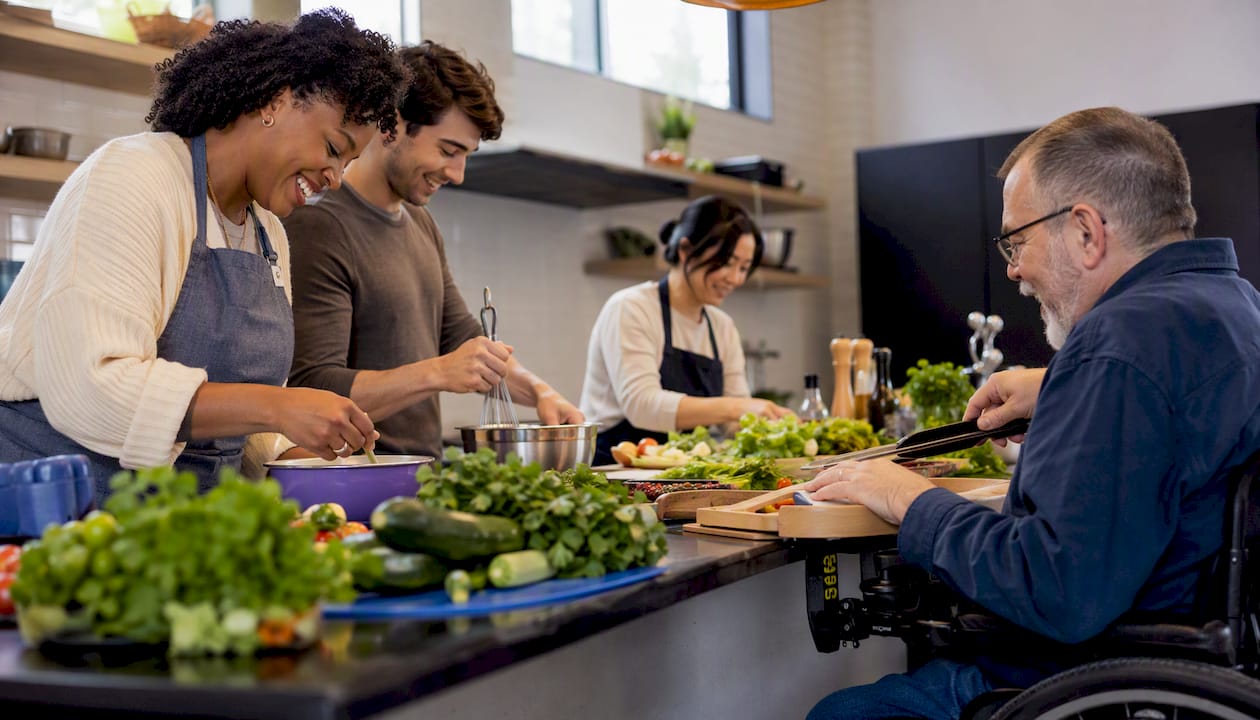
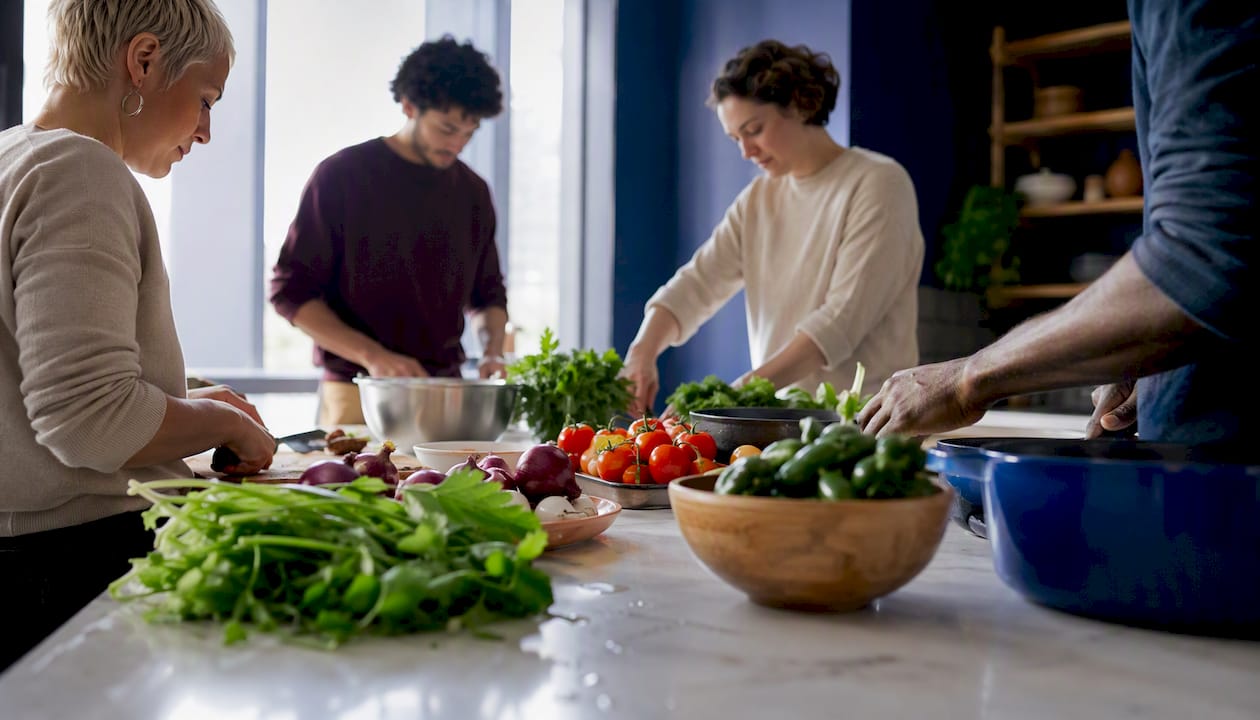
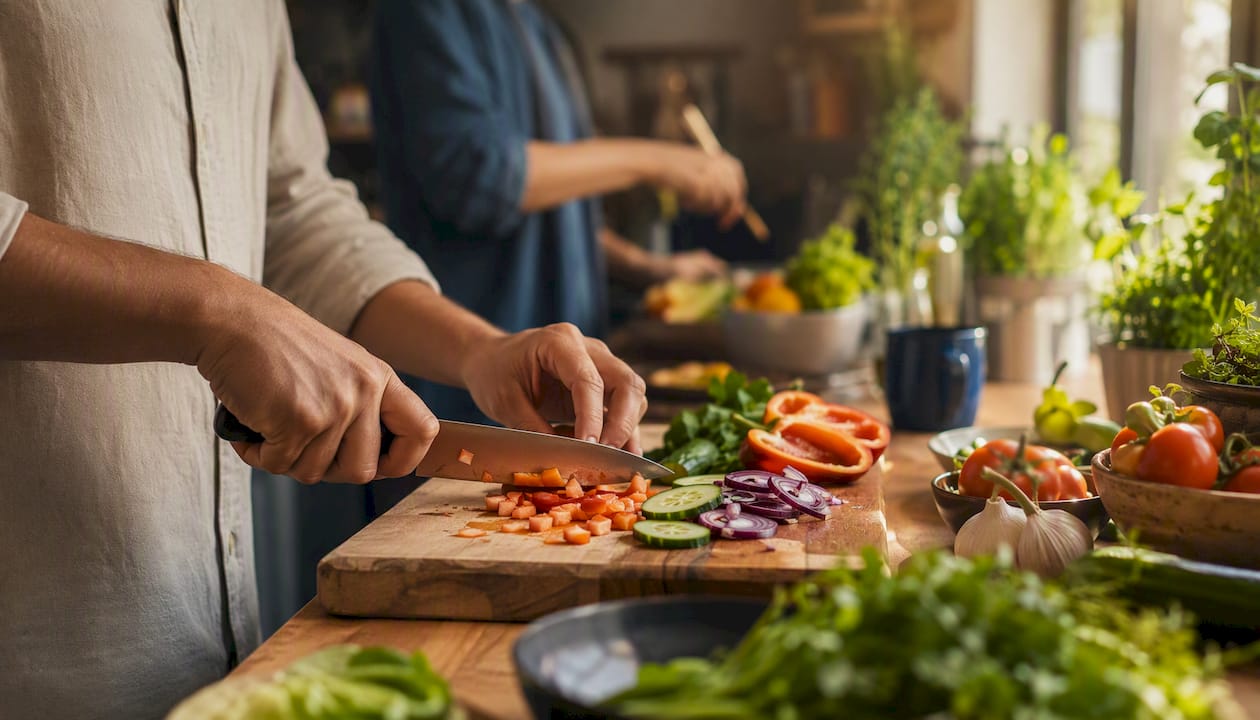
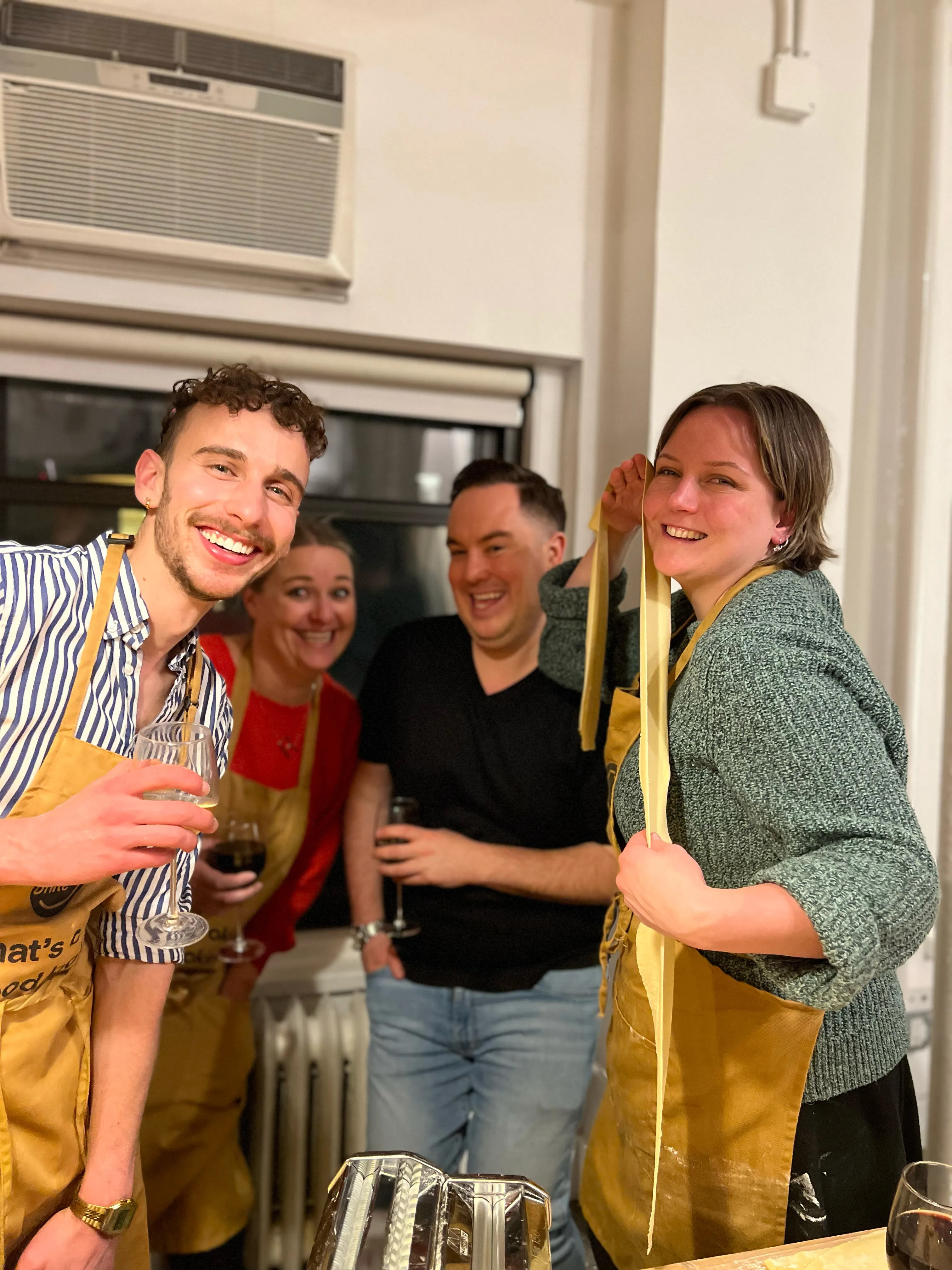
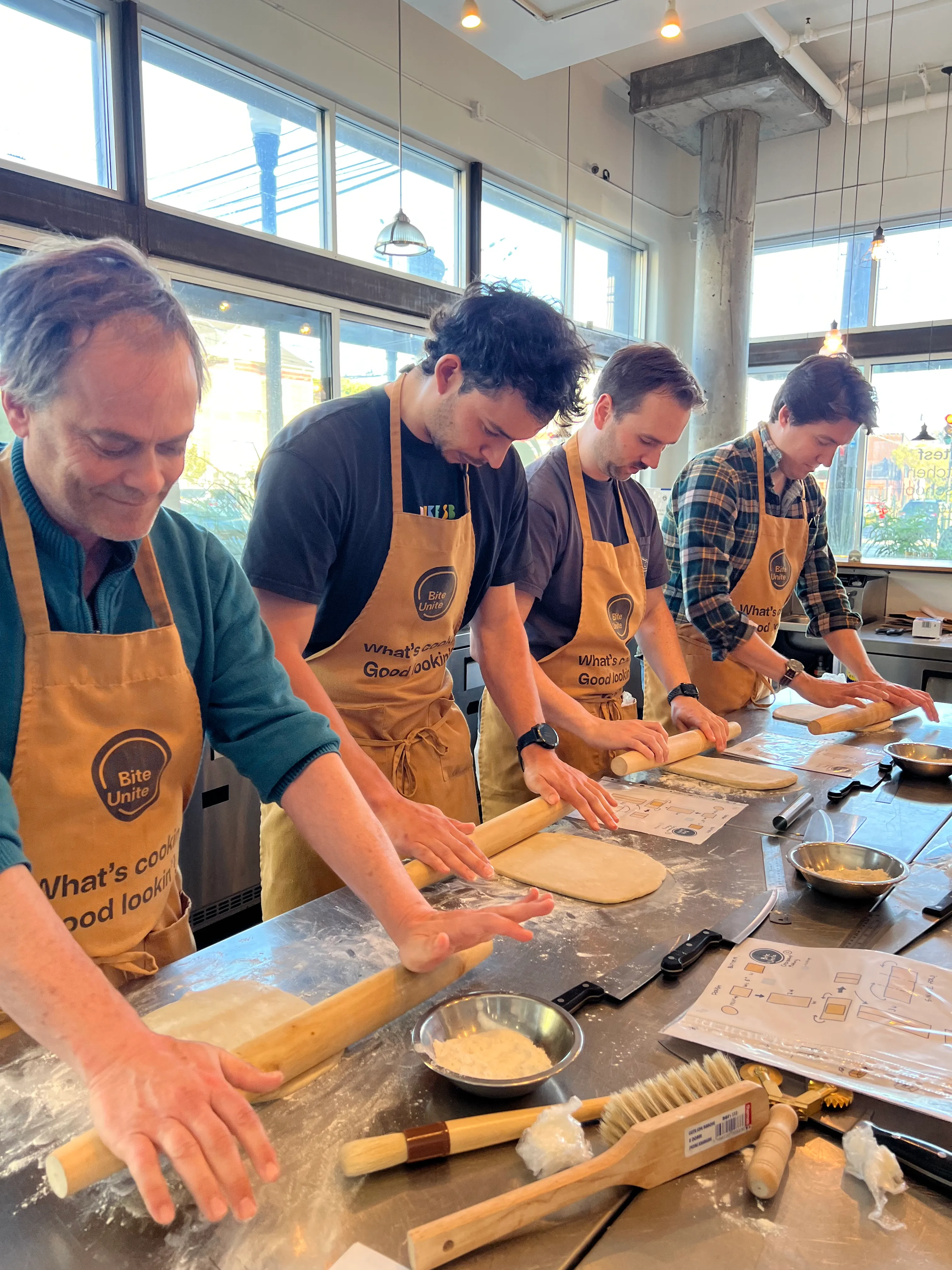
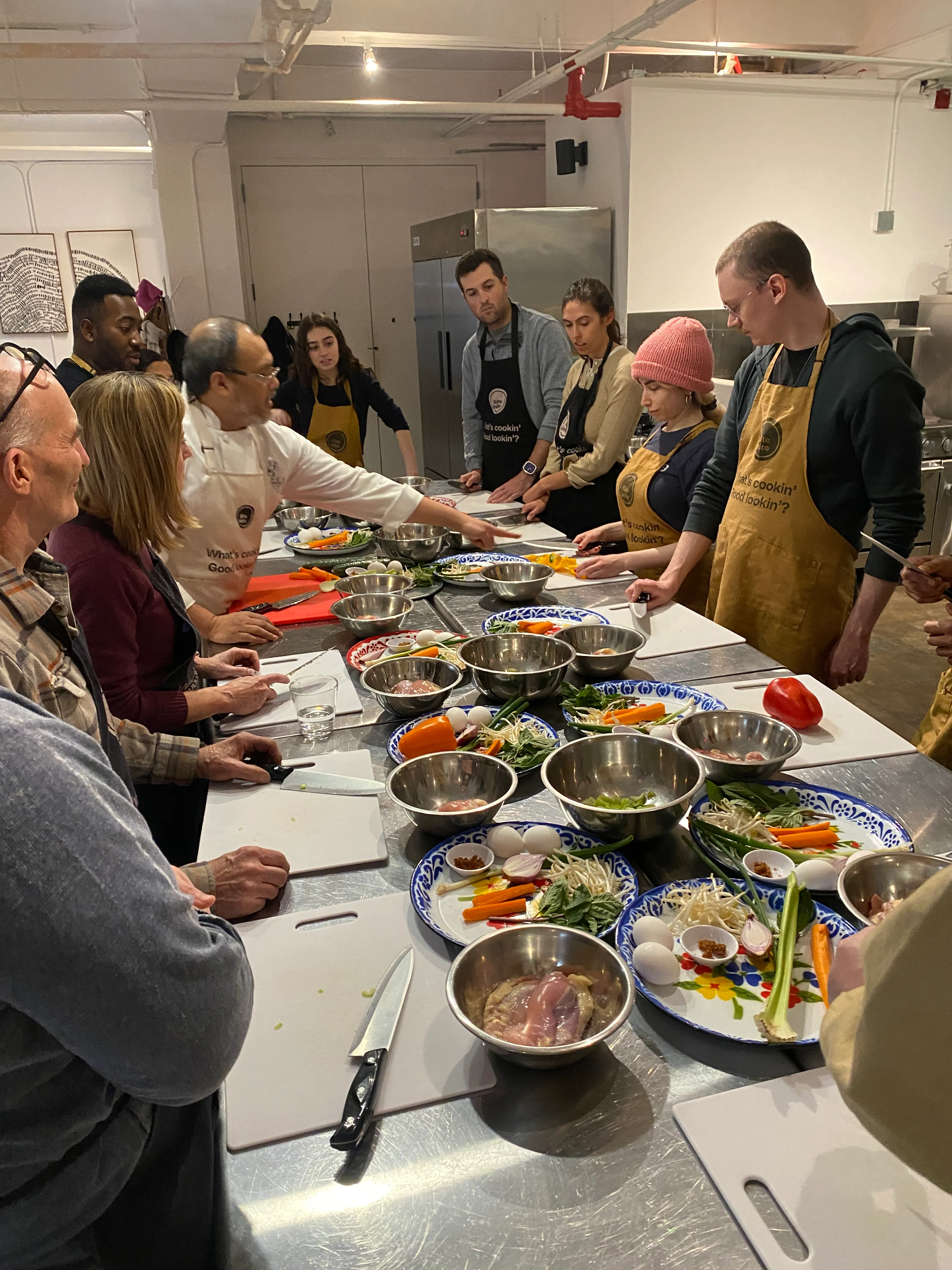
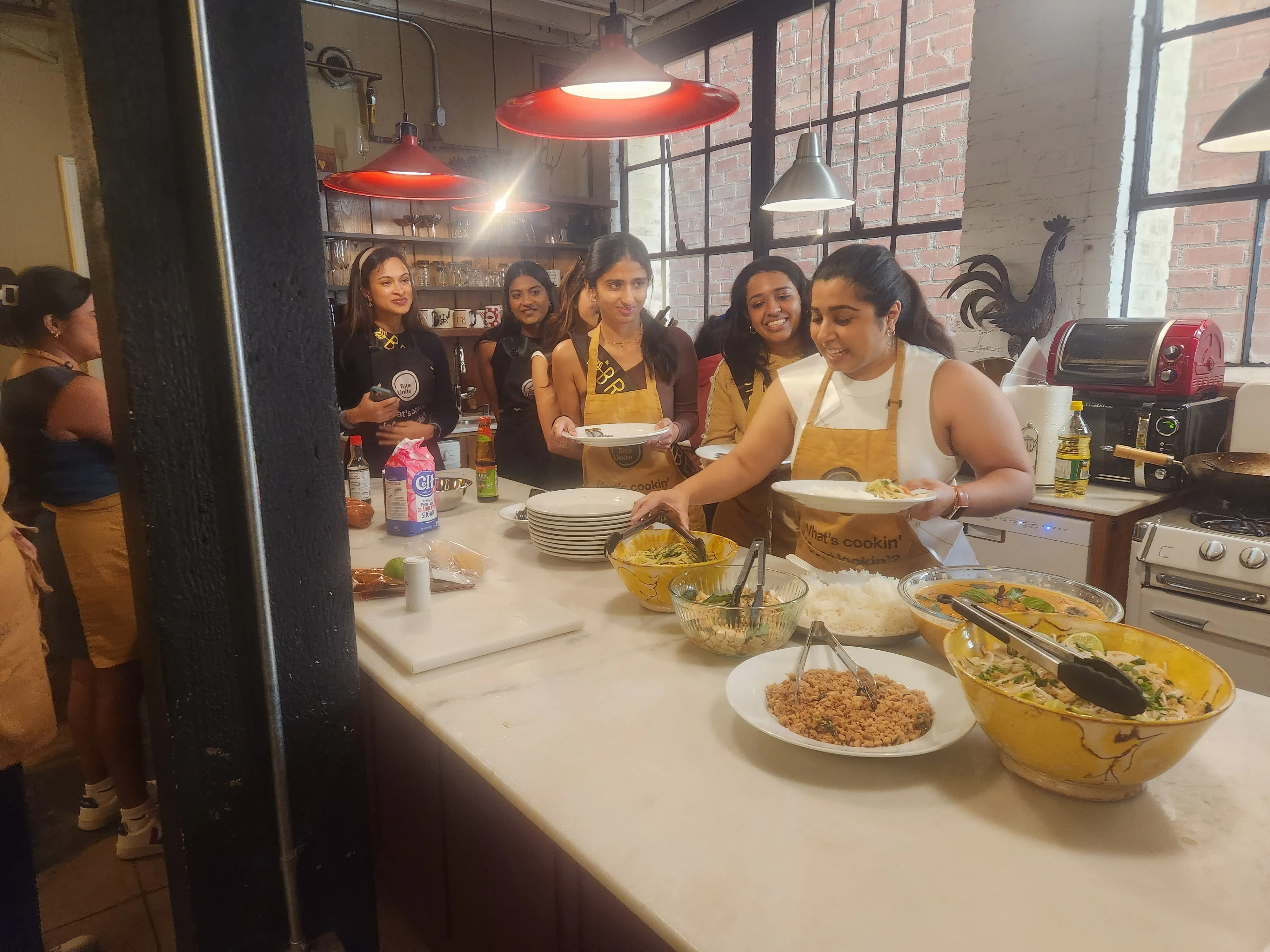
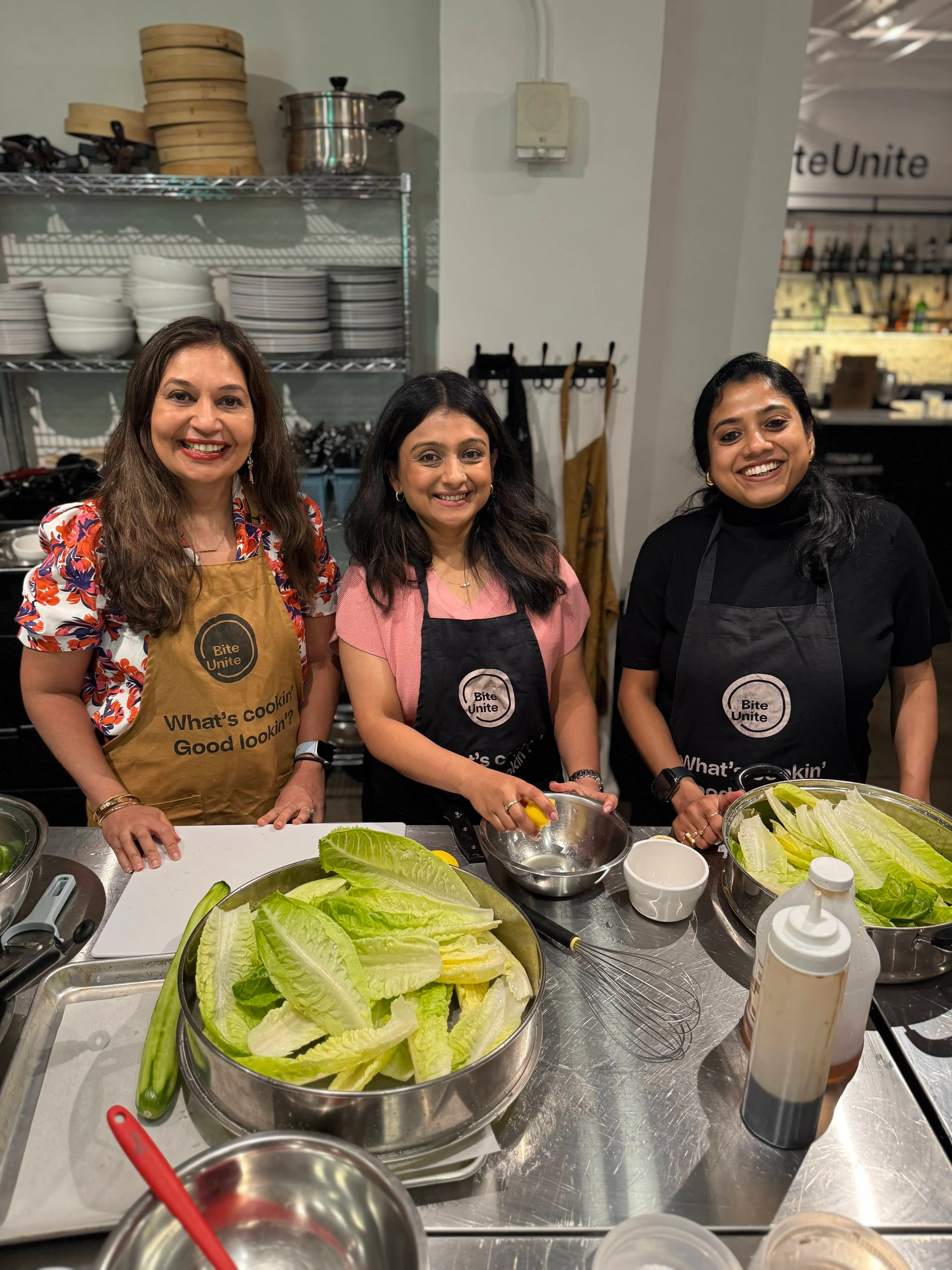
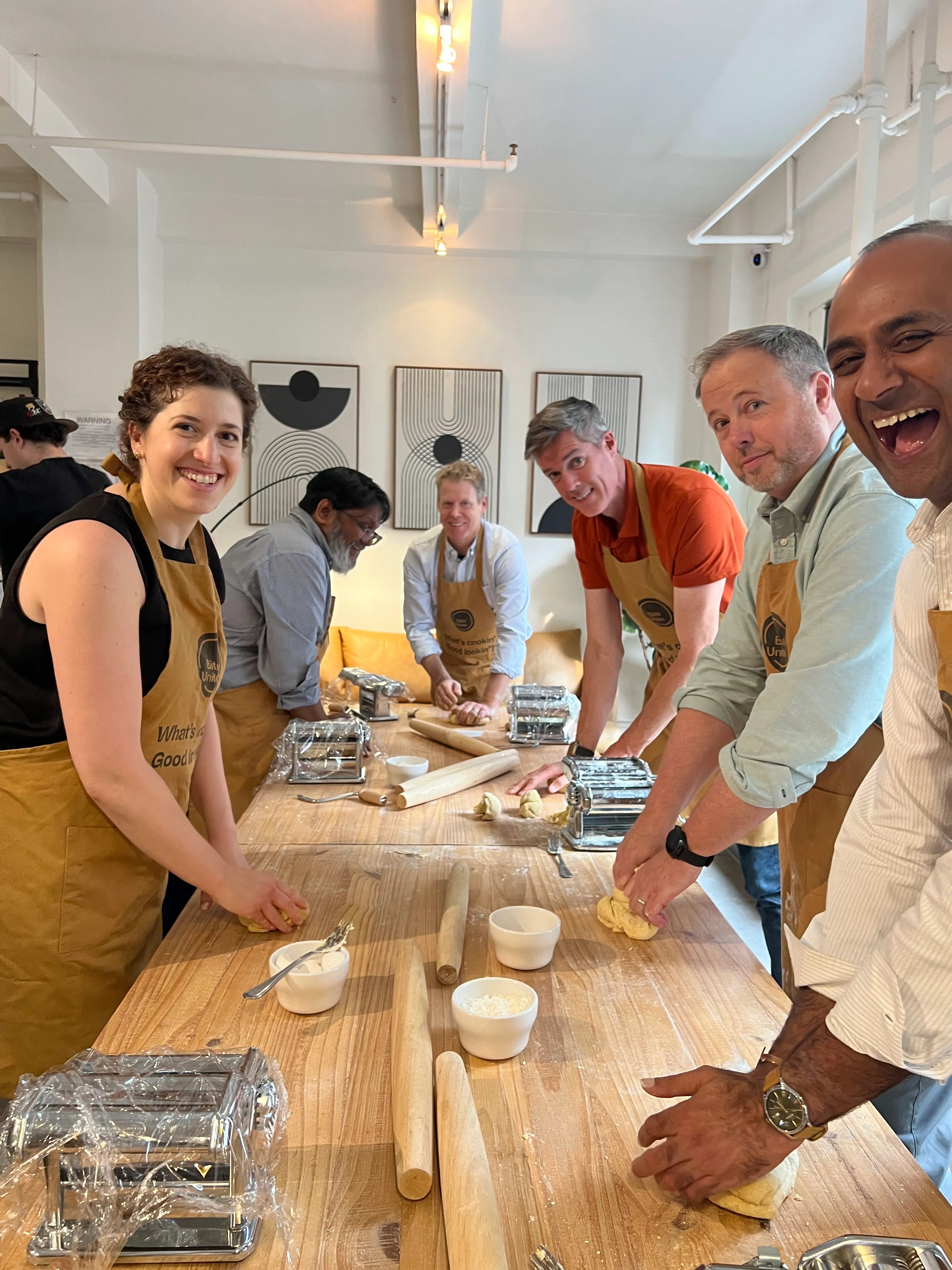
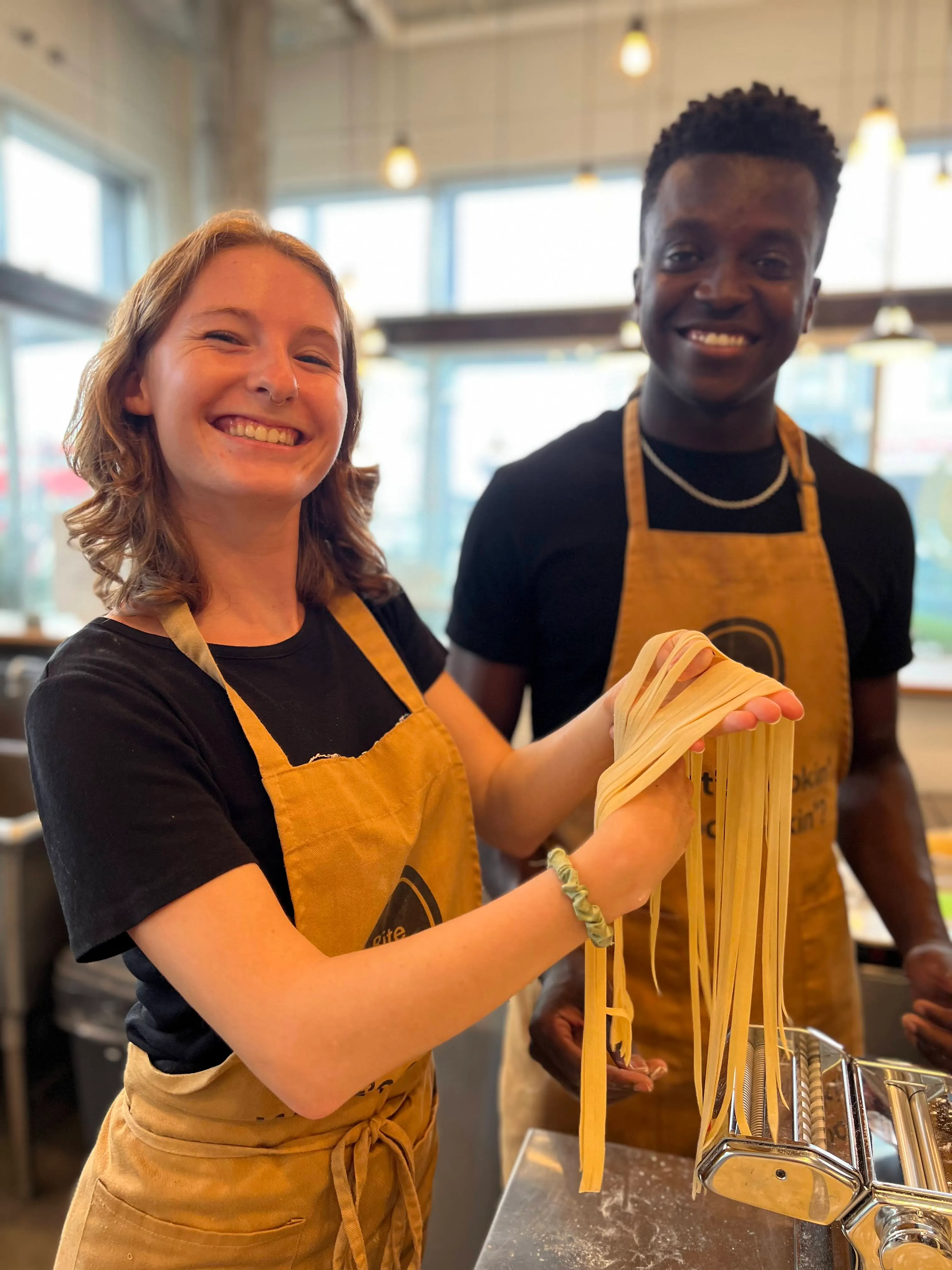
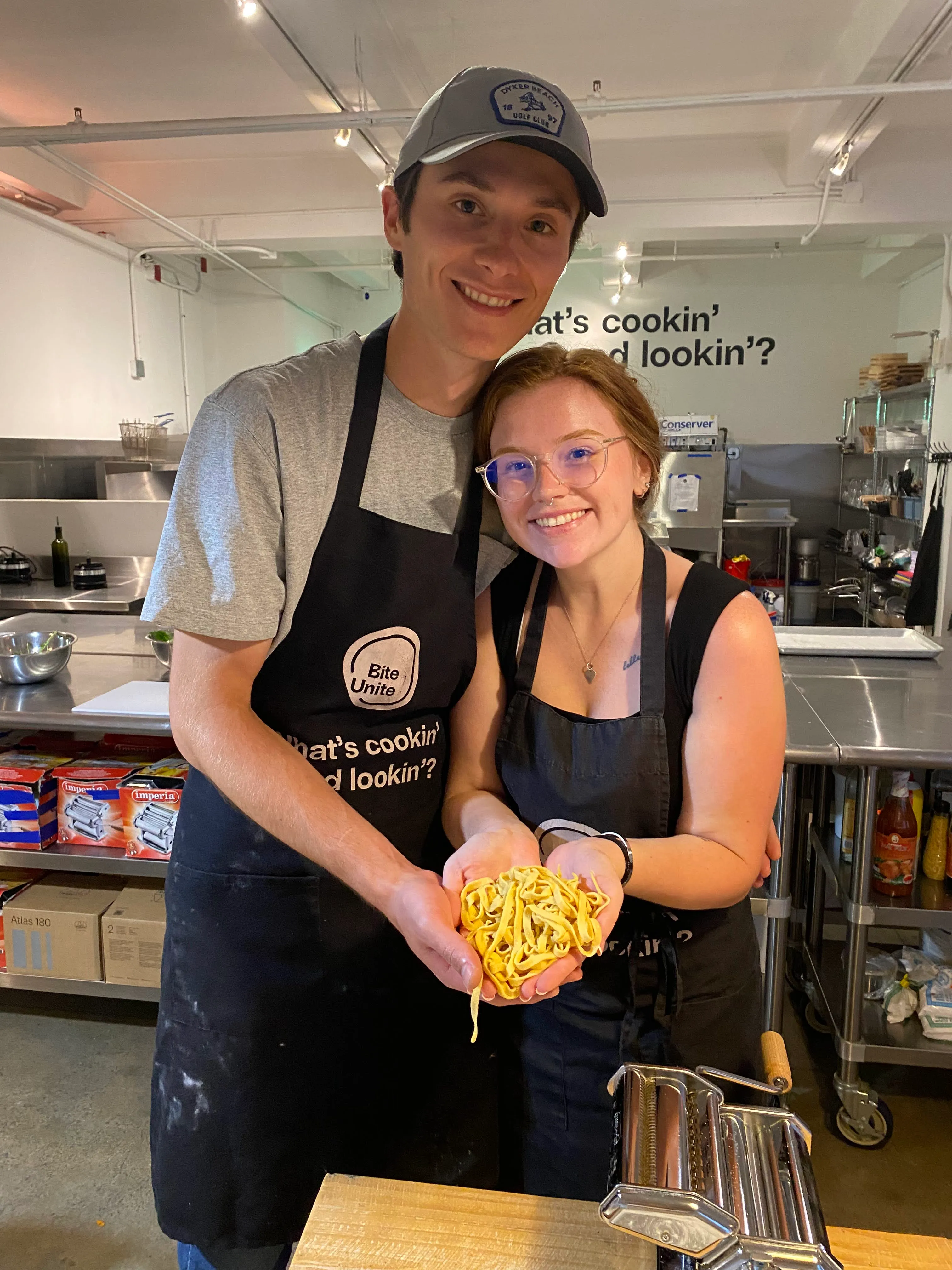
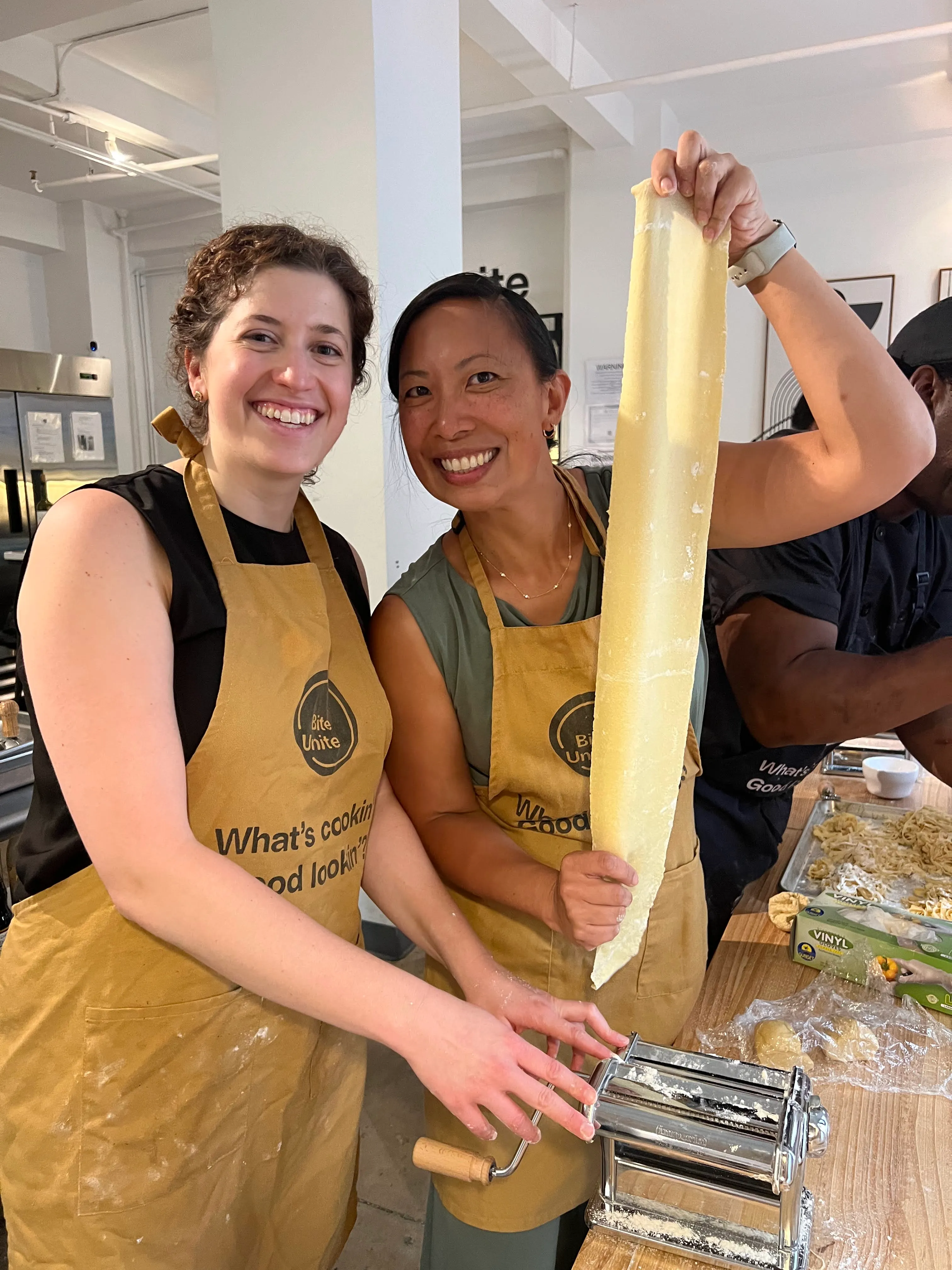
Strip away the geography and the reason a cooking class works becomes obvious: it is participatory by necessity. Every person has a station and a task, and the meal only reaches the table if the group gets there together. There is no audience and no back row to disappear into. People who have known each other solely as thumbnails on a screen end up side by side, passing ingredients, laughing at the pan that is smoking, and quietly recalibrating who is good at what. A senior leader who is cheerfully hopeless at folding dumplings gives everyone else permission to try, and the org chart dissolves for an hour into a room of people making dinner.
This is why the format travels. It lands in New York and San Francisco equally well because it is not relying on either city to supply the magic — the team supplies it, working together, and the city just sets the table. For a deeper look at what that shared effort actually returns to a company, why corporate cooking classes are the secret ingredient to better team wellness makes the fuller case.
What a Shared Kitchen Returns to a Distributed Team
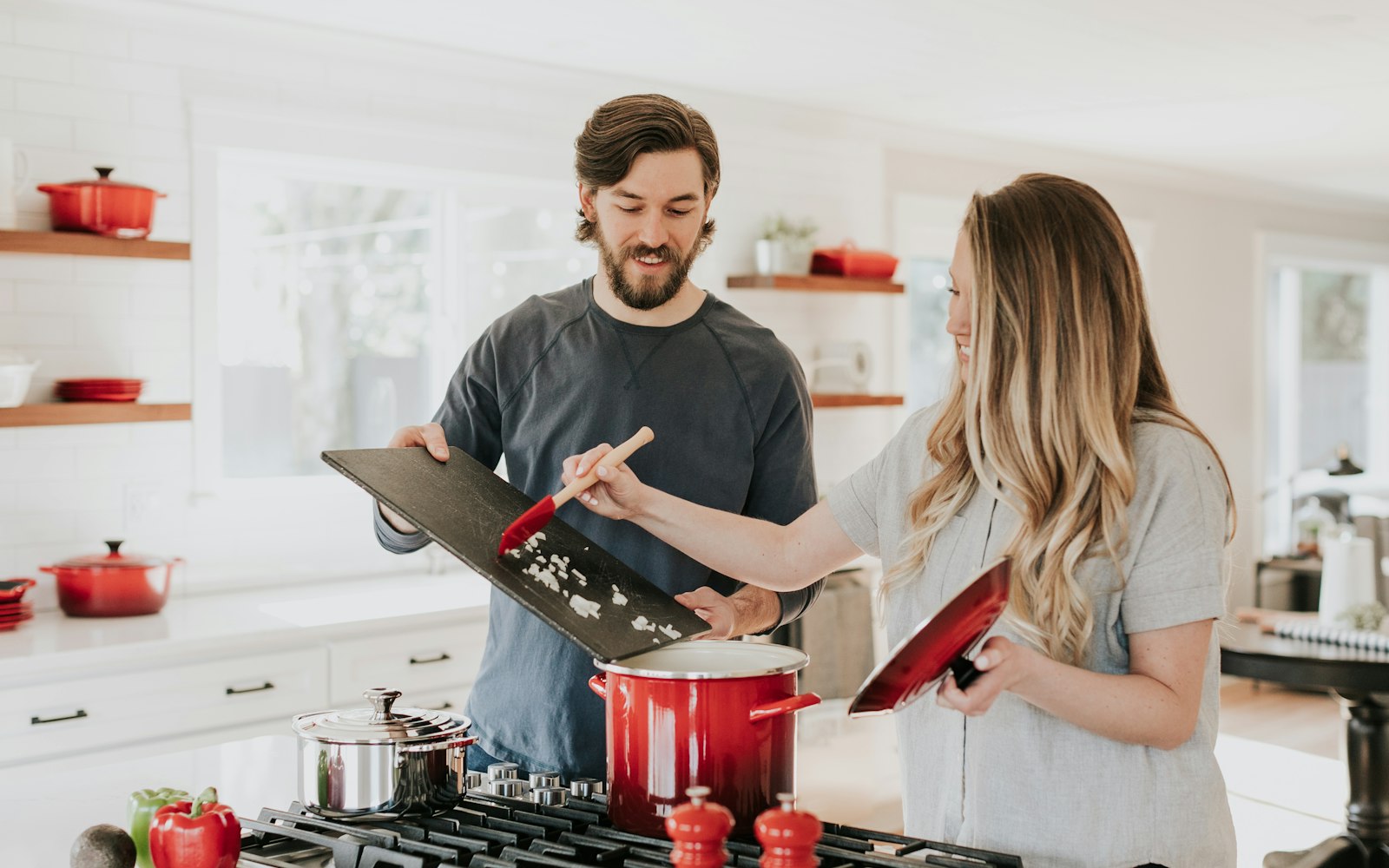
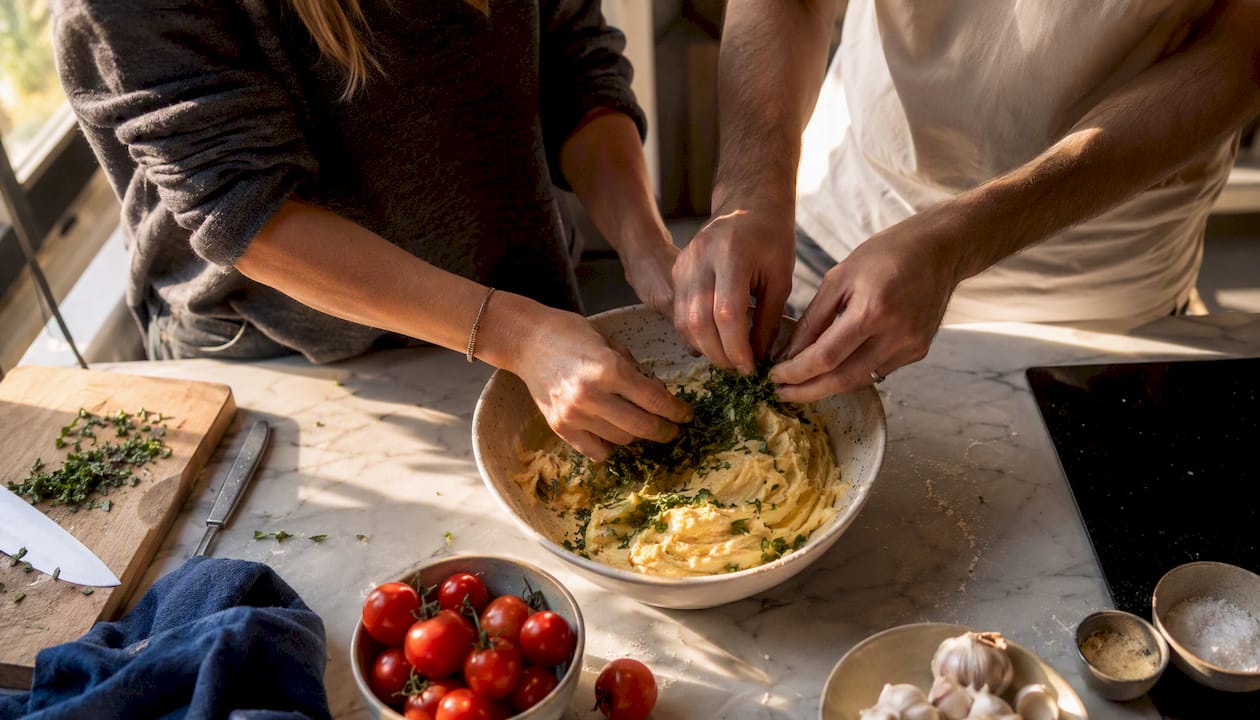
It is easy to file an offsite dinner under "morale" and move on, but the return on an evening spent cooking together is more concrete than that word suggests. Distributed teams run on trust built at a distance, and distance quietly erodes it — people who never share a room start to flatten into their job functions and their profile photos. A couple of hours in a kitchen does the opposite. It gives colleagues a low-stakes reason to rely on one another, to watch each other be imperfect and human, and to pull off something small together. Those are the raw materials of trust, and they are stubbornly hard to manufacture in a conference room.
The effect tends to show up later, in the texture of how the team works. People who have cooked together give each other a little more benefit of the doubt on a tense thread, reach out a little more readily, and remember there is a person on the other end. None of that is guaranteed by a single evening — but the evening is where it starts, and a kitchen starts it faster than almost anything else on a typical agenda.
New York for a Visiting Team
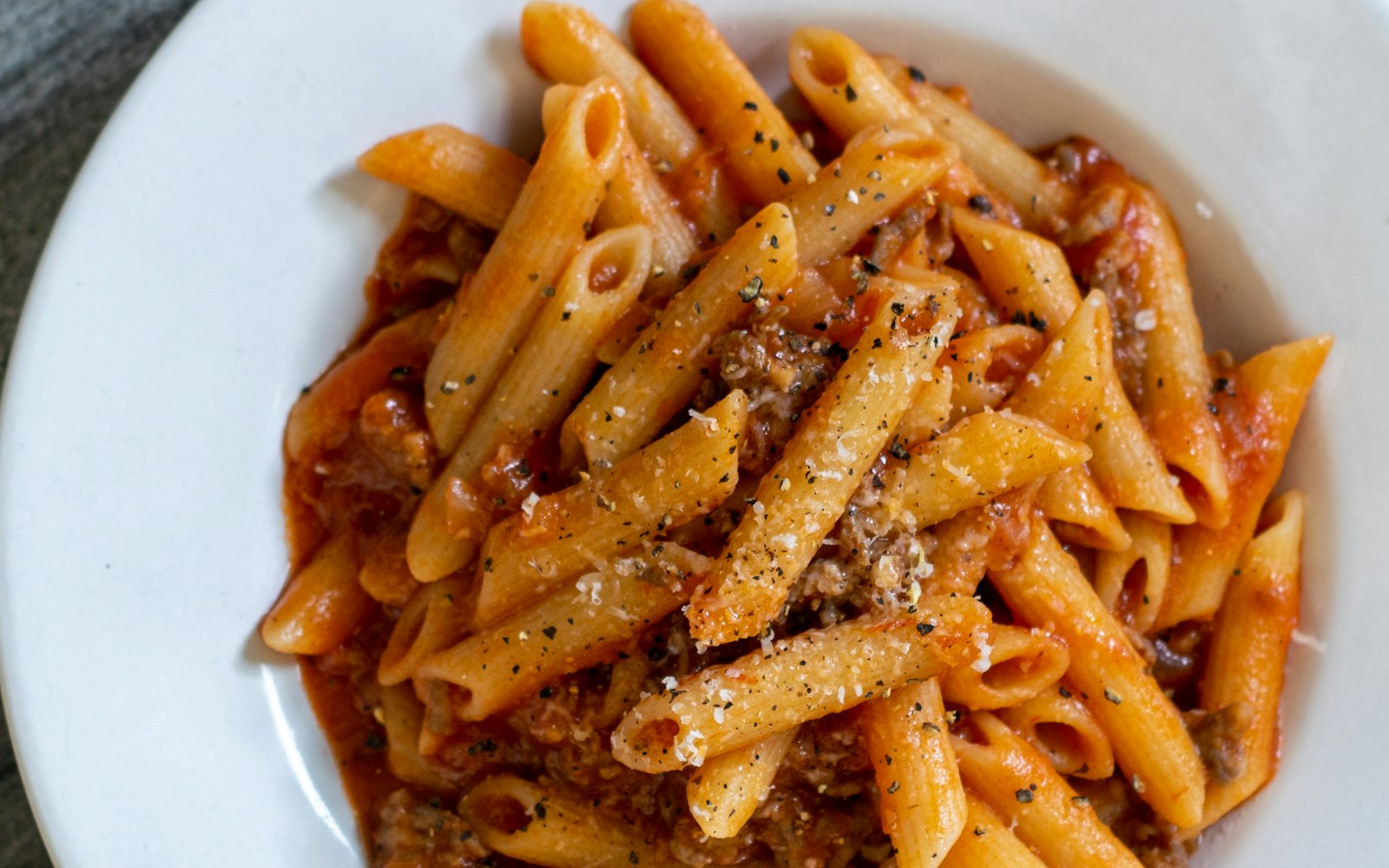
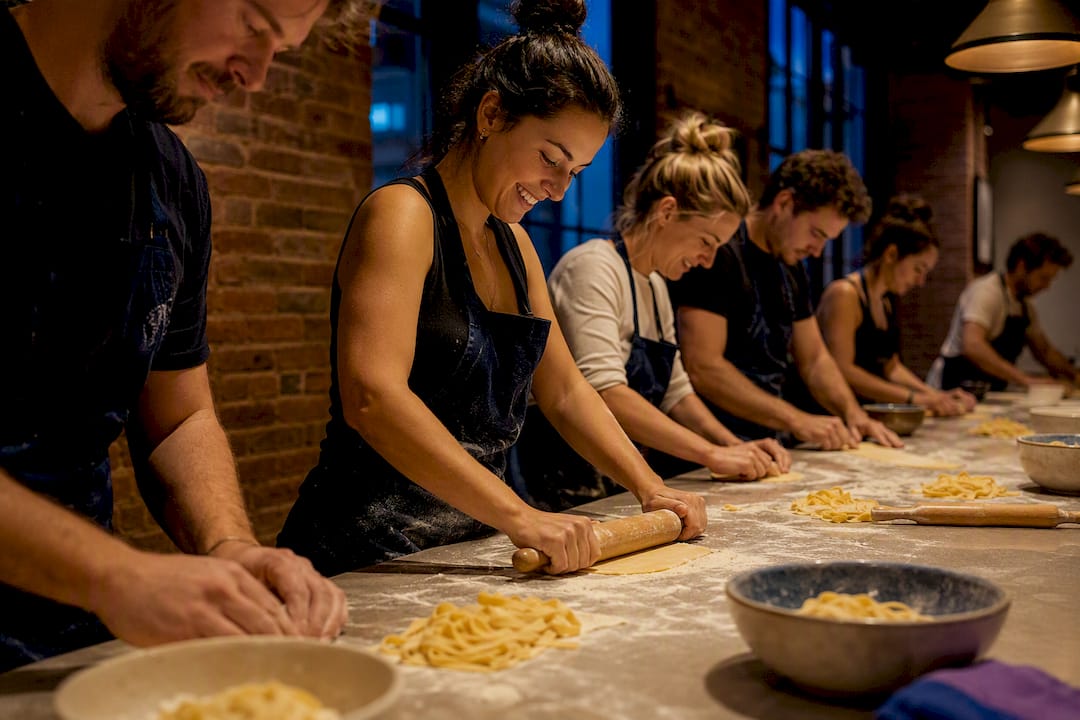
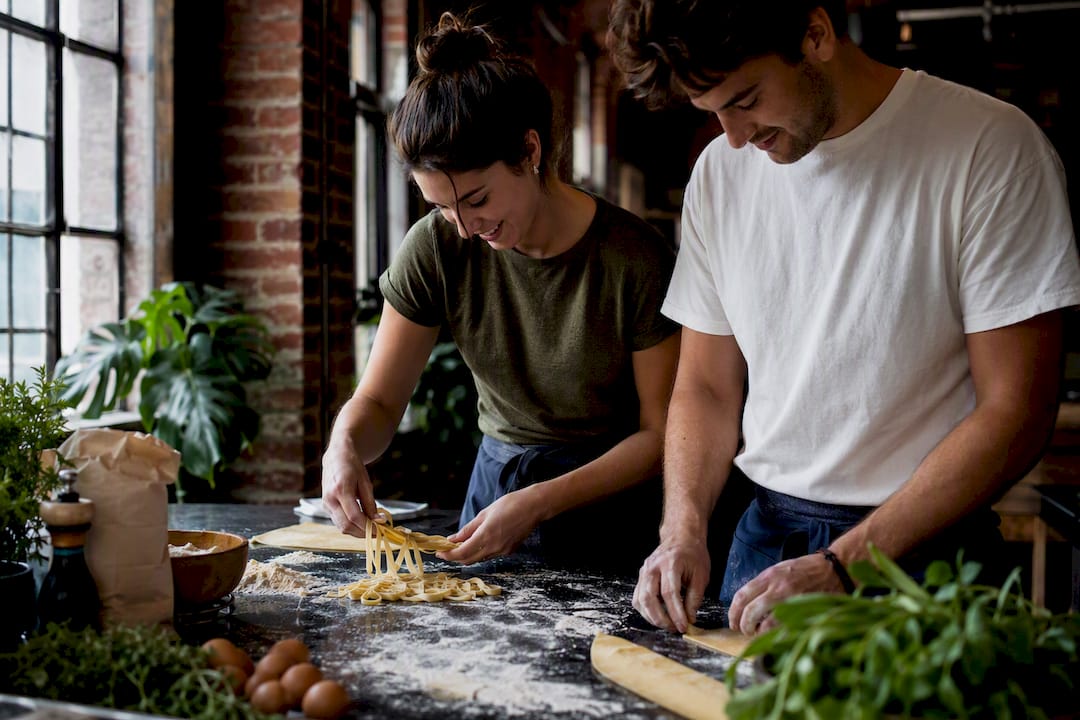
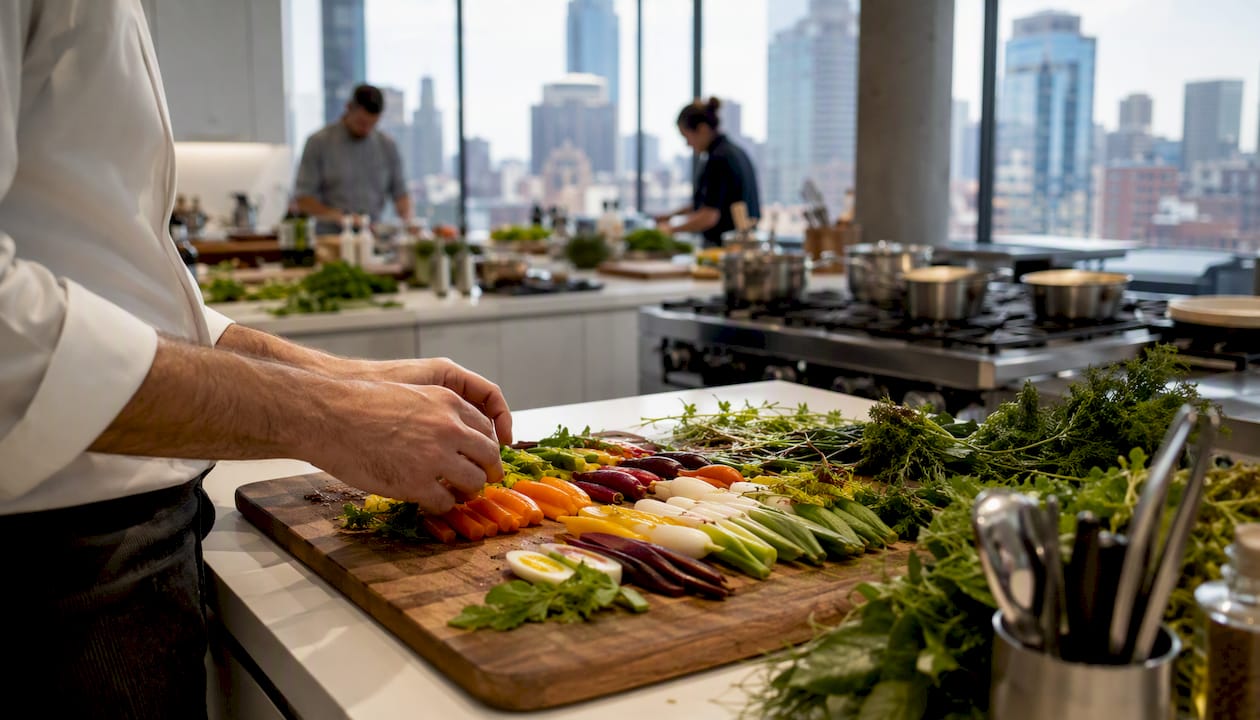
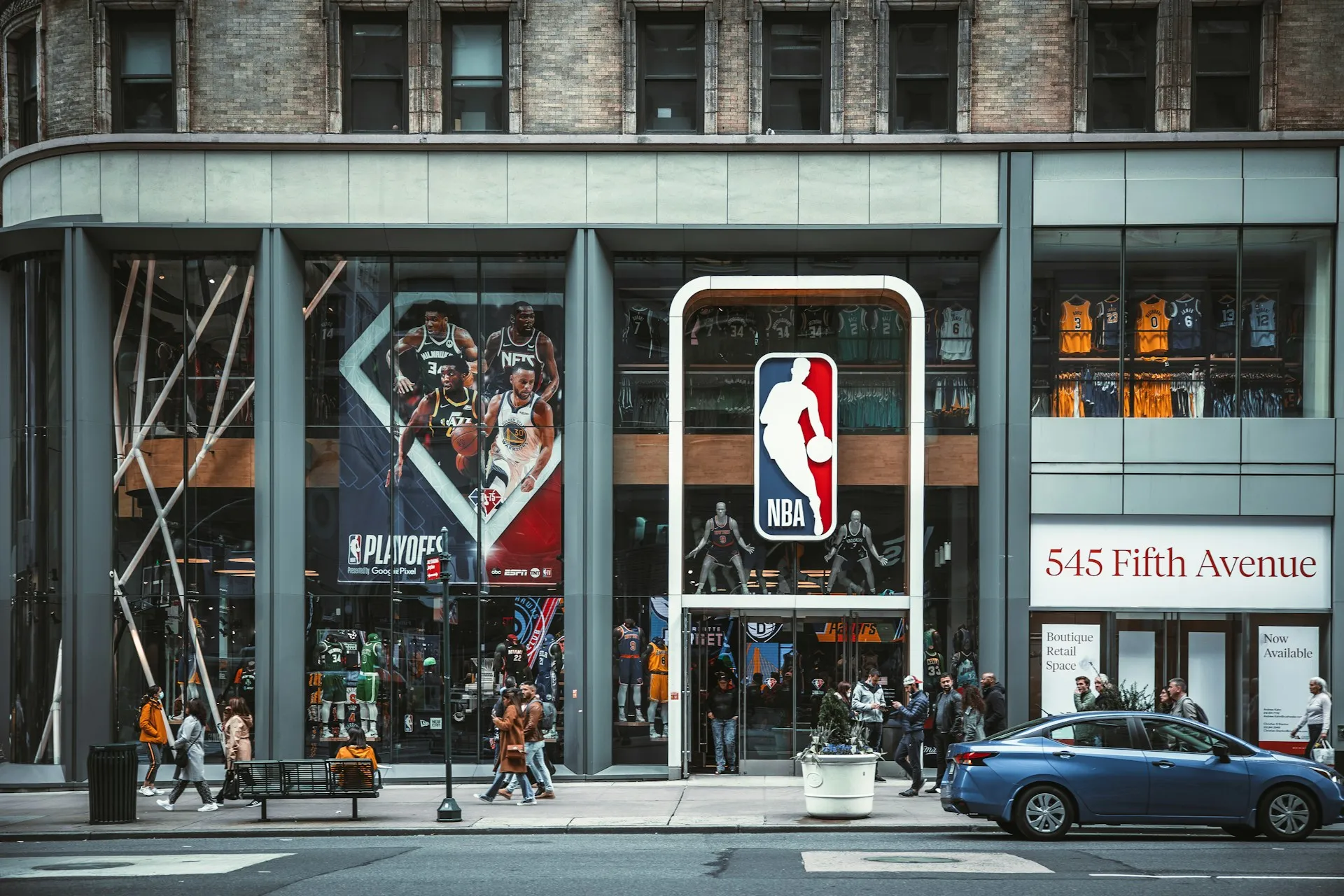
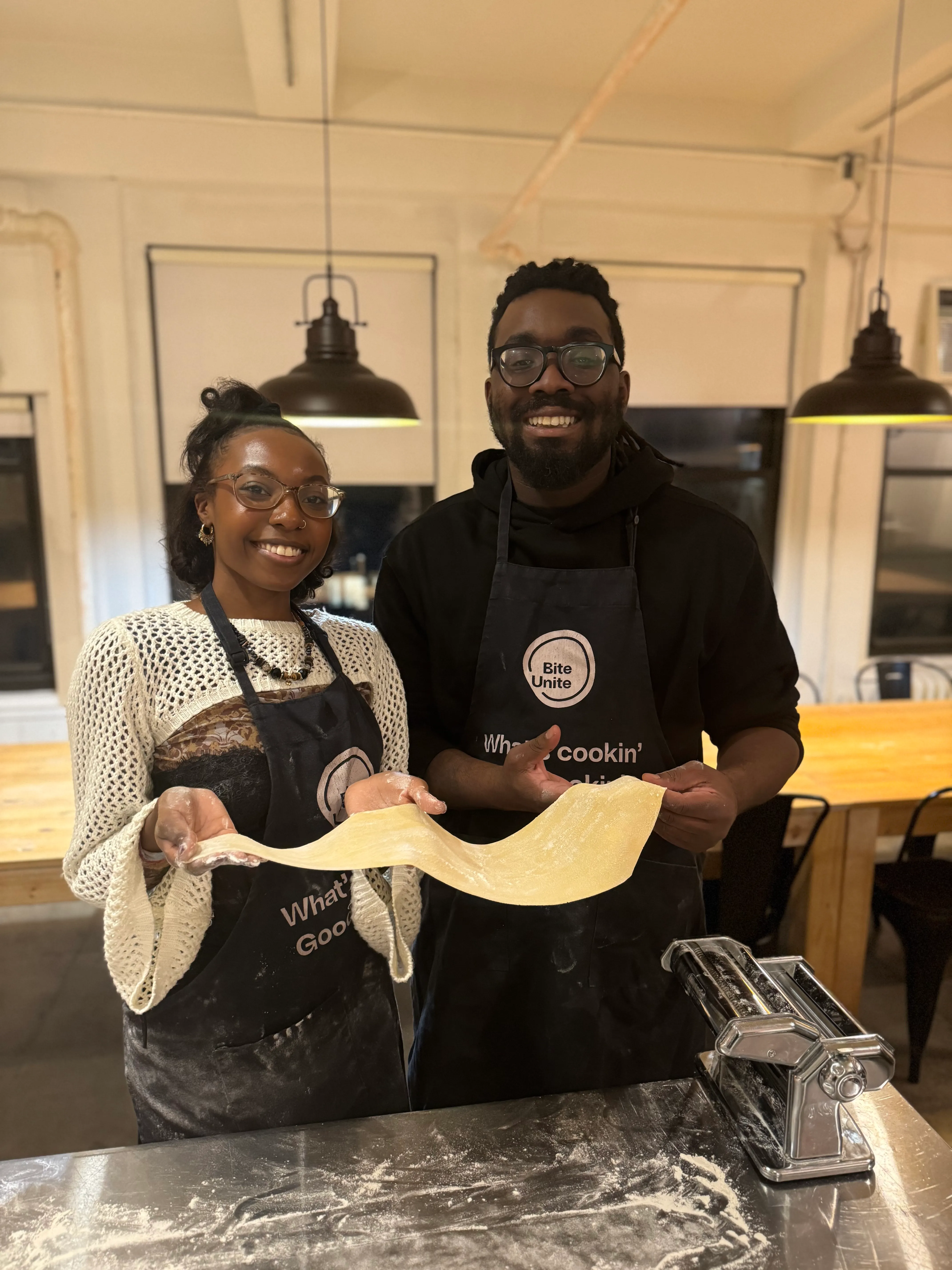
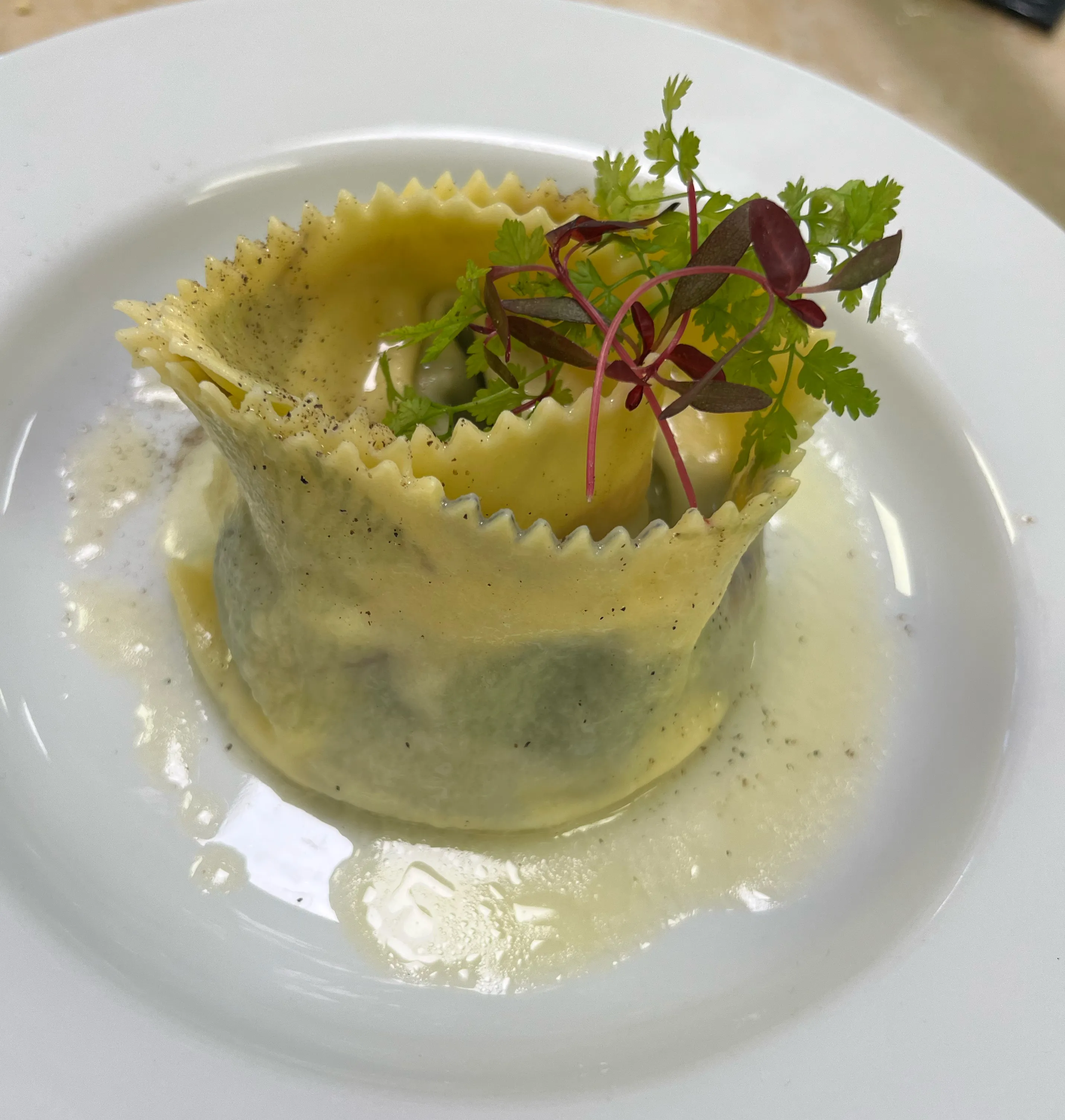
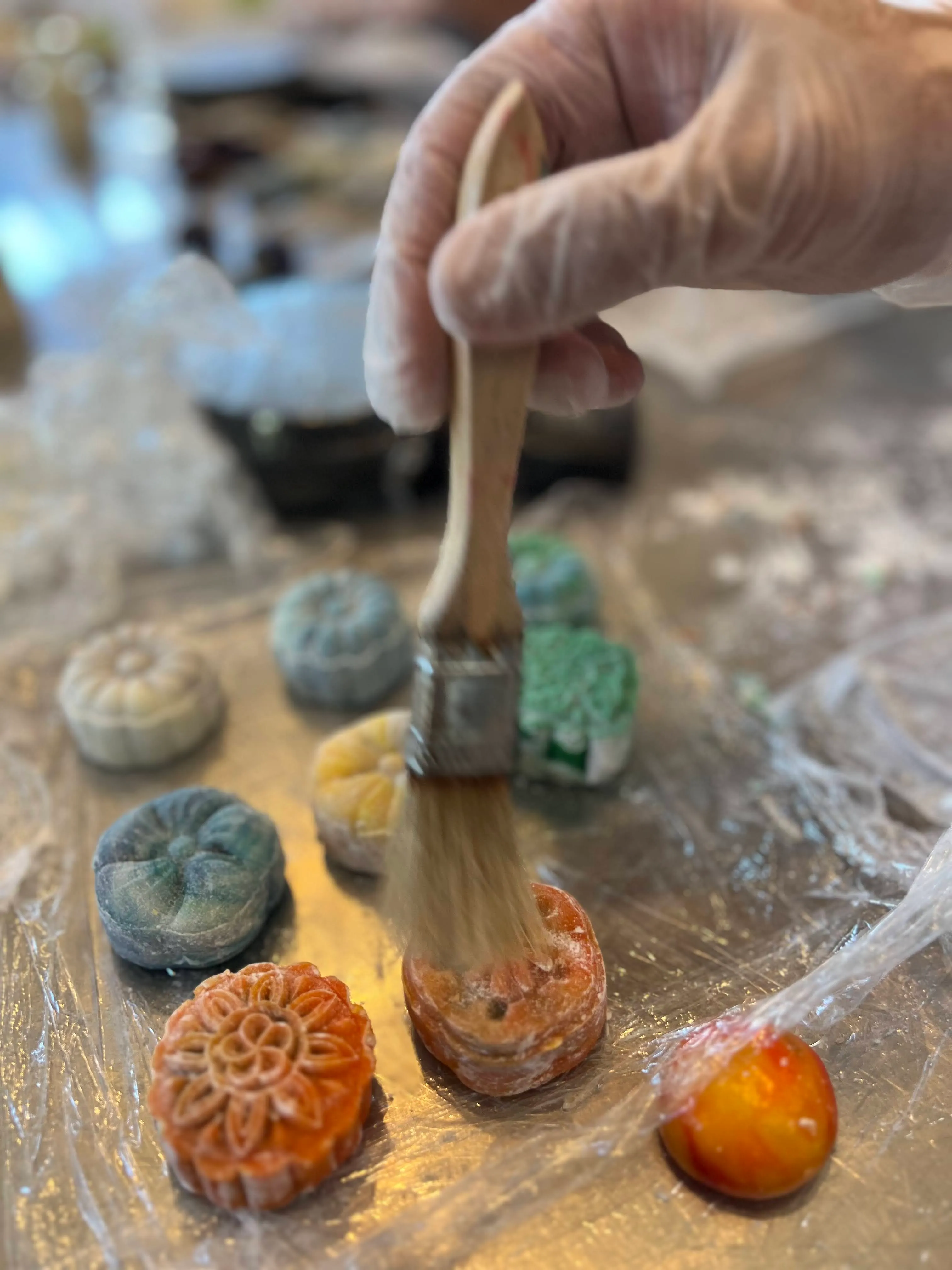
New York's draw is range and energy. A team can roll fresh pasta, fold soup dumplings, or press sushi in a real working kitchen a short ride from wherever they are staying, then step out into a city that is genuinely at its best in the fall — the summer heat gone, the evenings crisp, the streets alive. Classes book privately for the group, so your whole team shares one room and one experience rather than a reservation split across a busy floor. Start with the NYC cooking classes lineup, or the corporate and team-building options if you are organizing squarely around a work trip. If you want the full picture of what New York offers on the pasta side alone, our ultimate guide to pasta cooking classes in NYC lays out the range.
San Francisco for a Visiting Team
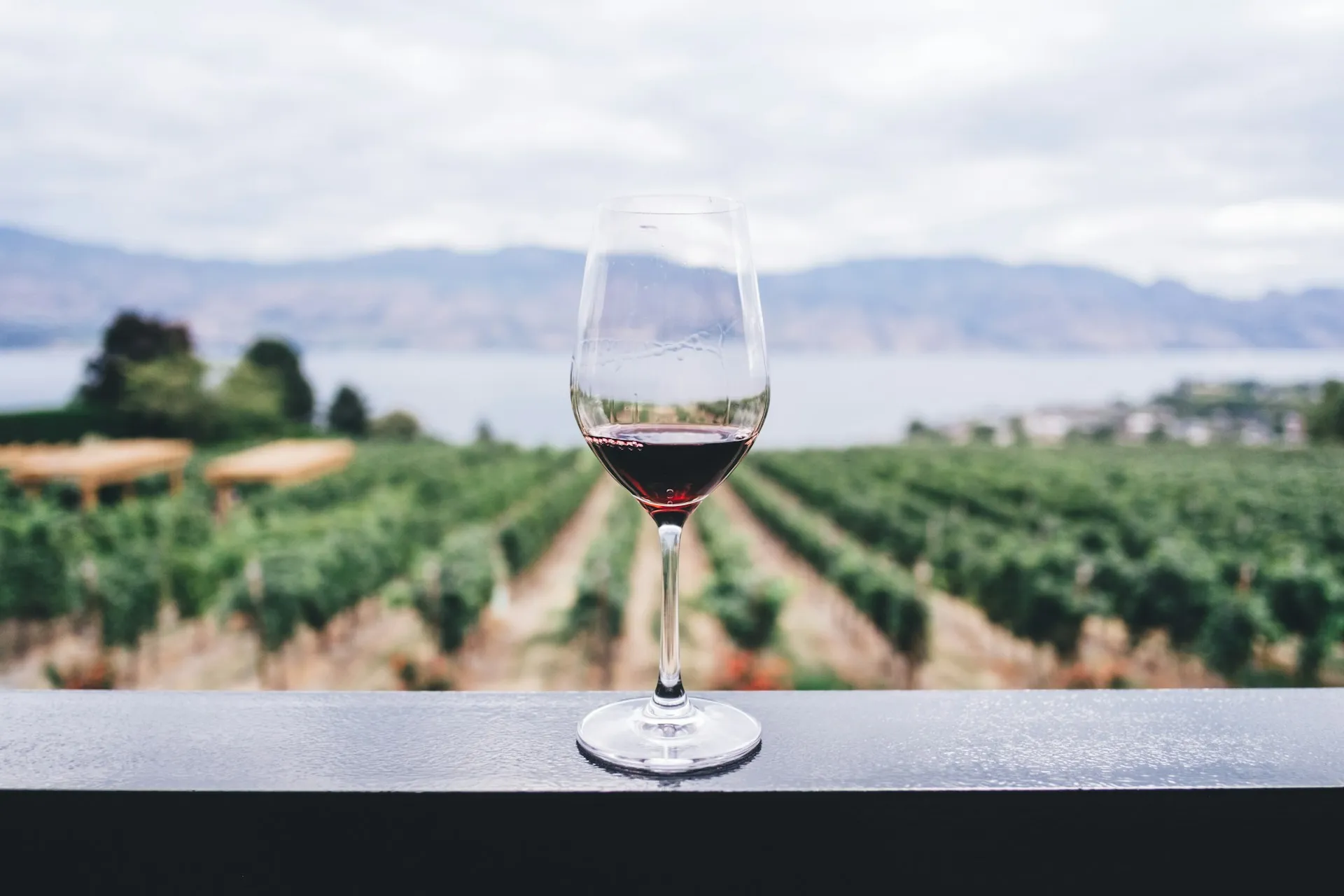
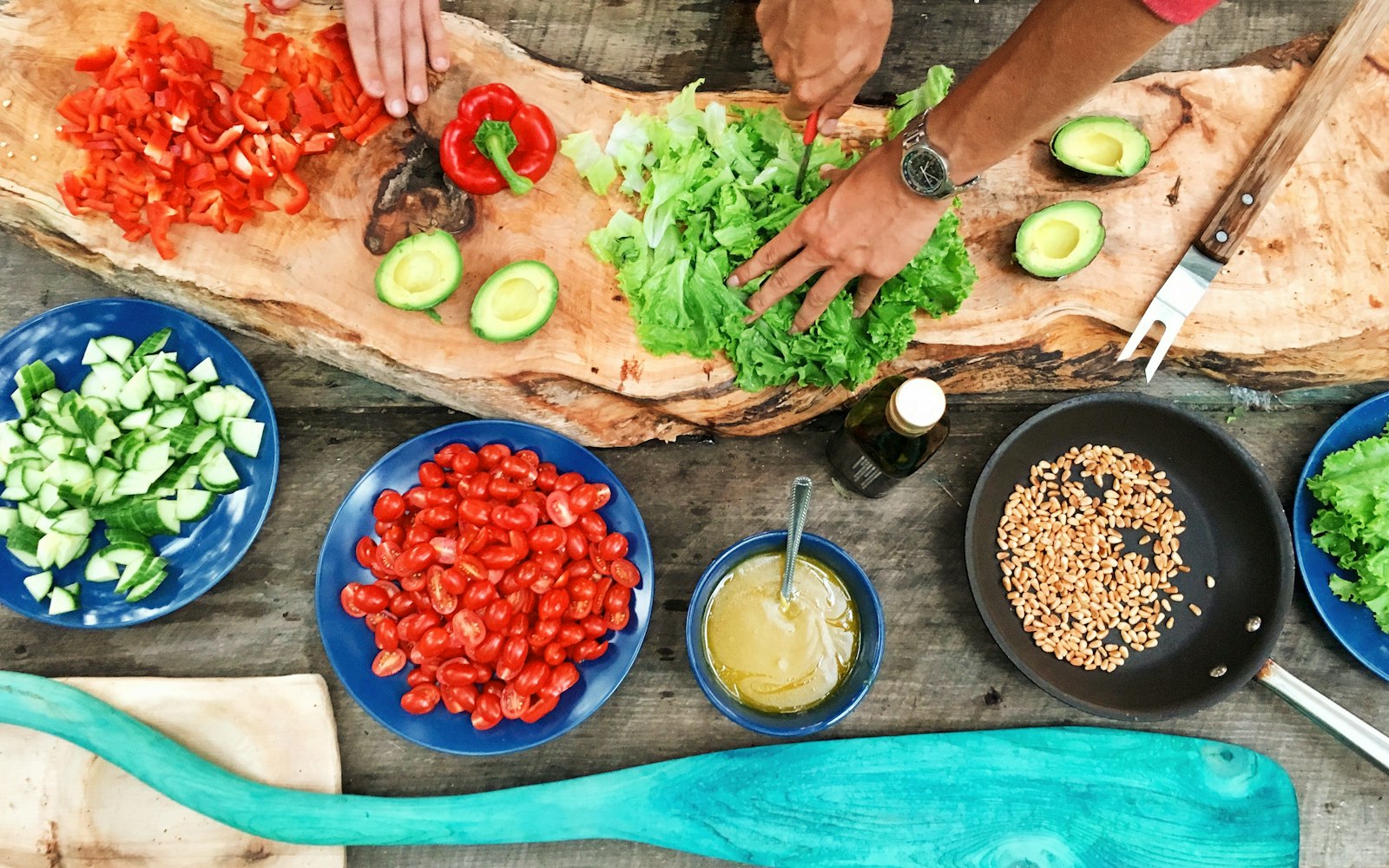
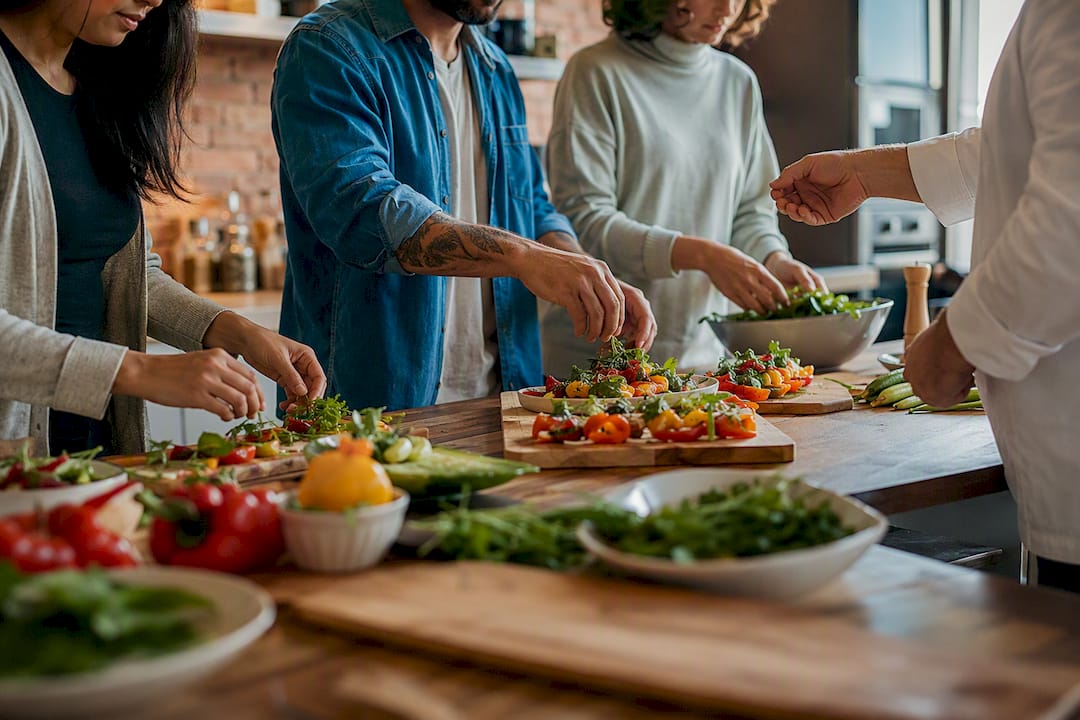
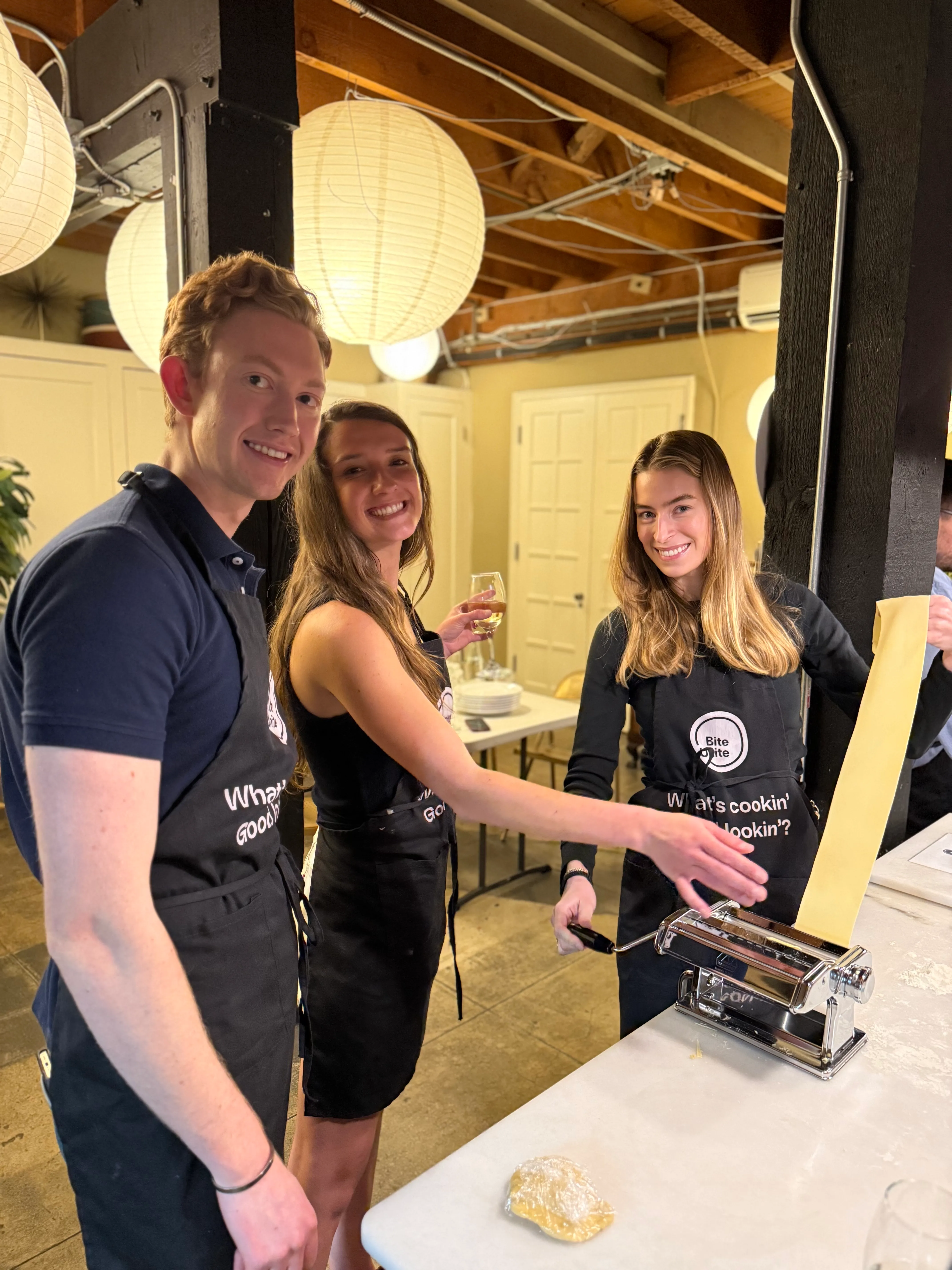
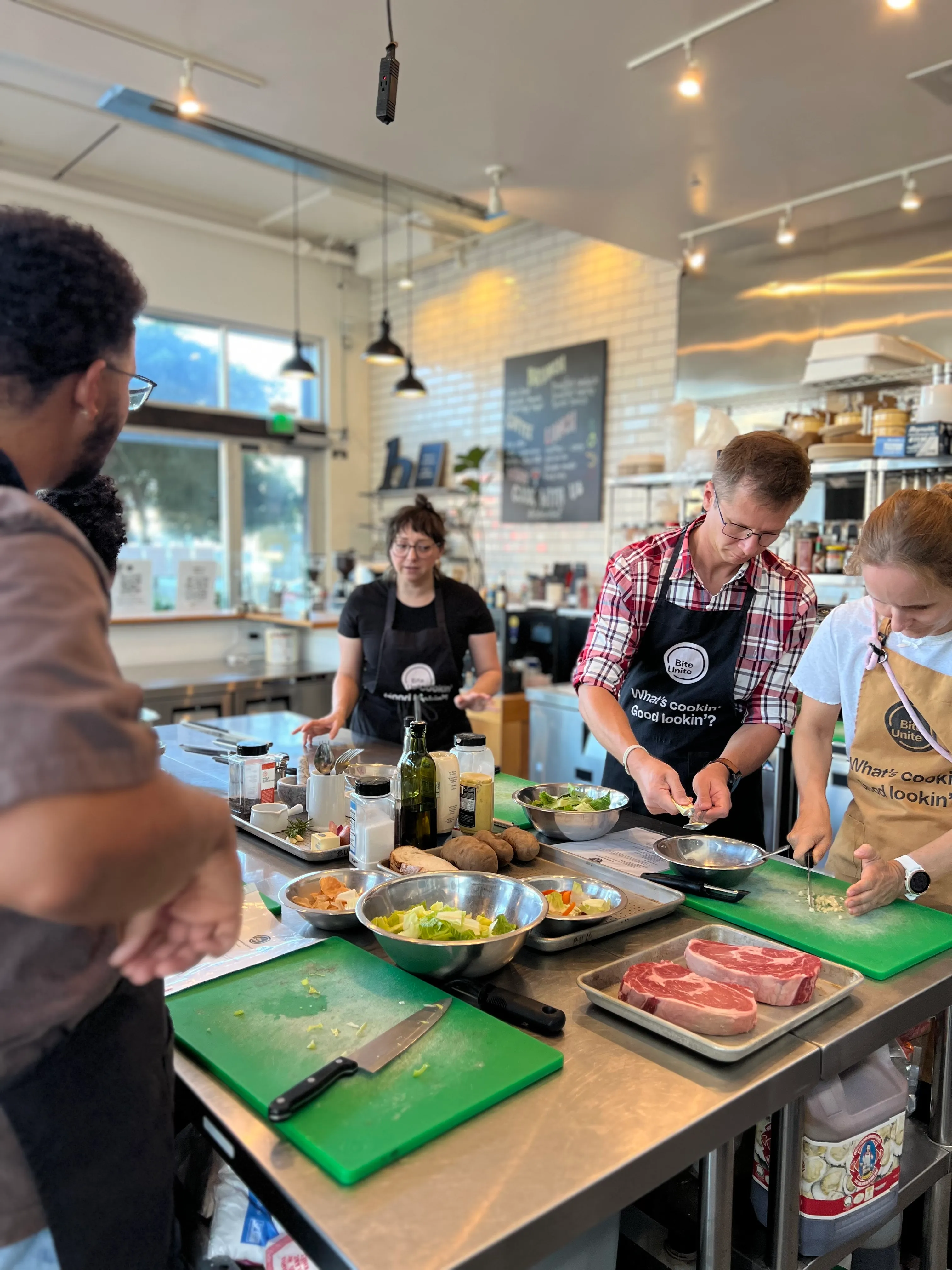
San Francisco brings a different register. The Bay Area's food culture is built on season and produce, on cooking that starts with what is good right now, and that sensibility suits a team that wants to slow down and focus rather than be swept along. The same private, hands-on format applies — one room, one instructor, one meal the group builds together — but the tone is a touch calmer, a touch more considered. Fall is also the Bay's clearest, warmest stretch, which makes September and October a genuinely good time to gather there. The San Francisco cooking classes page has the full range, and the team-building options are structured for exactly this kind of visiting-group booking.
How to Actually Choose Between Them
The decision usually comes down to logistics rather than magic. Choose the coast your people can most easily reach, where you already have an office or a critical mass of the team, or where the rest of the agenda naturally points. If the trip has an East Coast client visit stapled to it, New York picks itself; if most of the company already lives within a short flight of the Bay, San Francisco does. What should not weigh on the decision is the quality of the evening, because that variable is fixed. The group activity is the one part of the offsite that works the same wherever you land.
There is a temperament difference worth naming, though. New York in the fall has a kinetic, go-out-after energy — the class is often the launchpad for a bigger night. San Francisco tends toward a more contained, savor-the-evening feel that suits teams looking to actually talk. Neither is better; they are different rooms for different groups, and knowing your team tells you which one to book.
A Short Checklist for Either Coast
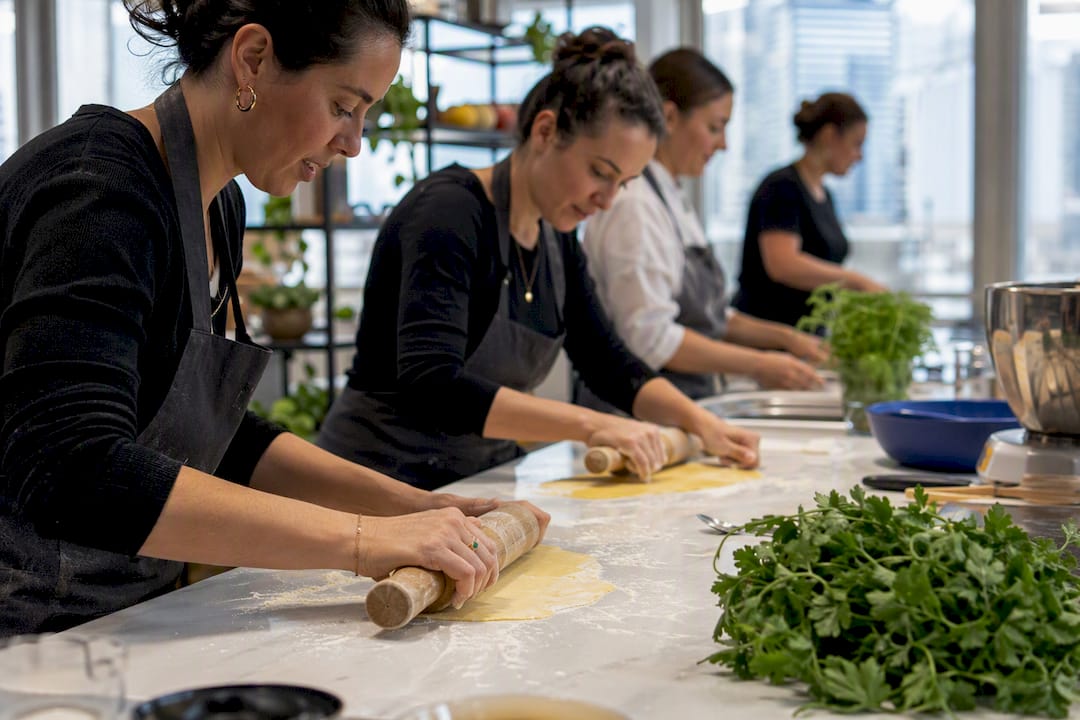
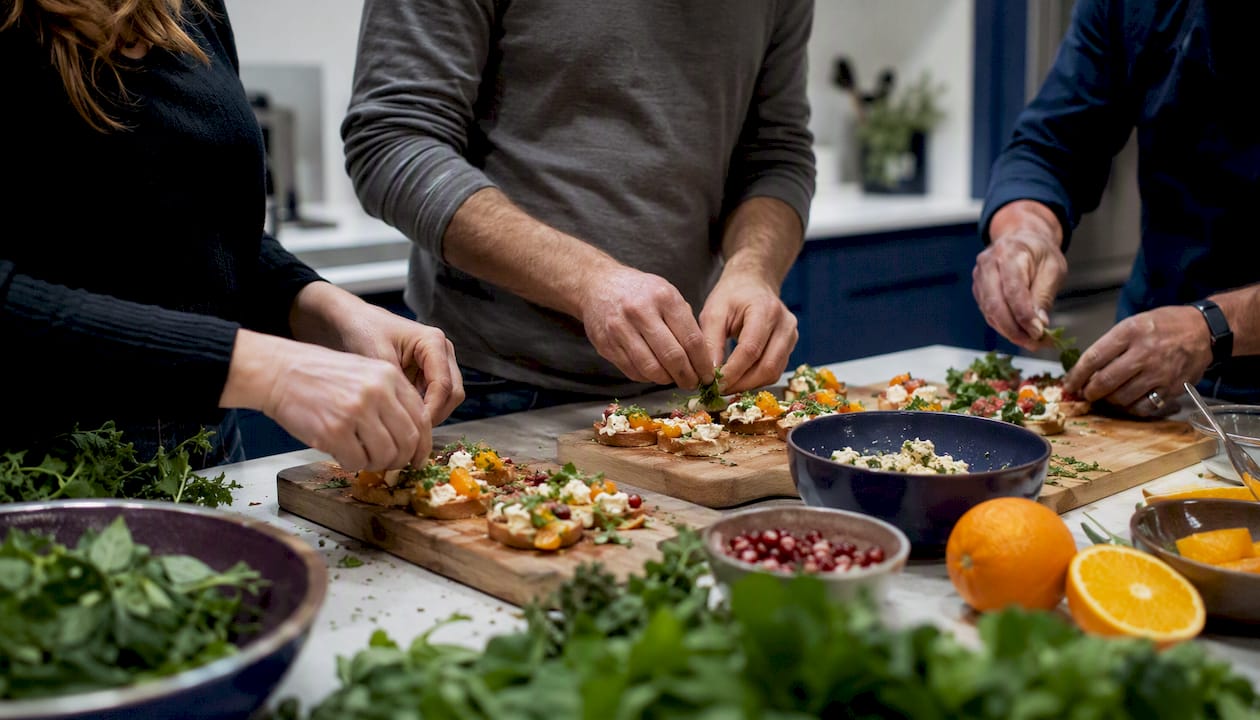
Wherever you land, a handful of decisions separate a good night from a great one. Settle the group's range of kitchen confidence before you book, so the menu fits the room rather than exposing the least experienced person in it. Confirm dietary needs in advance; a good kitchen will adapt, but not on the spot. Choose a private booking so the team stays in one room and the instructor can pace the night around your people. Slot the class into the agenda late enough to feel like the reward and early enough that nobody is fading over their plate. And if you want the whole evening — the cooking, the meal, any remarks or recognition — in a single place, plan for it rather than improvising a move across town at nine o'clock.
Whichever Coast, Book It Early
One rule holds on both coasts: reserve the moment your dates are firm. Fall group bookings fill fast in New York and San Francisco alike, and the weekday-evening slots that offsites want are the first to go. Booking early is not only about locking availability — it gives you the room to shape the night, to match the menu to a team with a wide range of kitchen confidence, to sort dietary needs in advance, and to decide between an approachable session and a more ambitious one. Left to the last minute, you take what is open; planned ahead, you get the evening you pictured.
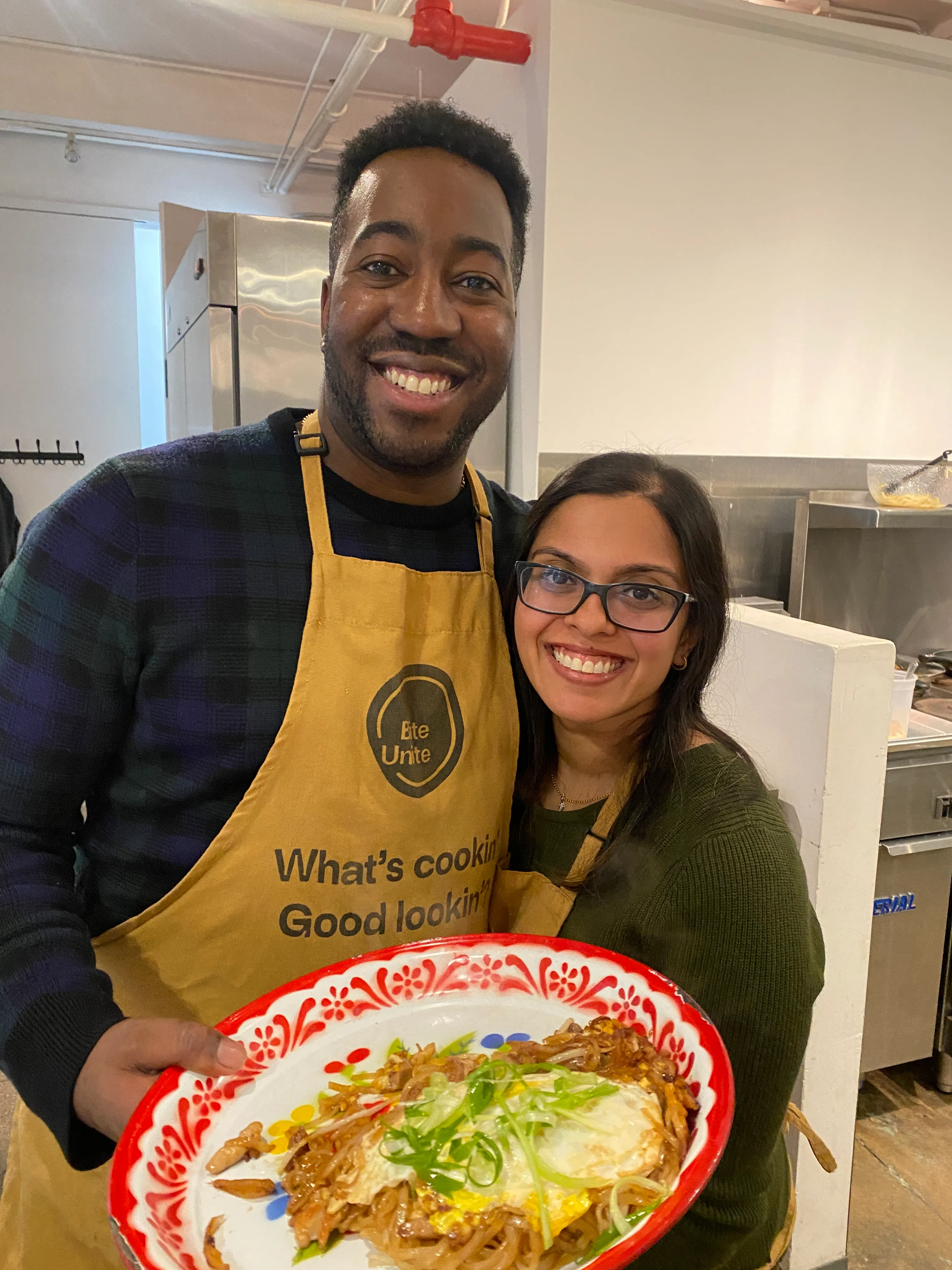
The coast is a logistics question. The evening is not. Whether your team gathers in New York or San Francisco this fall, a hands-on cooking class gives them the one thing the entire trip was built to deliver: real time together, doing something that actually brings a scattered group into the same room — and sends them home having built something, side by side, that no video call ever could.




























.webp)