Commercial Kitchen Rental Cost for Classes, Events & Dates
Plan on $85 to $195 per person for an in-person private cooking class or team event, or $55 to $75 per person for a virtual format according to event industry pricing data. A major factor influencing cost is whether your vendor prices per person or charges a flat hourly rate with a minimum. Here’s what shapes the number and what to do next:
- Get specific fast: request a quote with your headcount, date, and cuisine preference so pricing reflects your actual group, not a generic estimate.
- Watch the format: per-person pricing (commonly cited between $55 and $195 depending on format) rewards larger groups; flat hourly rentals reward smaller ones.
- BiteUnite and similar providers typically bundle chef, ingredients, and equipment into one quote, which simplifies comparison shopping.
Key Takeaways
Commercial kitchen rental cost depends primarily on whether pricing is per-person or flat-rate-plus-minimum, and venue rental typically represents the largest single line item in any event budget.
| Point | Details |
|---|---|
| Know your pricing model | Per-person pricing rewards larger groups; flat hourly rates with minimums favor smaller ones. |
| Budget by scenario | A 20-person team event runs close to $4,600 total, with venue rental as the largest share. |
| Watch for hidden add-ons | Specialty appliances, extra staffing, and insurance are commonly billed outside the base rate. |
| Book early for specialty needs | Lock ingredients and equipment rentals three or more weeks out to avoid rush fees. |
| BiteUnite bundles the essentials | Chef, ingredients, and standard equipment come included in quoted pricing across its markets. |
Table of Contents
- What Drives Commercial Kitchen Rental Cost?
- What Does It Cost for a Date Night, Team Event, or Private Party?
- What’s Included in Kitchen Rental vs. What Costs Extra?
- When Should You Book a Commercial Kitchen Rental?
- What Should You Ask Before Booking a Kitchen Rental?
- Ready to Book Your Cooking Experience?
- Sources
What Drives Commercial Kitchen Rental Cost?
Every quote you get is really a stack of line items pretending to be one number. Understanding each piece is how you spot a fair price versus a padded one.
The base rate is either an hourly charge or a flat session fee, almost always tied to a minimum booking window. Most private kitchen venues won’t book you for less than two to three hours, so a $150 hourly rate with a three-hour minimum means $450 before anyone touches a stove. Location and kitchen size push this rate up or down. A shared commercial kitchen rental cost in a mid-size city runs lower than a private studio kitchen in a major metro, and dedicated event space typically charges based on square footage, included amenities, and whether staff comes with the room.
Staffing and ingredients make up the second layer. An in-house chef is often bundled into the base rate at experiential venues; an external or specialty chef (say, a sushi instructor or a pastry expert) usually costs extra. Ingredient spend scales with cuisine complexity. A pasta-making class runs cheaper per person than a multi-course tasting menu with imported proteins.
Then come the fees that catch planners off guard:
- Equipment rental (specialty ovens, sous-vide setups, extra workstations) if the base kitchen doesn’t include them
- Cleaning and admin fees, sometimes rolled into the base rate, sometimes itemized separately
- Utility or “heavy power” surcharges for commercial-grade appliances
- Damage deposits, refundable if the kitchen is left intact
- Overtime charges, typically billed in 15 or 30-minute increments past your booked window
Complete venue budgets should also account for insurance and liability coverage, since most commercial kitchens require proof of coverage or offer it as an add-on. Cancellation policies vary widely, so ask for the refund window in writing before you pay a deposit.
| Cost component | Typically bundled | Typically billed separately |
|---|---|---|
| Chef or instructor | Yes, at experiential venues | Specialty chefs, extra assistants |
| Ingredients | Yes, per person | Premium proteins, imported items |
| Basic equipment | Yes | Specialty appliances, extra stations |
| Cleaning | Often | Deep cleaning for large events |
| Insurance | Rarely | Usually an add-on or requirement |
Pro Tip: Ask for a single itemized quote rather than a lump sum. If a vendor hesitates to break down the number, that’s your first clue the price has room to negotiate.
What Does It Cost for a Date Night, Team Event, or Private Party?
Numbers mean more when you see them applied. Here are three realistic budgets, built from typical per-person and venue-rental pricing patterns.
Small date-night or couple’s class (2 people). Expect $85 to $195 per person for an in-person studio session, landing the total between $170 and $390 for two. Most venues have no meaningful minimum here since it’s priced per person, not per hour.
Mid-size team-building event (15 to 20 people). A sample 20-person team cooking event runs close to $4,600 total, with venue rental at roughly $2,500, ingredients around $600, chef instructors near $800, and beverages plus incidentals covering the rest. That puts venue rental alone at about $125 per person, which is a useful benchmark: if your quote has venue costs eating less than a third of the total, dig into what’s missing.

Large private event (30+ people). At this scale, per-person pricing usually drops, but most vendors enforce a minimum headcount, commonly 8 to 12 people, and will bill to that minimum even if fewer show up. For 30 guests at $99 to $160 per person (traveling chef format), total costs land between $2,970 and $4,800.
| Scenario | Headcount | Estimated total | Per-person cost |
|---|---|---|---|
| Date night, in-studio | 2 | $170 to $390 | $85 to $195 |
| Team-building event | 20 | ~$4,600 | ~$230 |
| Large private event | 30 | $2,970 to $4,800 | $99 to $160 |
The lesson across all three: fixed venue costs favor bigger groups, while per-person pricing stays predictable regardless of size. Know which model you’re being quoted before you compare two vendors side by side.
What’s Included in Kitchen Rental vs. What Costs Extra?
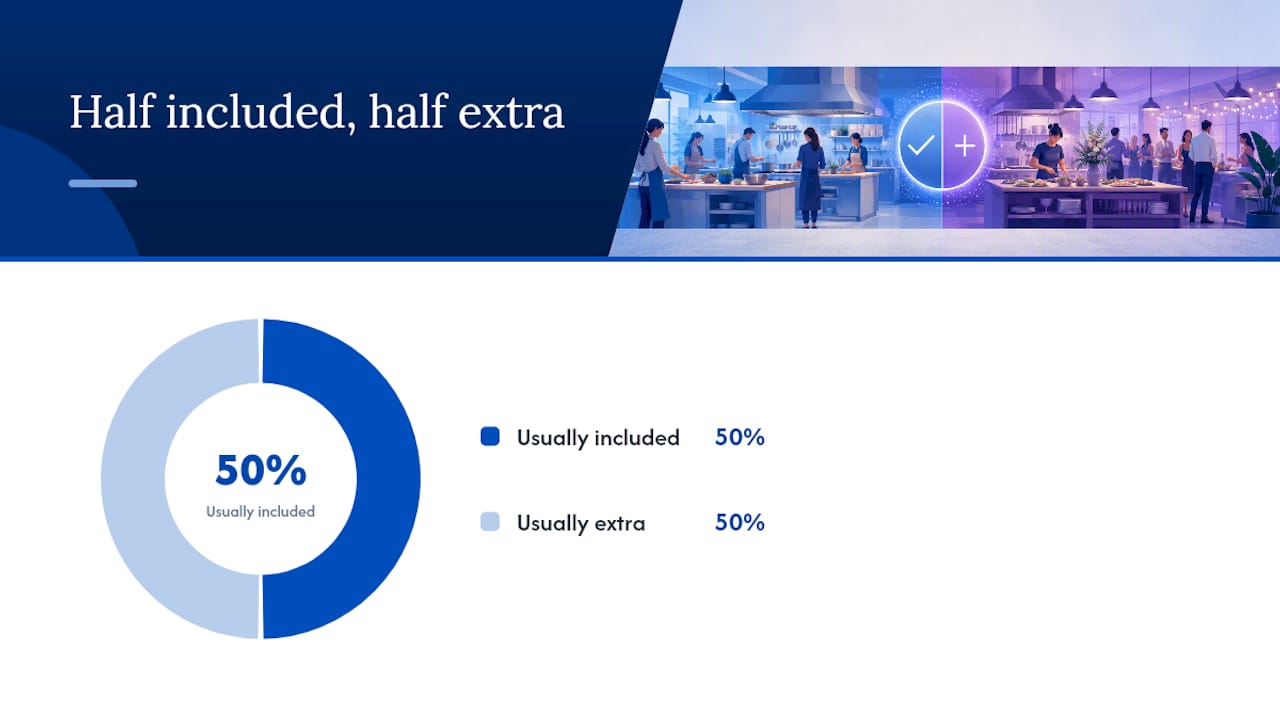
Base rental almost always covers standard cookware, stovetops, basic cleaning, and aprons. What it usually doesn’t cover is where planners get surprised.
- Usually included: pots, pans, basic utensils, stovetops and ovens, aprons, basic post-event cleaning
- Usually extra: specialty appliances (sous-vide, tandoor, pizza ovens), refrigeration beyond standard capacity, extra chef assistants, AV or event staffing, linens, alcohol service
The phrase “fully equipped kitchen” deserves scrutiny. Advertised full equipment often means standard cookware and basic benchtop appliances, not the specialty gear a themed menu might require.
Before signing anything, ask directly: “What’s in the base price, and what would push this quote higher?” A vendor who answers clearly is one you can trust to invoice accurately later.
When Should You Book a Commercial Kitchen Rental?
Timing affects both availability and price. Popular evening slots for date nights and team events fill up faster, so earlier booking protects your preferred date and gives you room to negotiate.
- 3+ weeks out: Confirm headcount, collect dietary restrictions, and lock in specialty ingredient orders. Securing equipment rentals and specialty ingredients at least three weeks ahead avoids rush fees and keeps your menu feasible.
- 1 to 2 weeks out: Finalize the menu, confirm parking and arrival logistics, and send participants any prep instructions.
- Day of: Arrive early for setup, review decor limits with the venue, and do a quick equipment walkthrough with your chef.
Pro Tip: Collect dietary restrictions at least two weeks out. Scrambling for a last-minute substitute meal is the fastest way to deflate an otherwise great event.
What Should You Ask Before Booking a Kitchen Rental?
A few pointed questions upfront save you from an ugly invoice later. Get these answers in writing before any deposit changes hands:
- What’s the minimum booking time, and what’s the overtime rate per 15 or 30 minutes?
- What’s explicitly included, and what counts as an add-on?
- What’s your cancellation and refund policy, and how many days’ notice does it require?
- Is there a damage deposit, and under what conditions is it withheld?
- Who carries liability insurance, the venue or the renter, and is proof required?
Vague answers to any of these are the clearest red flag you’ll encounter. Same goes for a venue that can’t confirm its staff are trained on the specialty equipment you’re planning to use, or one that’s unclear about whether your booking overlaps with another group’s session. If a vendor won’t put inclusions and fees in writing, treat that as your answer.
A Provider’s Take on Getting the Budget Right
The lesson we’ve learned running hands-on events: collect dietary restrictions and menu preferences early, ideally two weeks out, because scrambling on event day to accommodate a last-minute allergy wrecks the flow for everyone. We also price transparently. Chef, ingredients, and standard equipment come bundled into our quotes, so what you see is close to what you pay, with add-ons flagged upfront rather than buried.
Ready to Book Your Cooking Experience?
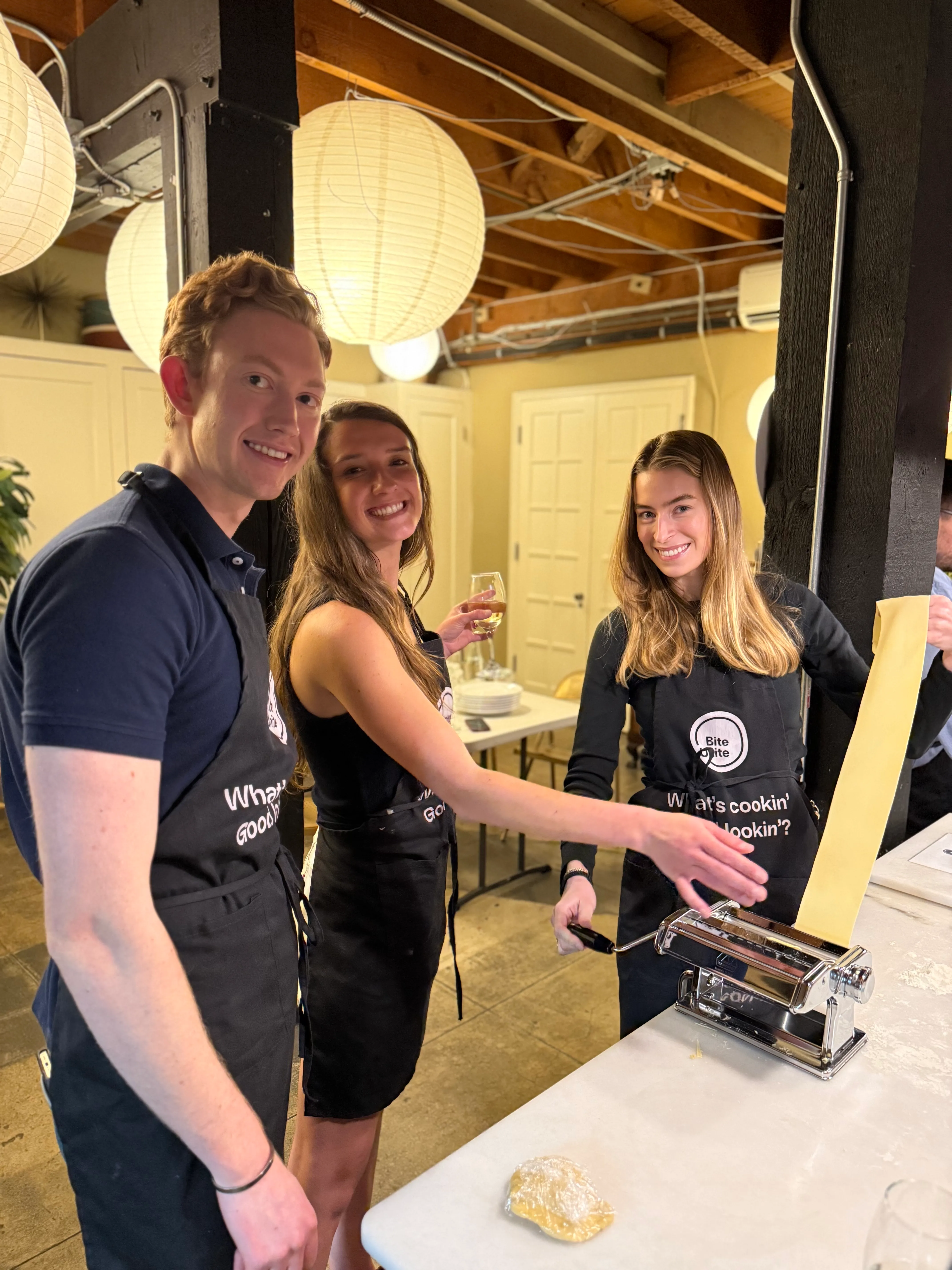
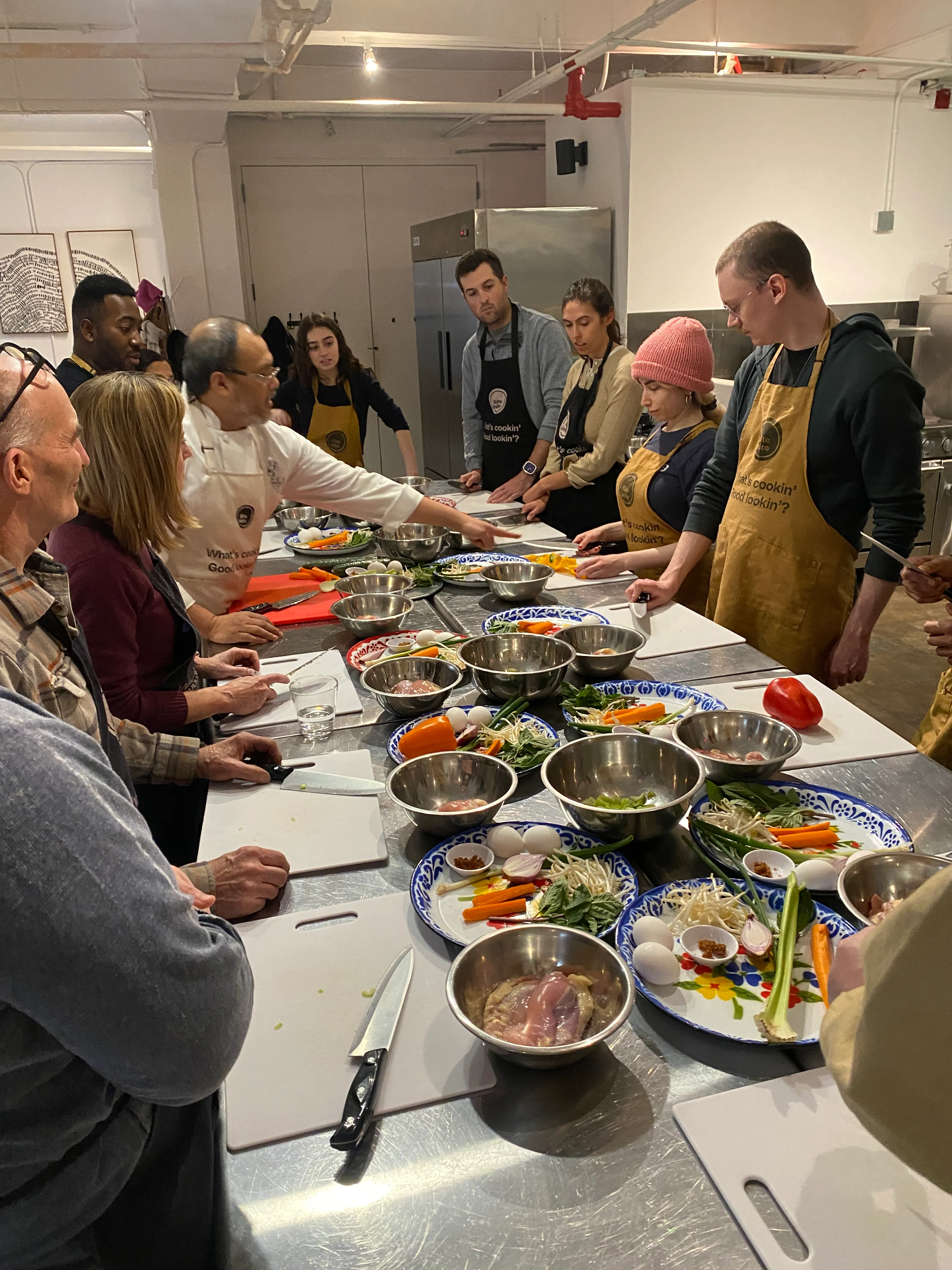
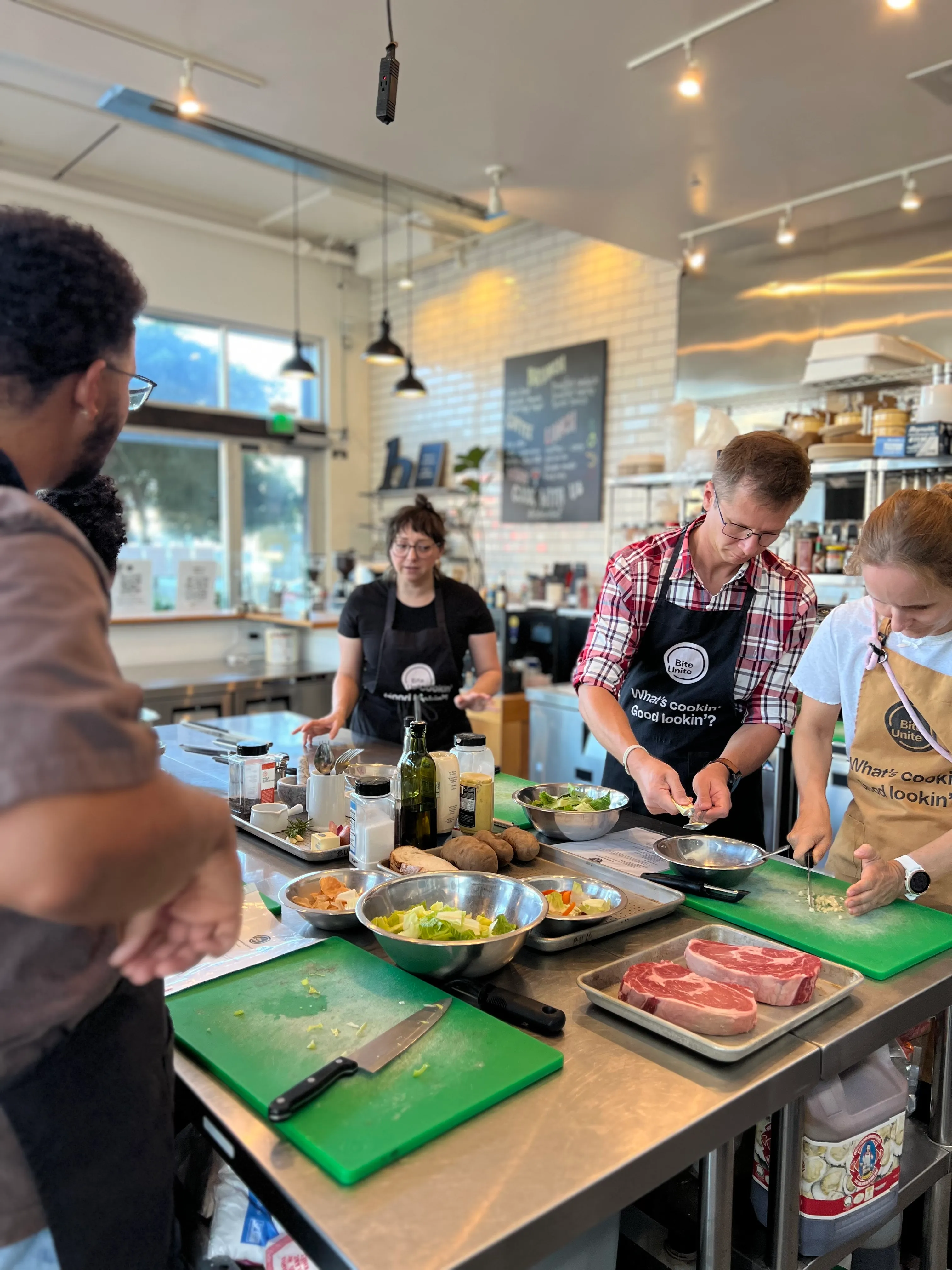
BiteUnite takes the guesswork out of commercial kitchen rental cost by bundling the chef, ingredients, standard equipment, and cleaning into one upfront quote, so you’re comparing real numbers instead of estimating hidden fees. Whether you’re planning a date night, a corporate team-building session, or a private celebration, our hands-on classes run in dedicated kitchen spaces across cities including New York, the San Francisco Bay Area, and Hong Kong.
If you’re planning something in Manhattan specifically, our group cooking classes in Manhattan page shows current availability and per-person pricing for team events and private parties. Also consider a short-term kitchen membership if you’re planning multiple events, which can lower your effective per-session cost compared to booking hourly each time. Check your date and request a quote today to lock in pricing before your preferred slot fills.
Sources
- Corporate Cooking Class Cost Comparison 2026
- How to Organize a 3-Hour Team Cooking Challenge That Fosters Teamwork | Offsiteio Learn | Offsiteio Learn
- Cooking Team Building Singapore: Classes & Packages 2026 - Get Out! Events | Premier Corporate Event Management Singapore
- Cooking Event Planning: What Hosts Should Know — Culinary Eye








































































.webp)