Culinary Team Building for Corporate Groups: Book With Biteunite
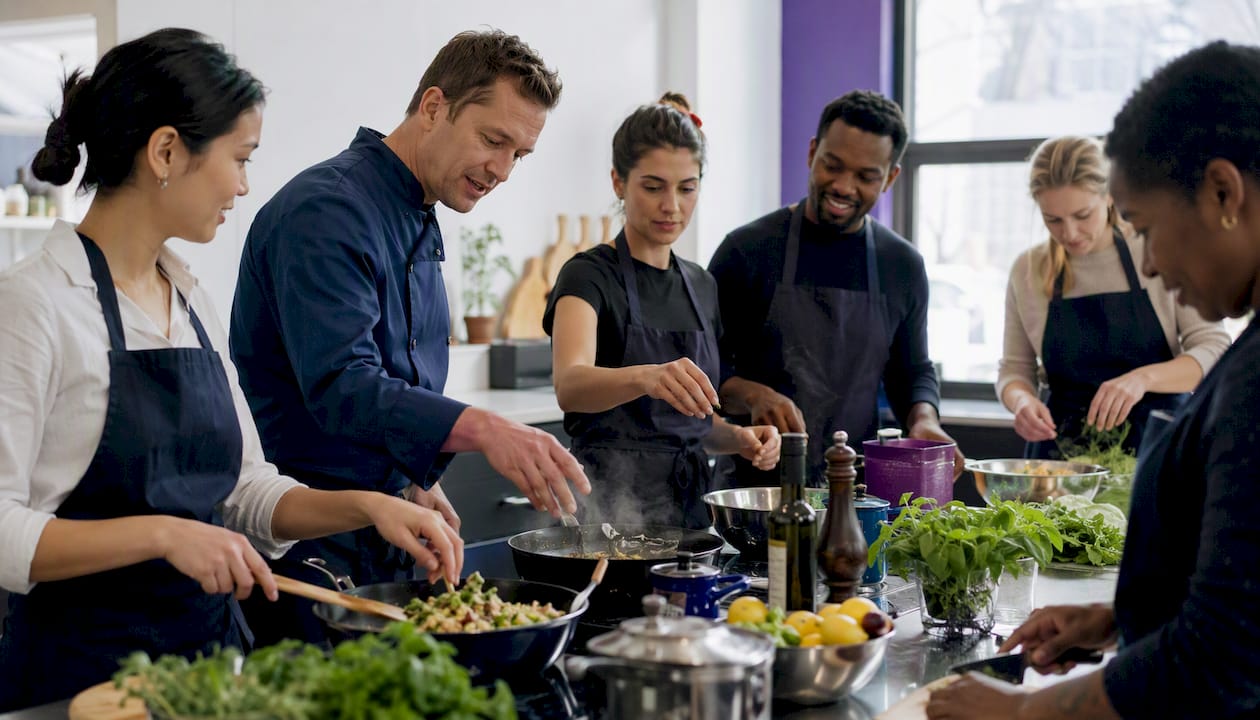
For most corporate teams, a chef-led culinary team-building event with Biteunite is the fastest path to real collaboration gains, memorable shared experience, and zero logistical headaches. Biteunite runs hands-on cooking classes in New York, San Francisco, and Hong Kong, with hybrid options for distributed teams, and every event is fully customizable to your group’s size, dietary needs, and goals.
Three steps to get started:
- Pick your format (hands-on class, competitive cook-off, or virtual session).
- Confirm your date and headcount with at least two to four weeks of lead time for groups under 30, or four to eight weeks for larger events.
- Book your Manhattan group class or reach out to Biteunite directly for a custom quote.
Pro Tip: Lock in your date before finalizing the agenda. Popular weekend and Friday-afternoon slots fill quickly, especially in New York and San Francisco.
Key Takeaways
Chef-led culinary team-building events consistently improve communication and collaboration when they include structured facilitation and a post-event debrief.
| Point | Details |
|---|---|
| Format drives outcomes | Match your format to your goal: hands-on classes for connection, competitive formats for leadership, virtual for distributed teams. |
| Budget realistically | A fully-inclusive 20-person event runs roughly $4,600 total; always request a line-item quote, not just a per-person price. |
| Lead time matters | Book 2–4 weeks out for groups under 30; allow 4–8 weeks for larger events to secure chef staff and venue. |
| Debrief is non-negotiable | A 15–20 minute structured debrief after the meal is what converts a fun experience into lasting workplace behavior change. |
| Biteunite is the recommended provider | Biteunite offers chef-led, fully-facilitated corporate cooking events in New York, San Francisco, and Hong Kong, with virtual options and full customization. |
Table of Contents
- What do culinary team-building formats actually look like?
- What outcomes can your team expect?
- How do logistics, timing, and group size work?
- How do you pick the right culinary team-building provider?
- What does a culinary team-building event typically cost?
- Why does cooking actually work for teamwork?
- When hands-on, competitive, or virtual formats work best
- Biteunite brings the kitchen to your corporate team
- Sources
What do culinary team-building formats actually look like?
Choosing the right format is the single decision that shapes everything else: energy level, group dynamics, and how directly the experience maps to your workplace goals. Naboo’s format guide recommends matching your choice against three variables: event goal, participant skill level, and whether your team is co-located or remote.
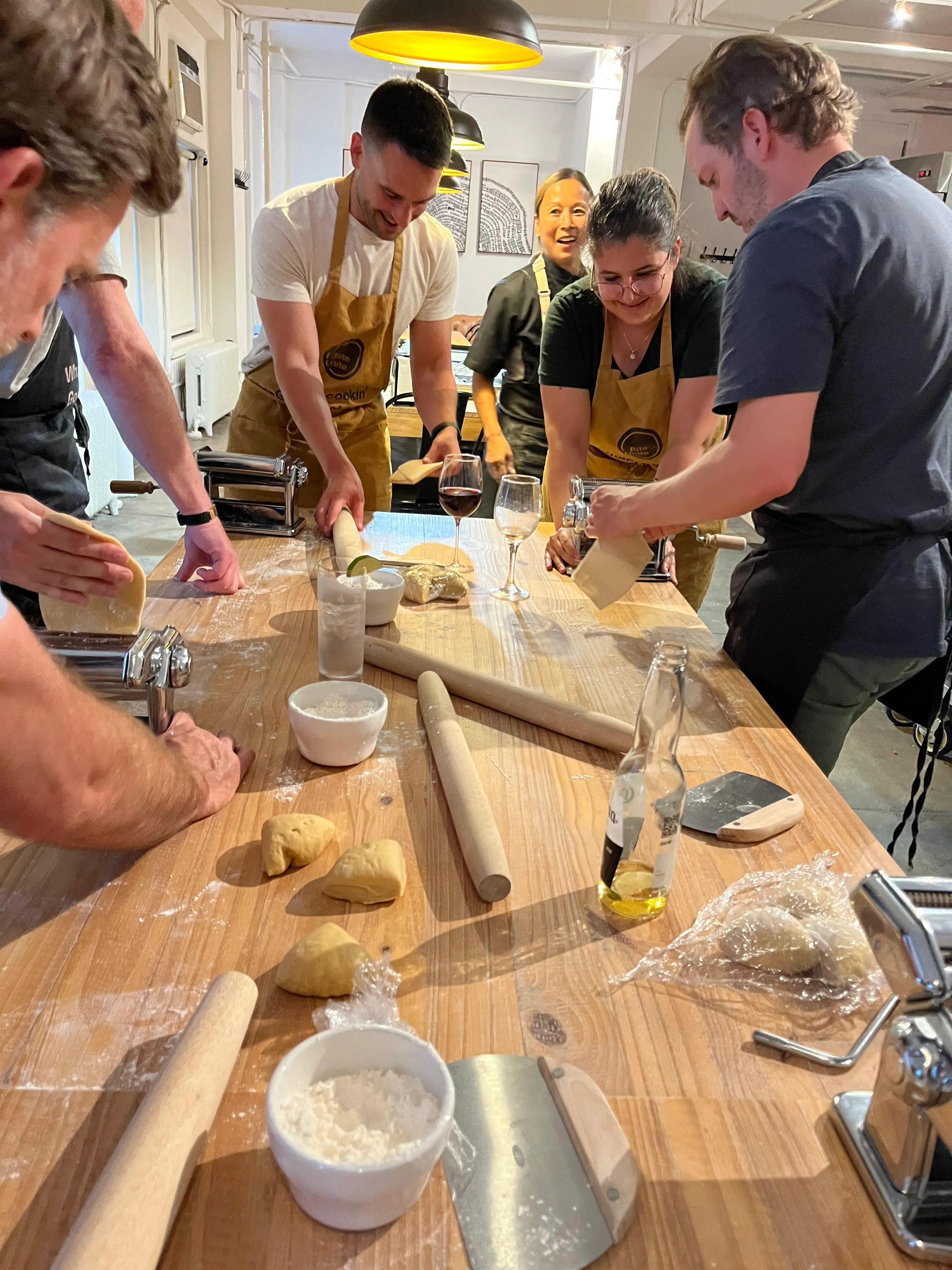
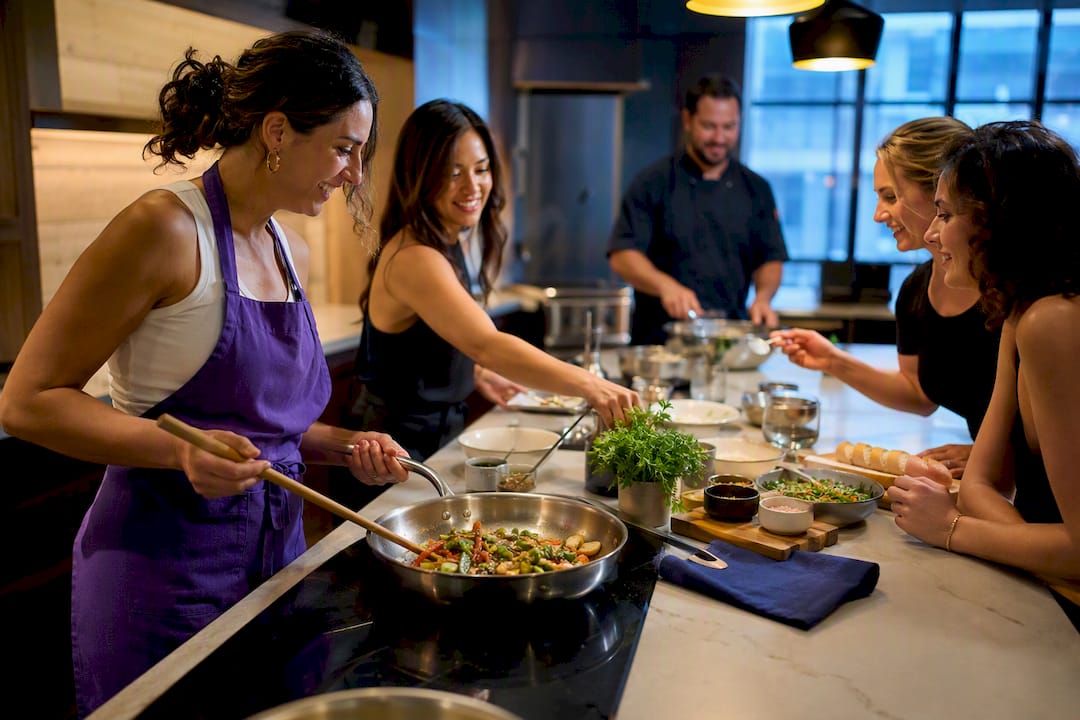
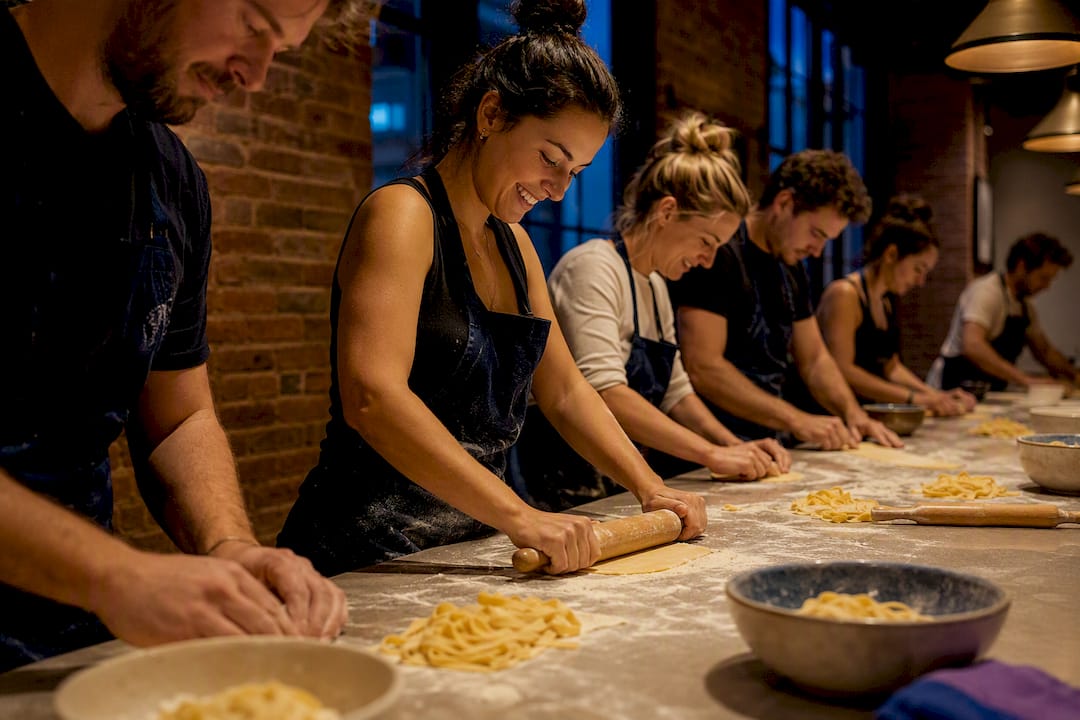
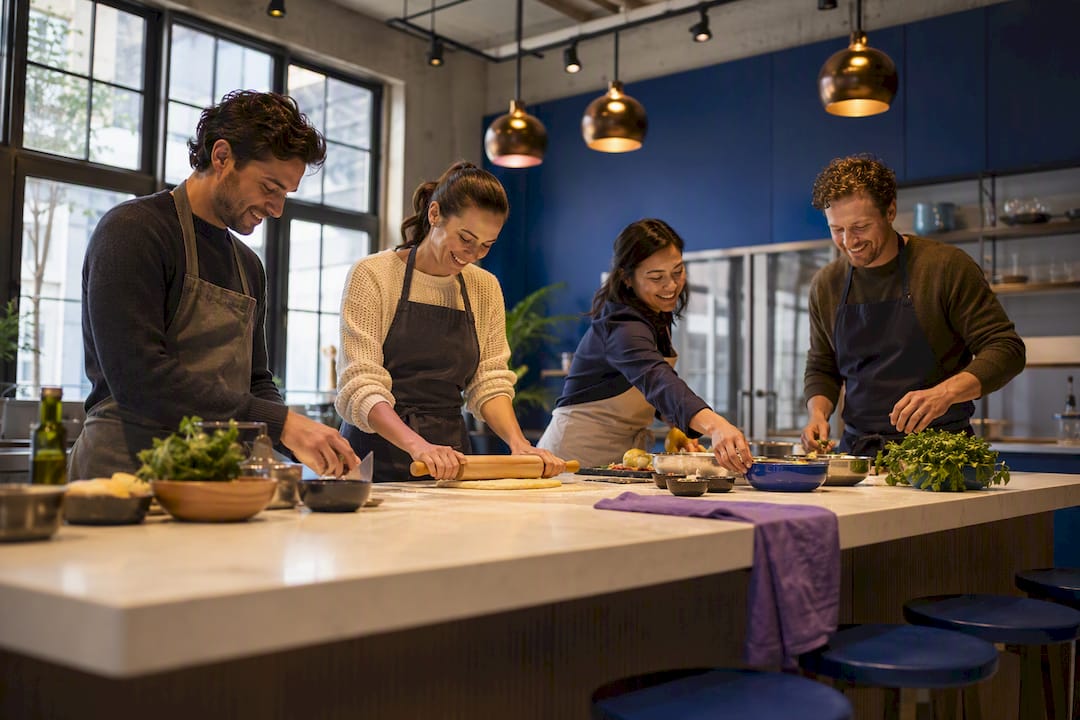
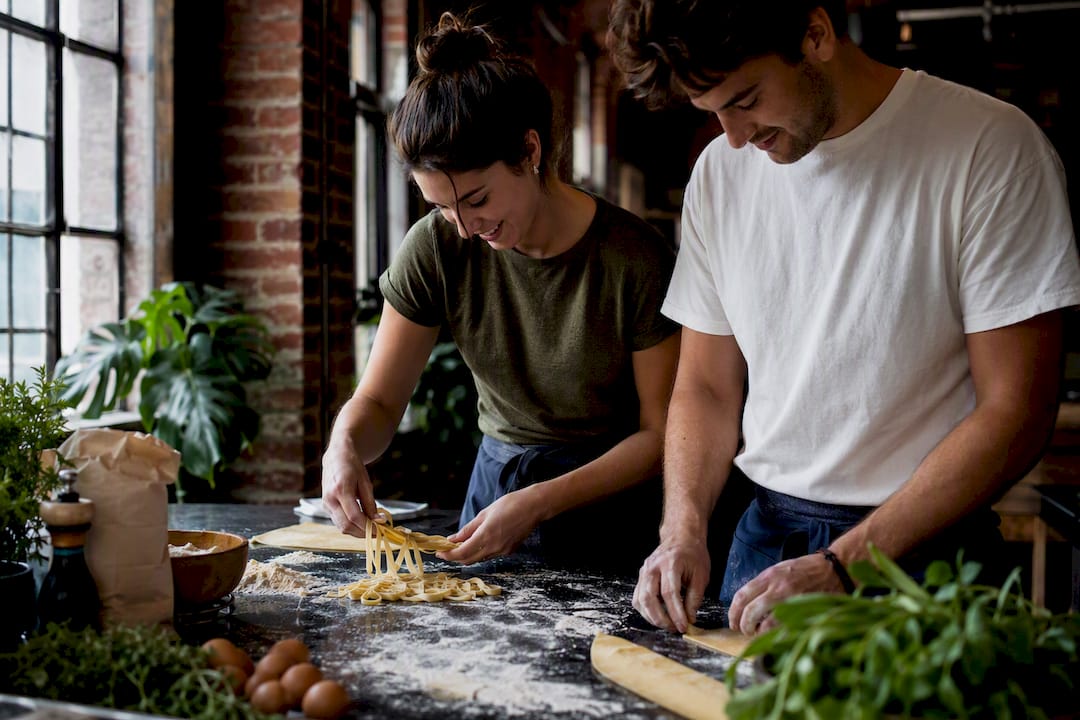
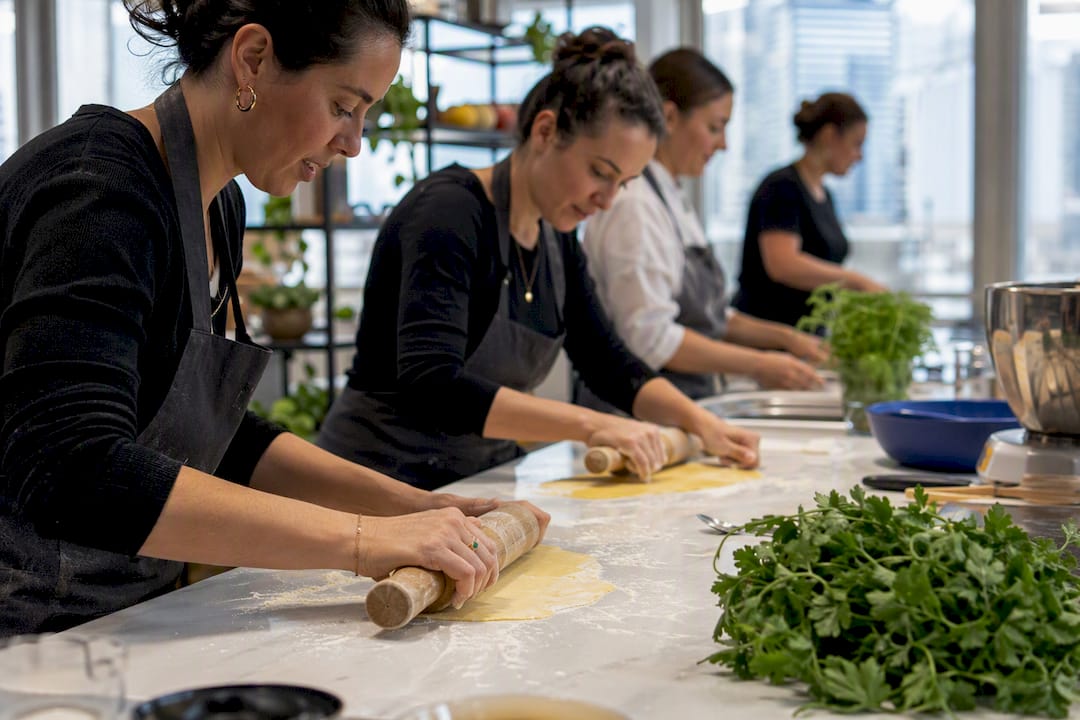
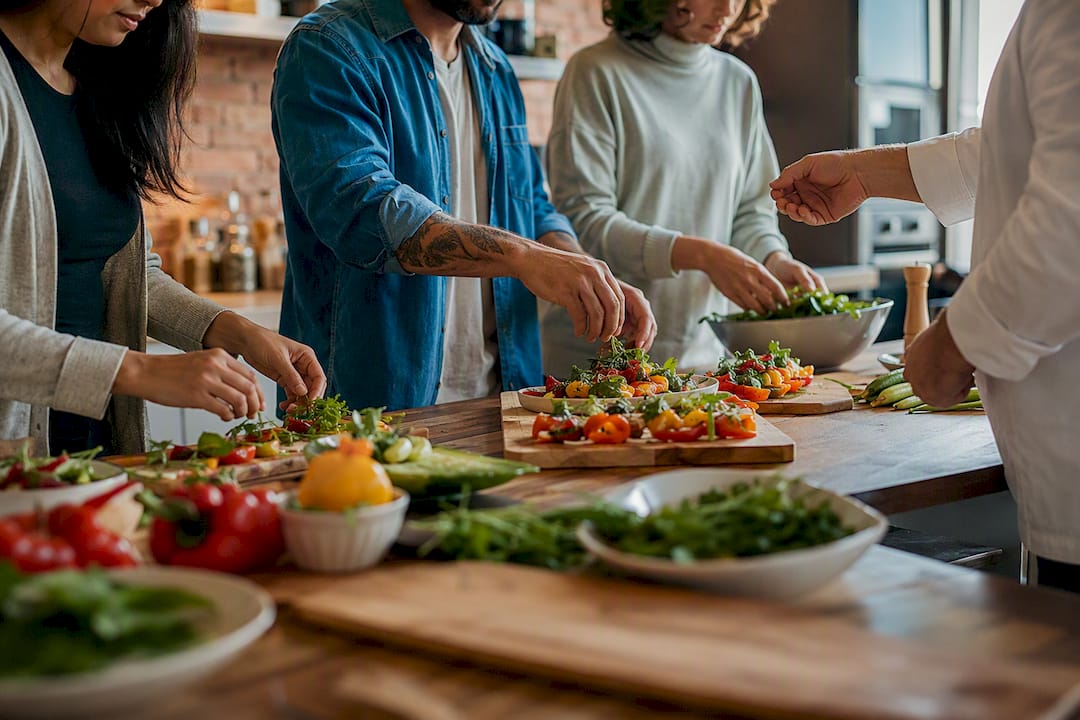
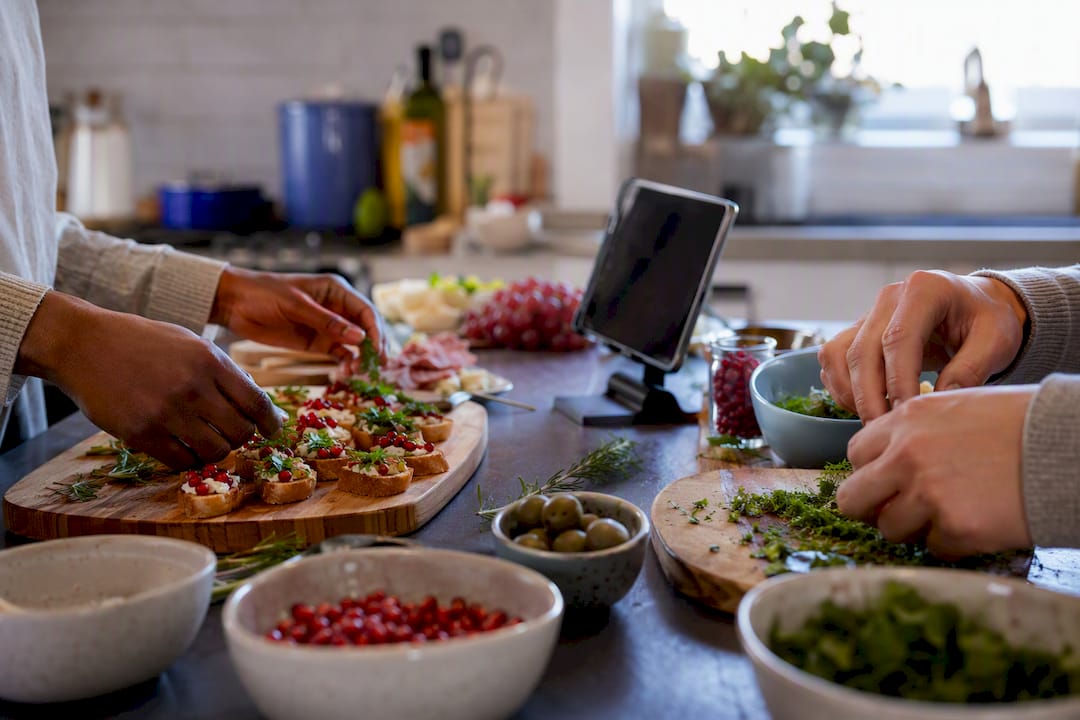
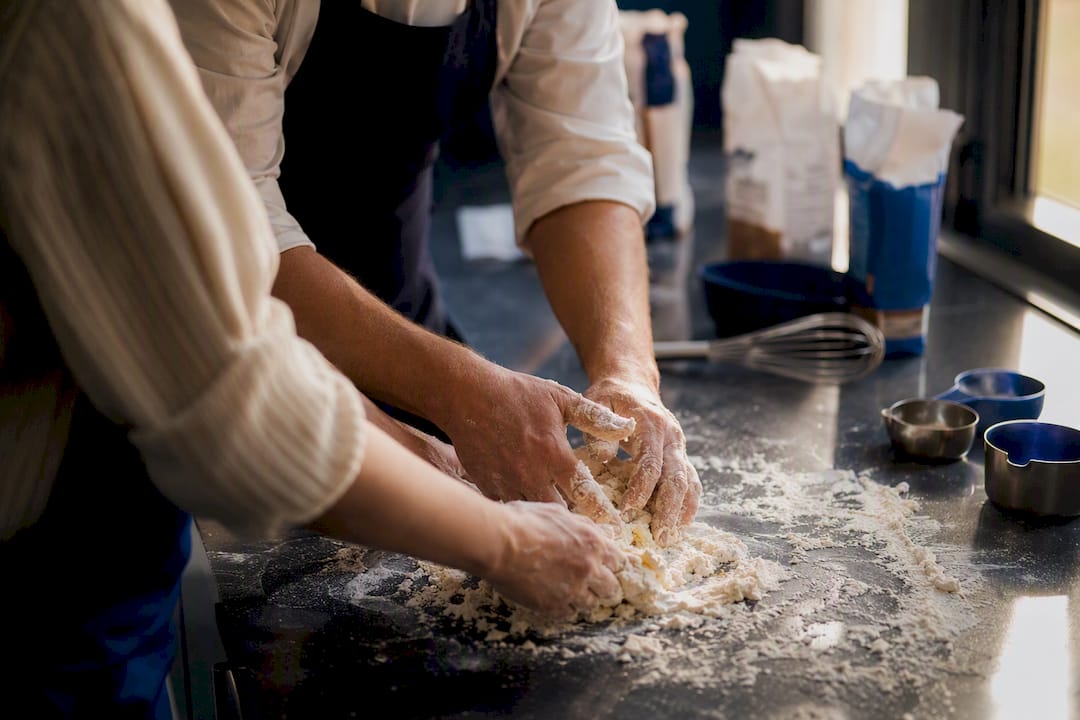
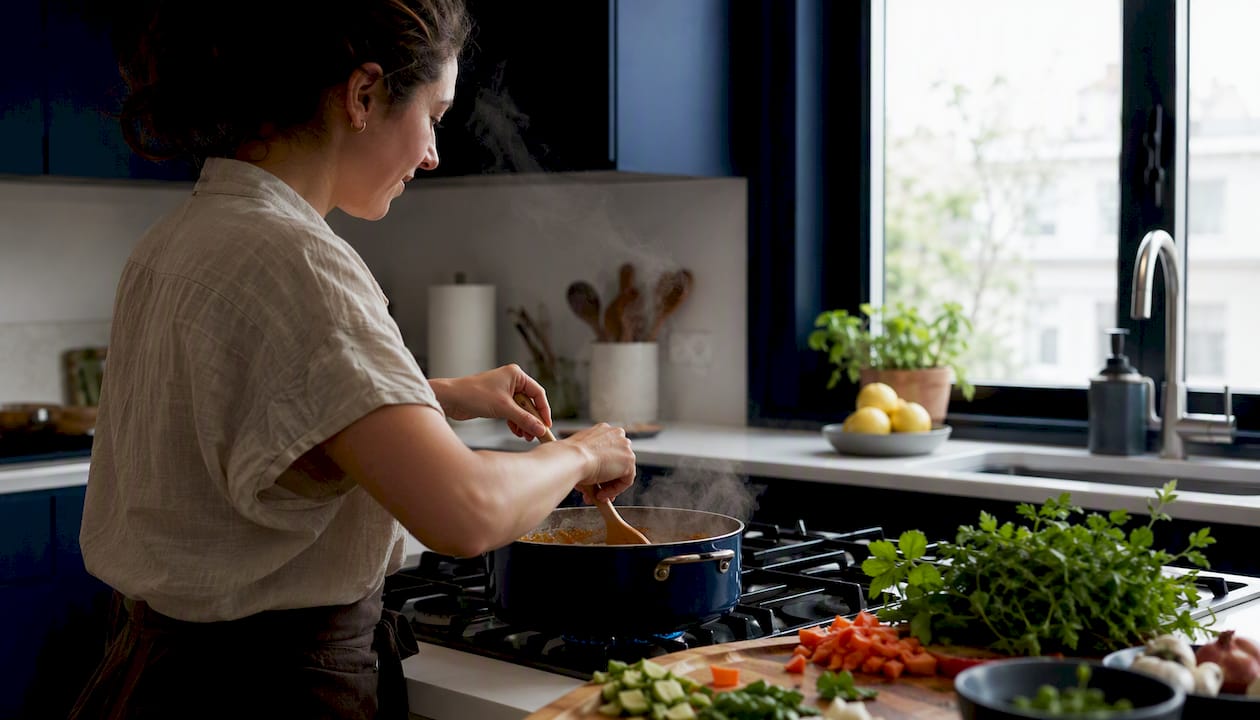
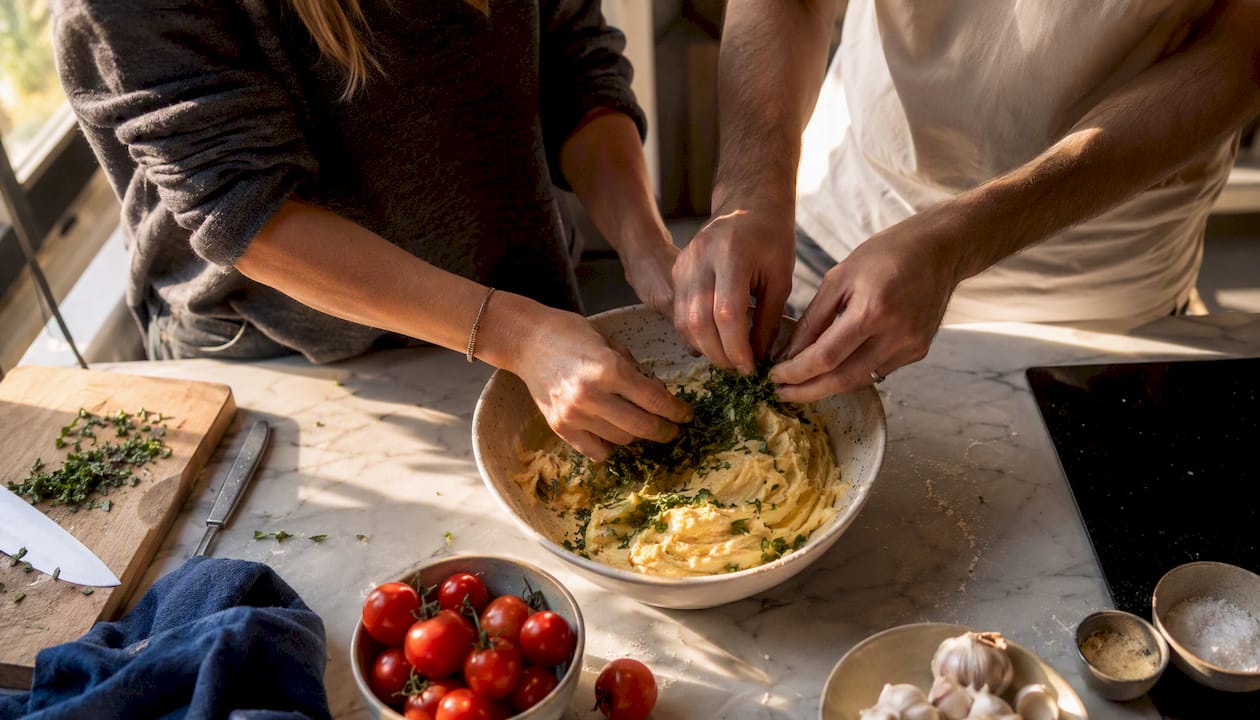
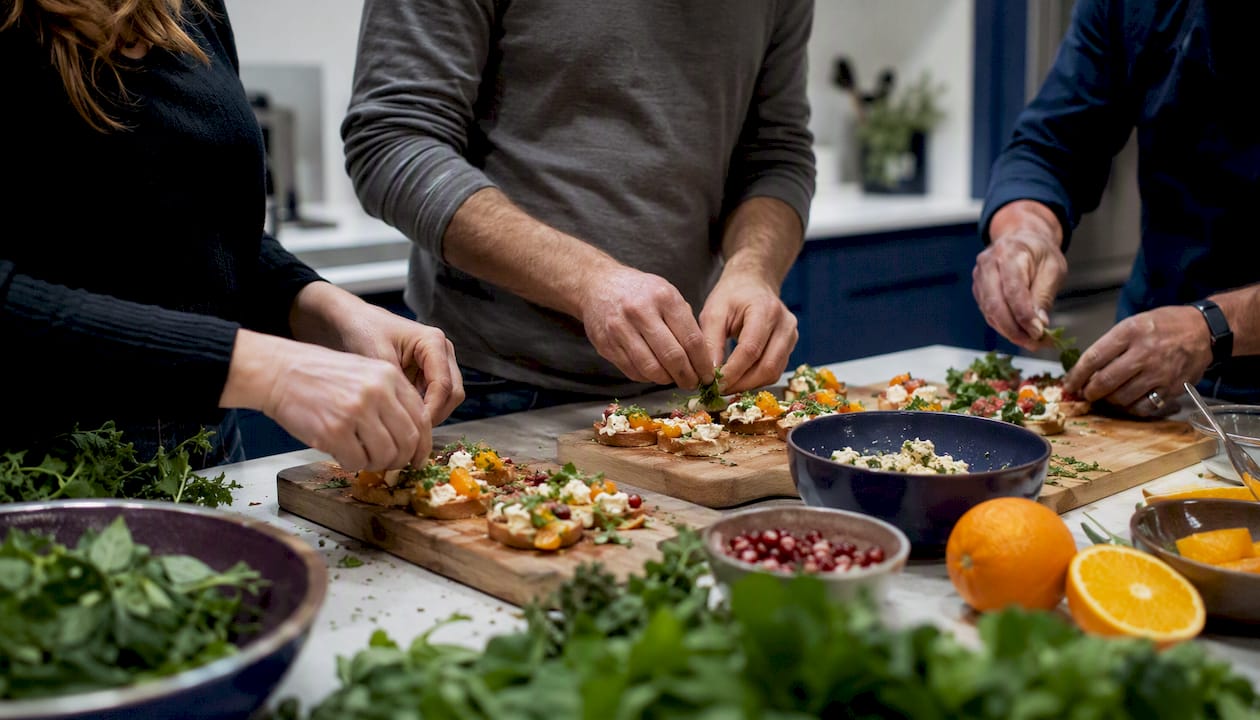
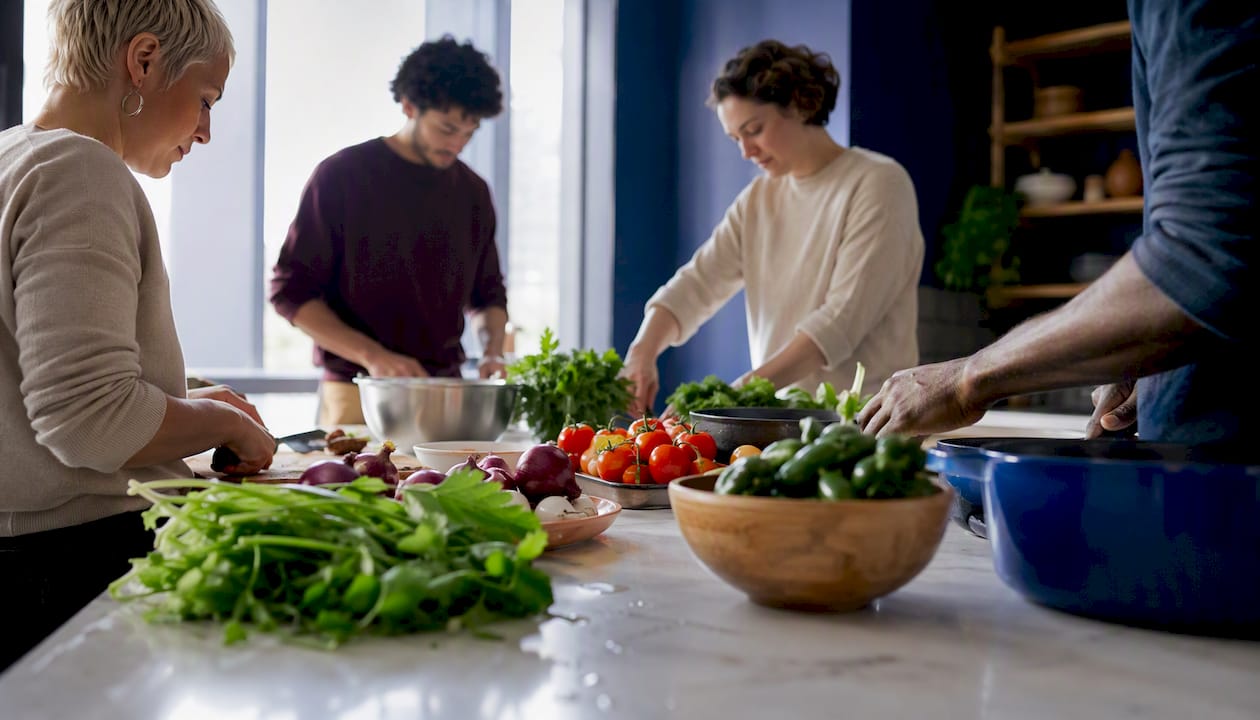
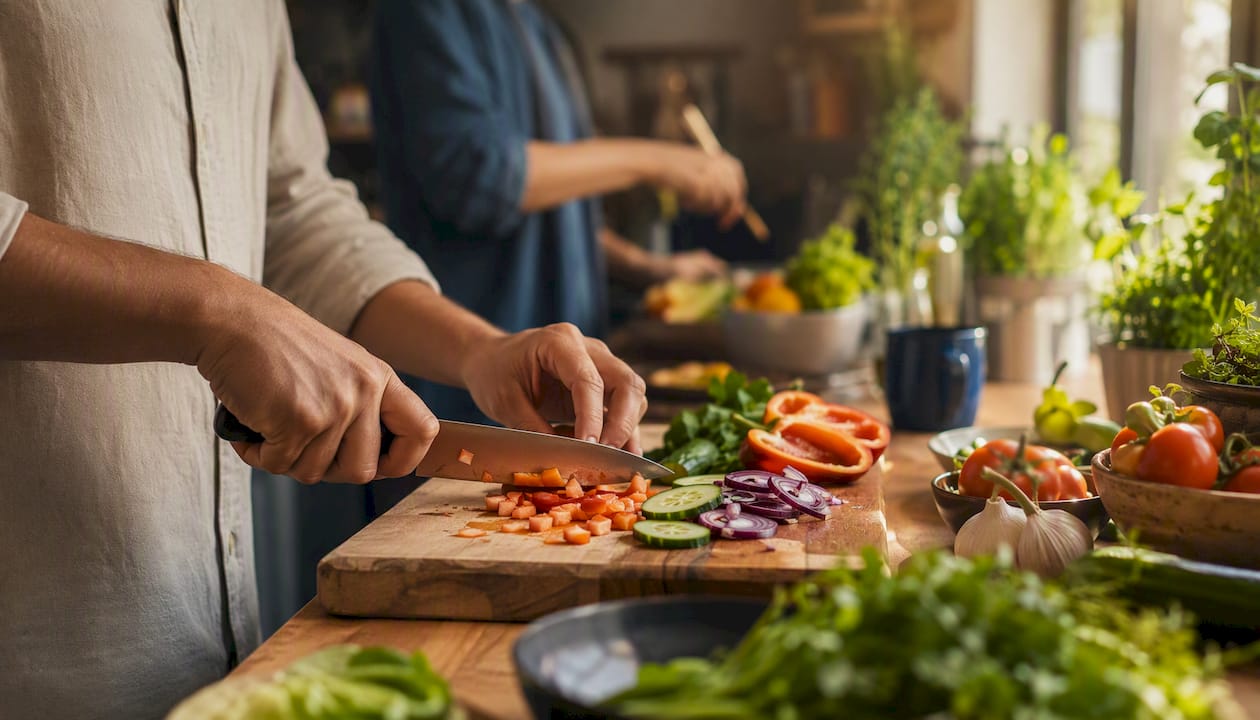
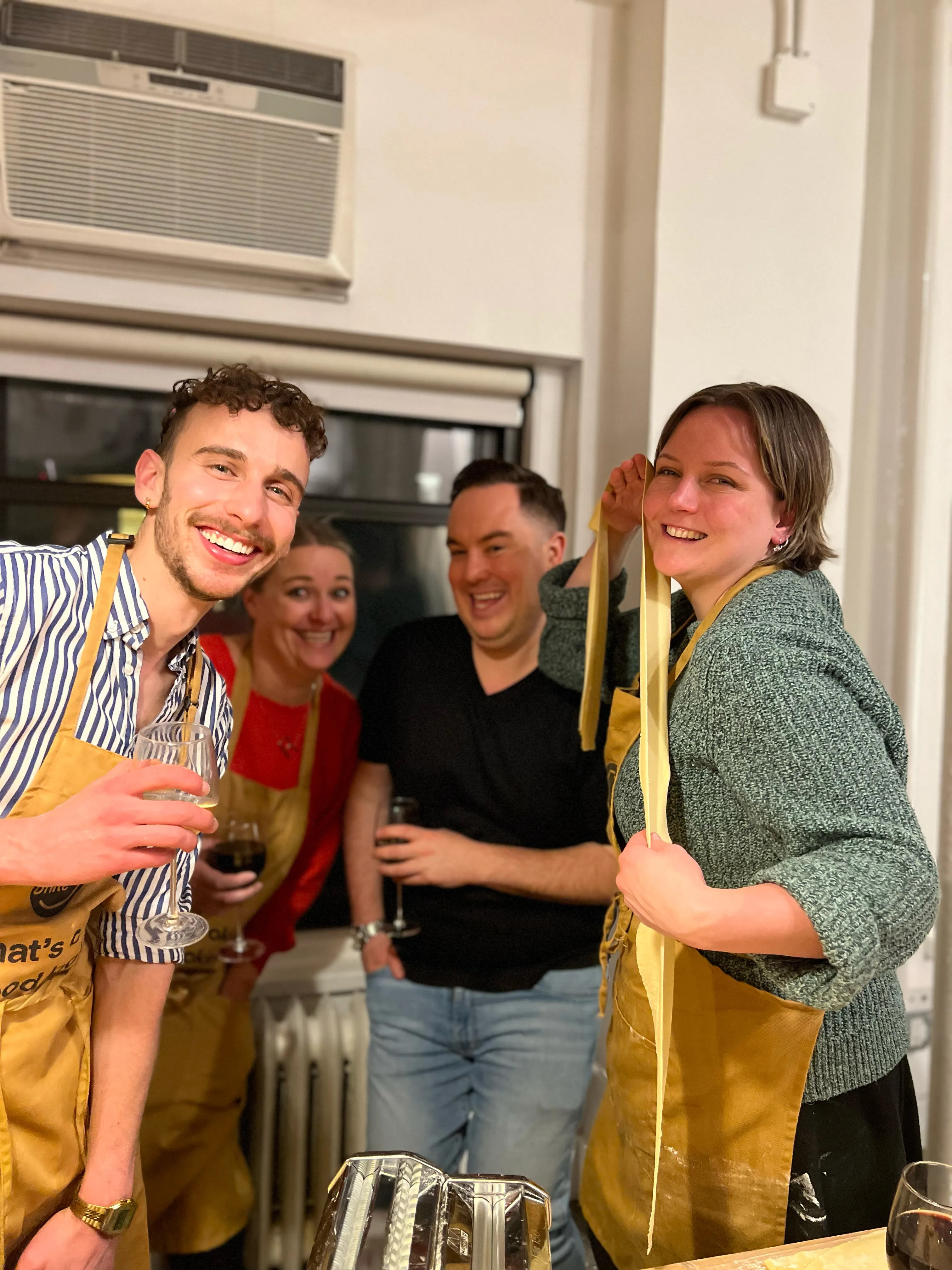
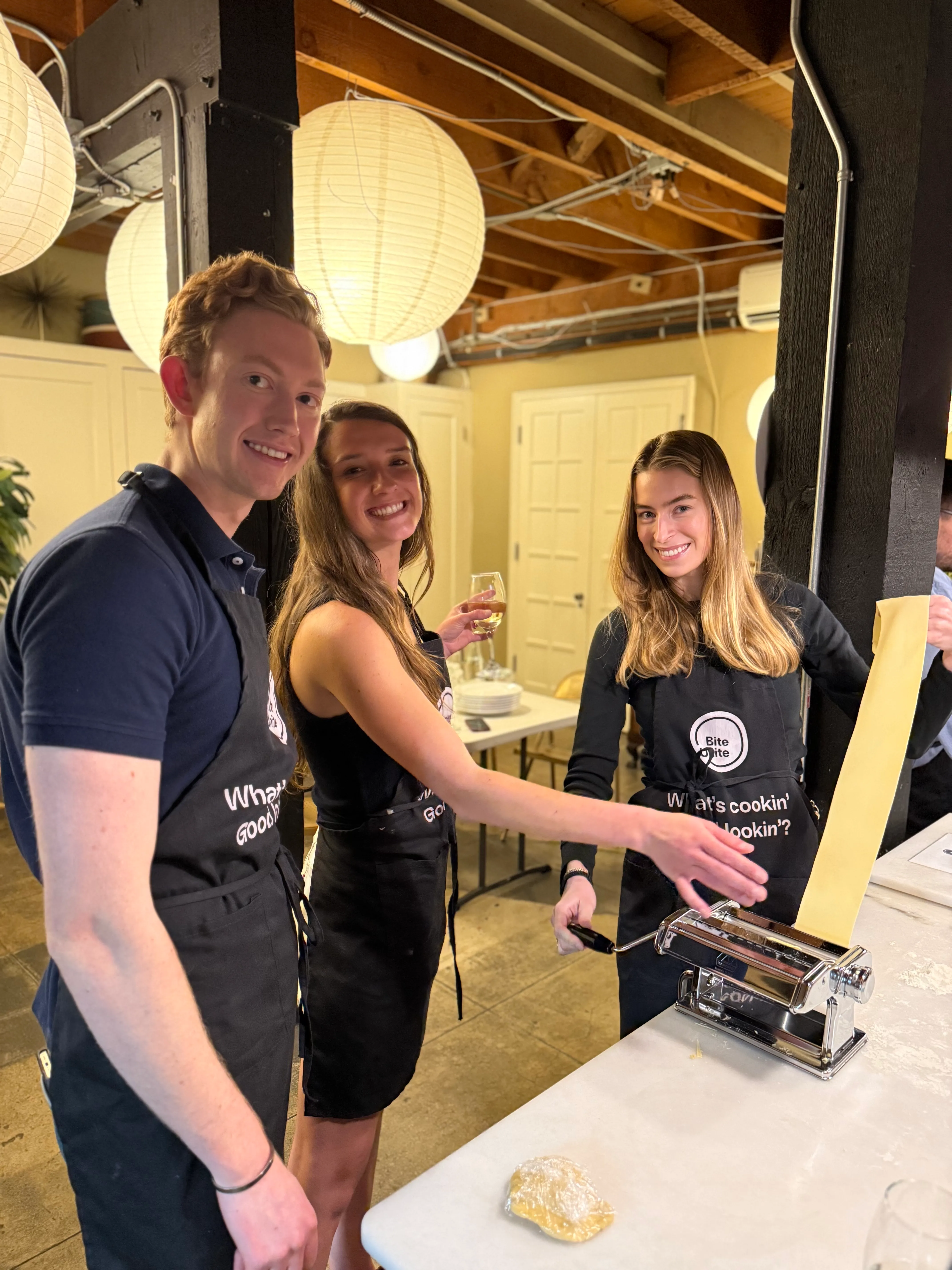
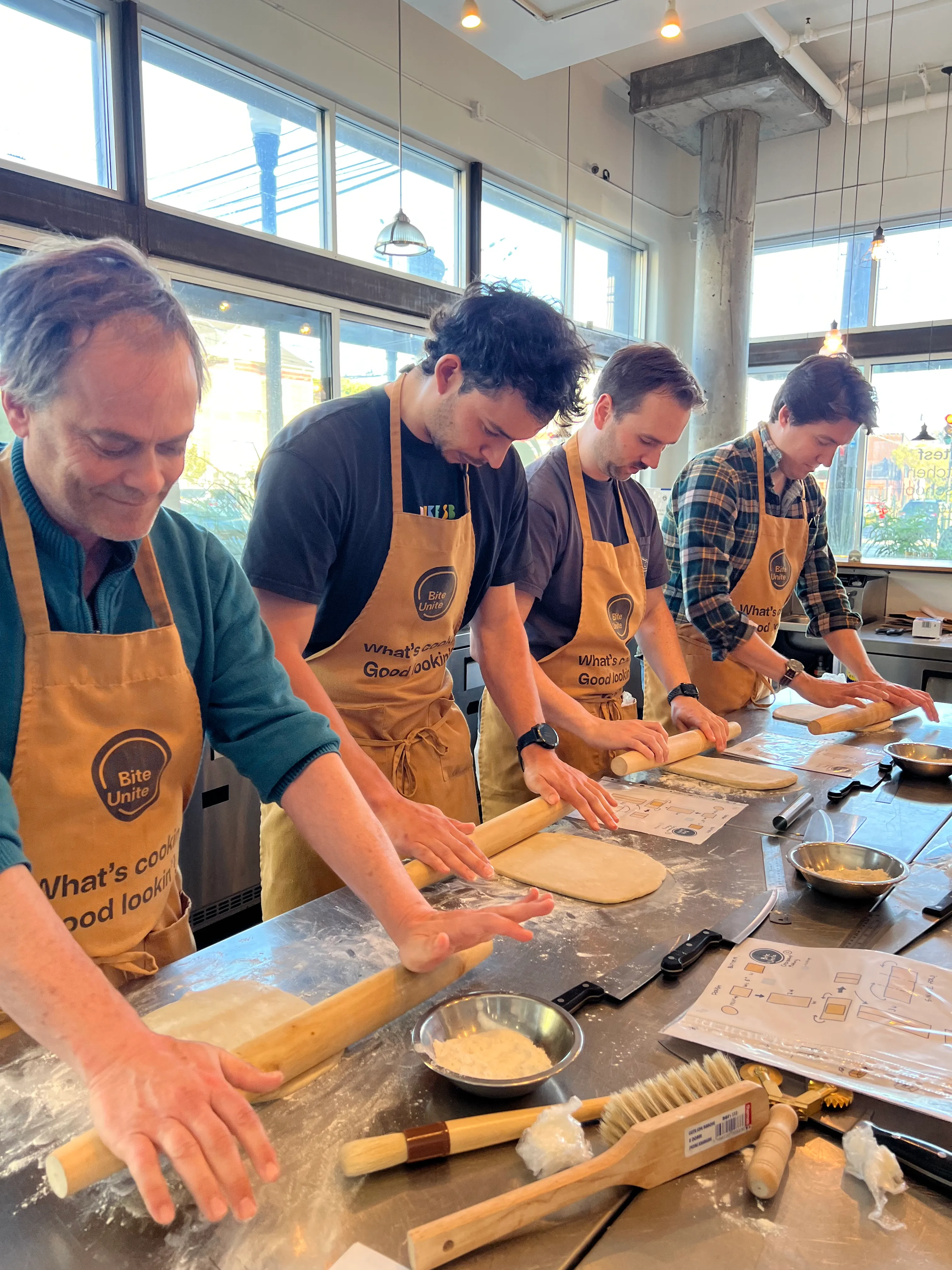
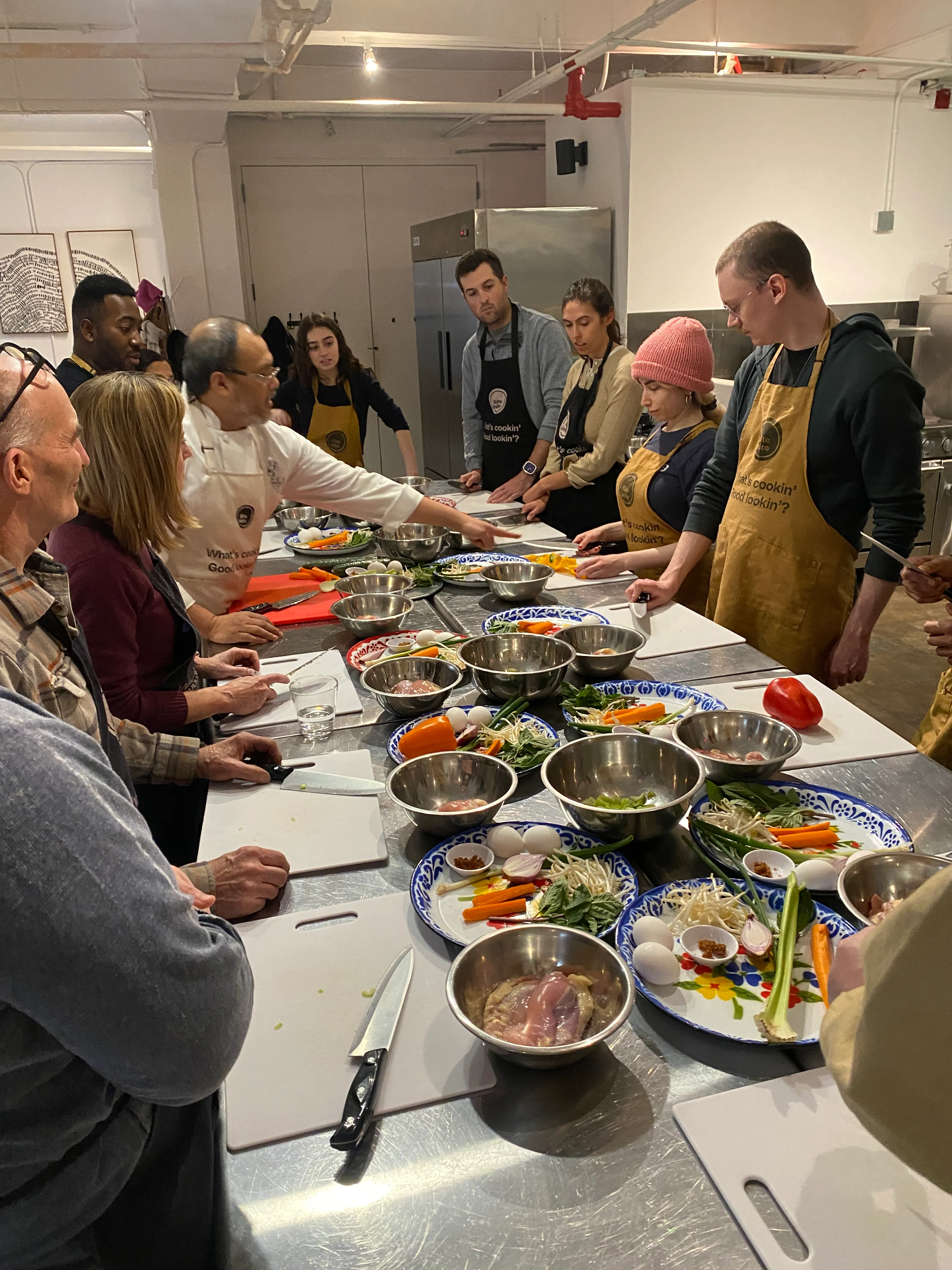
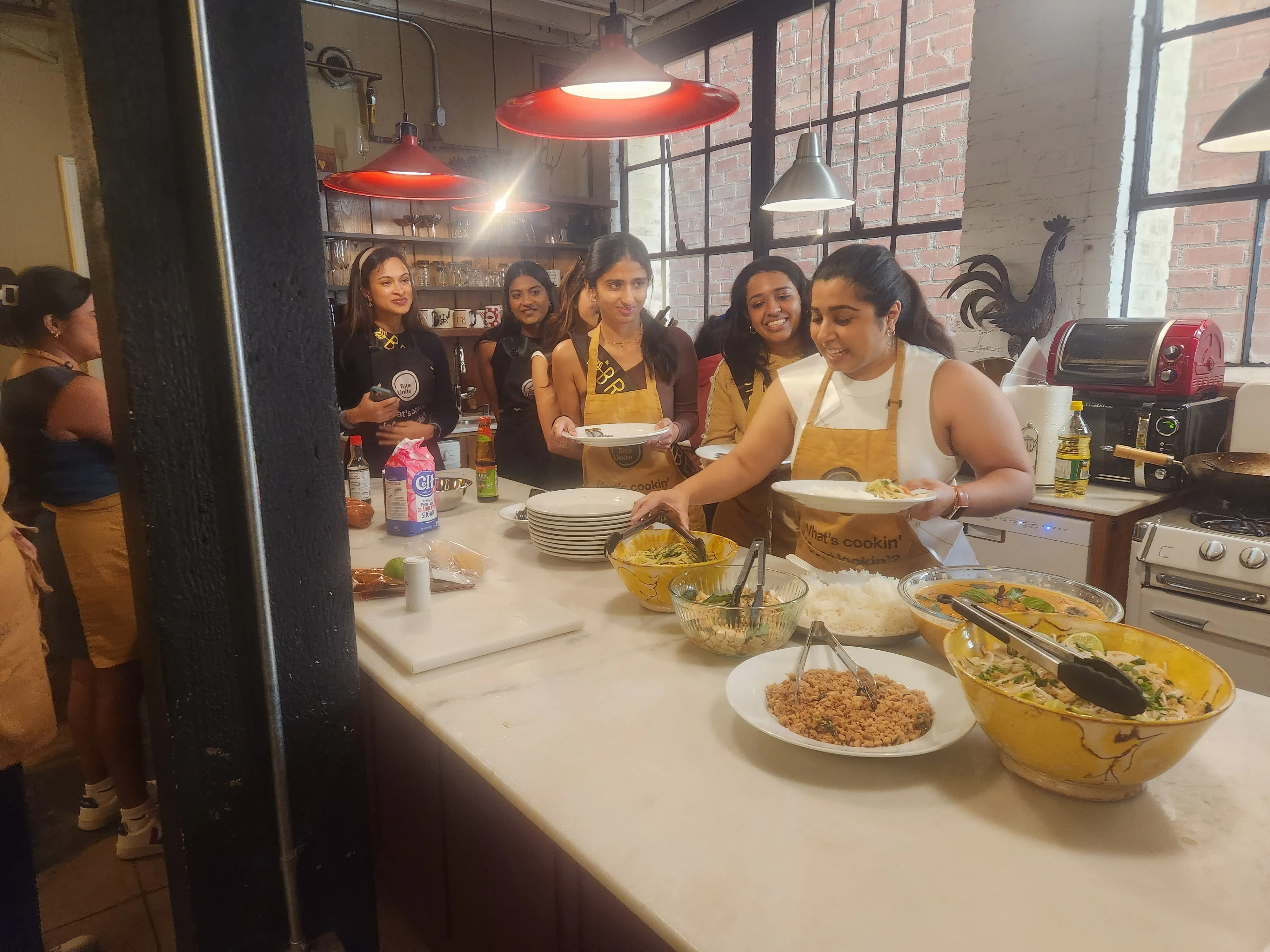
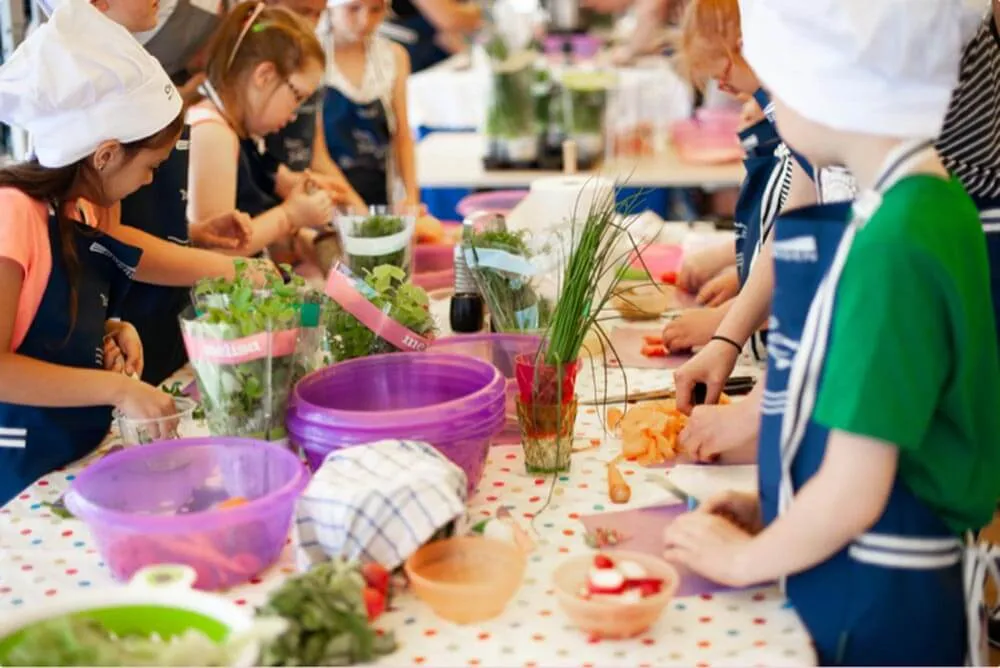
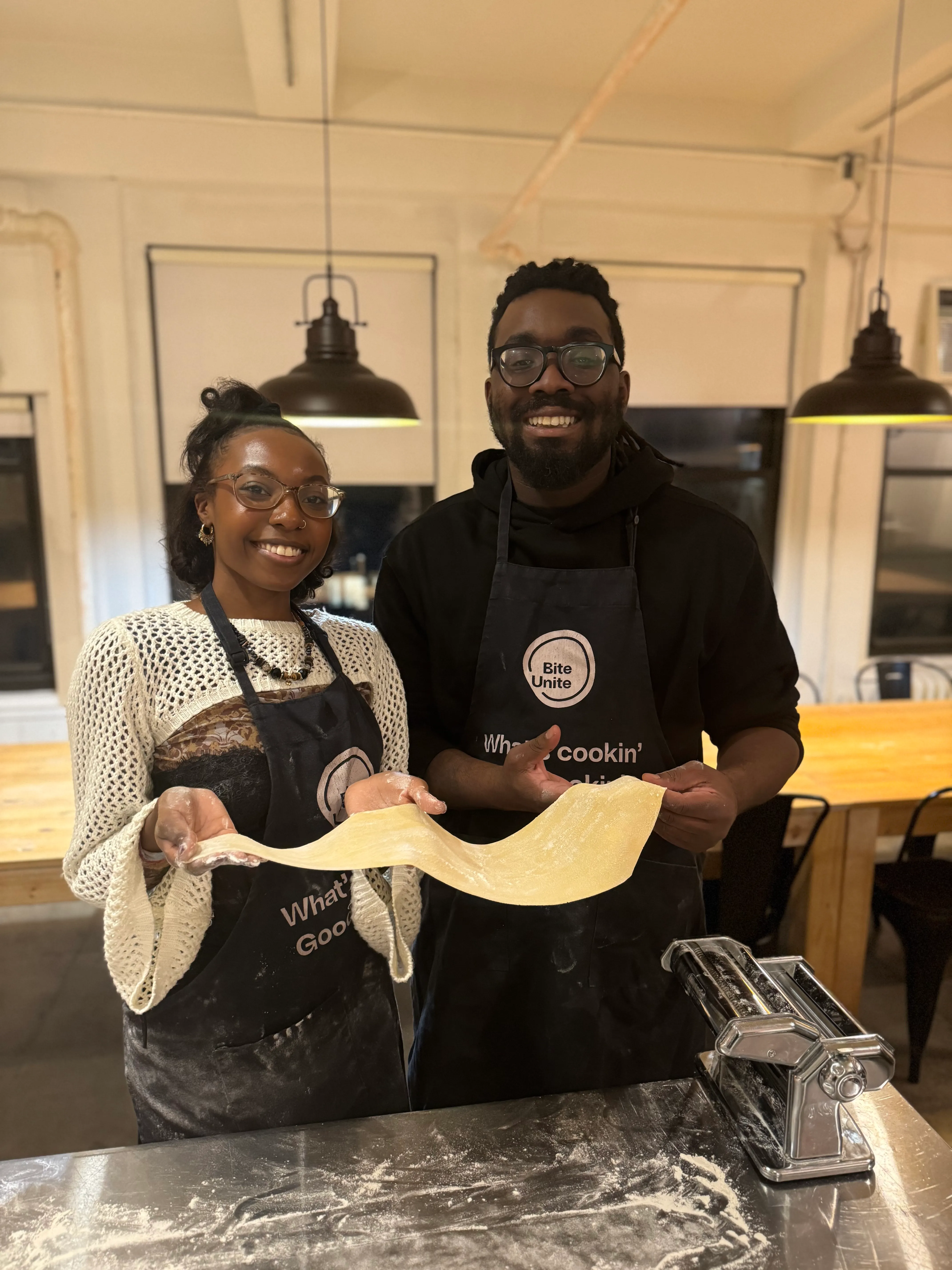
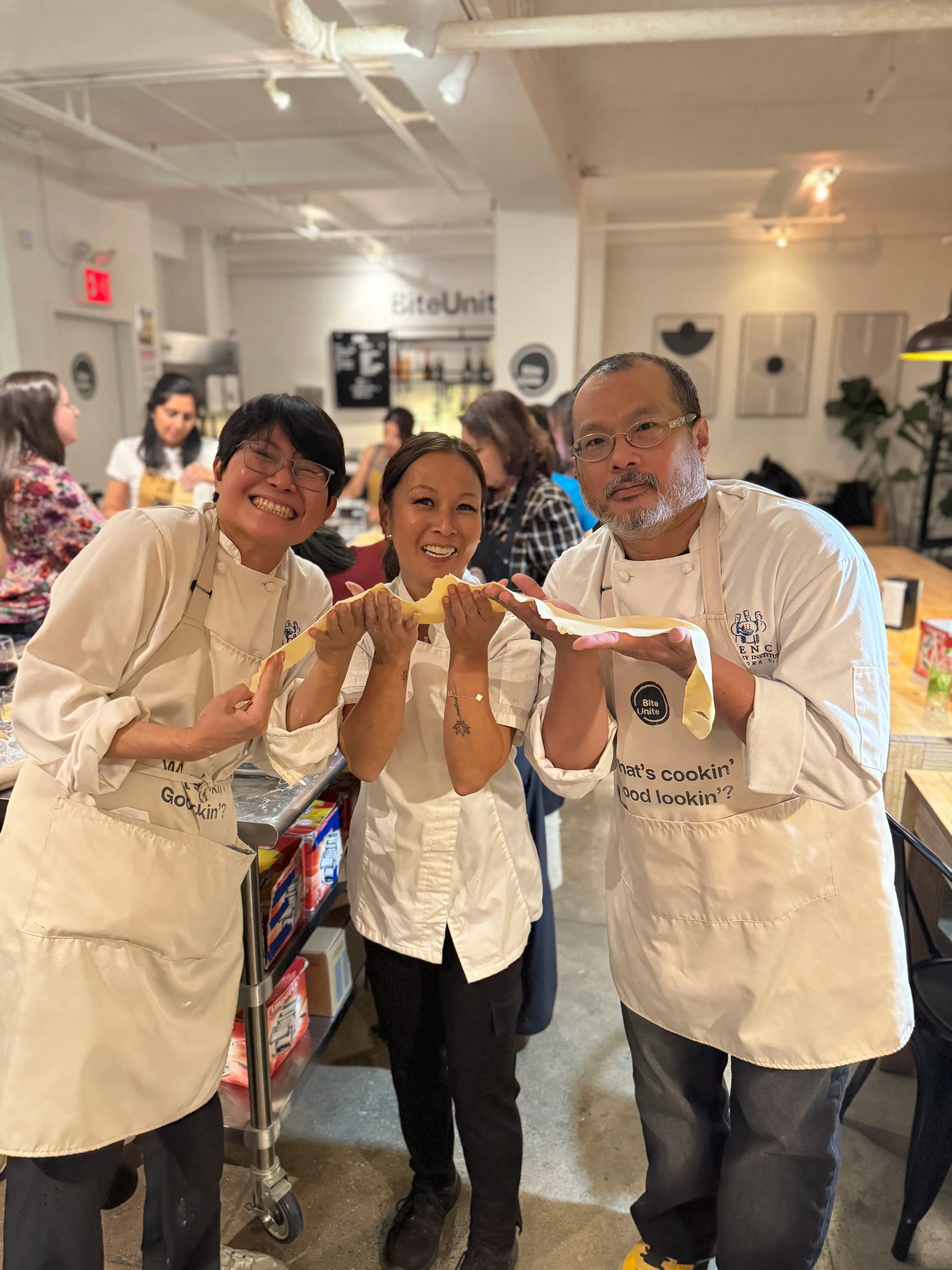
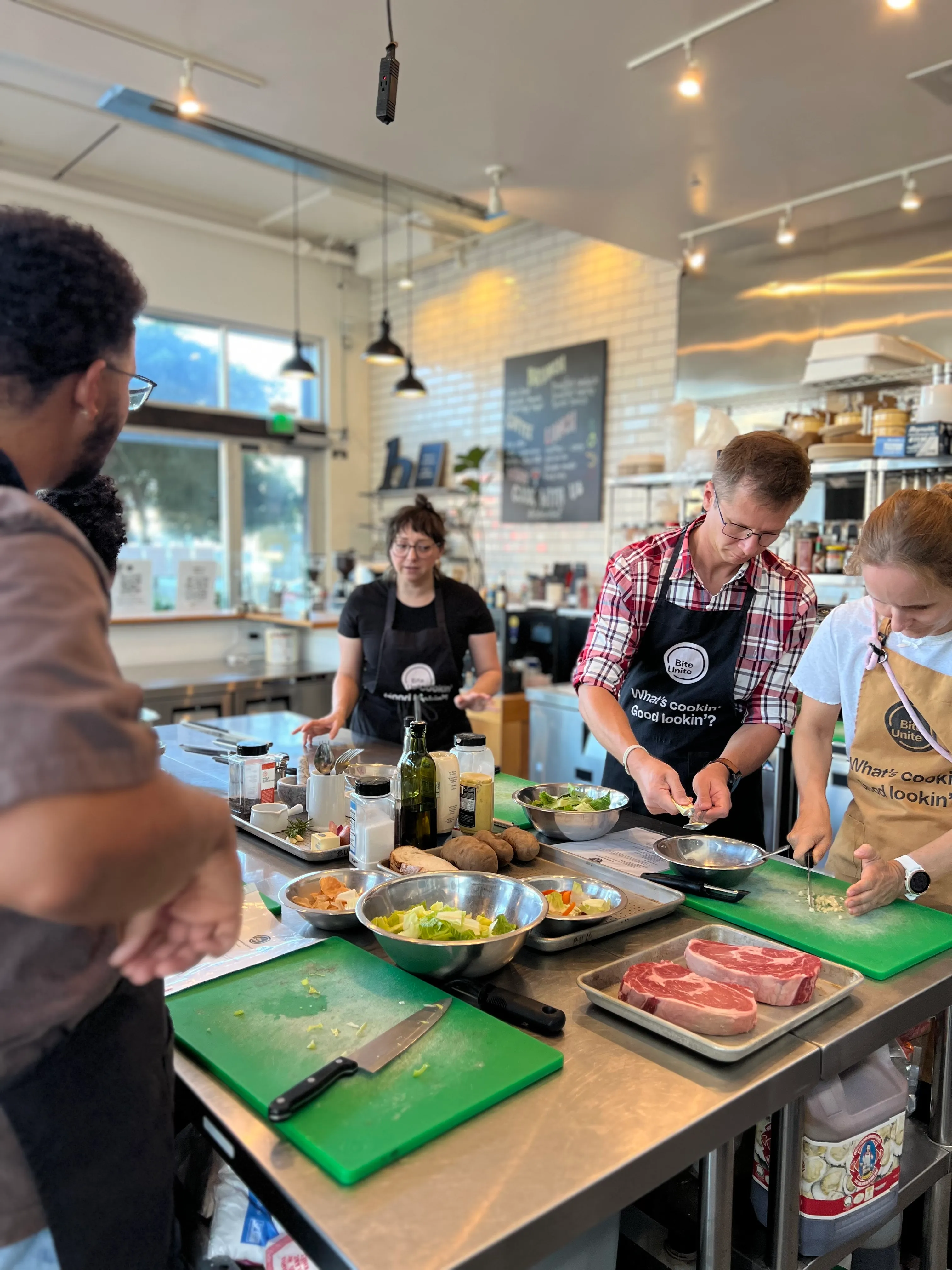
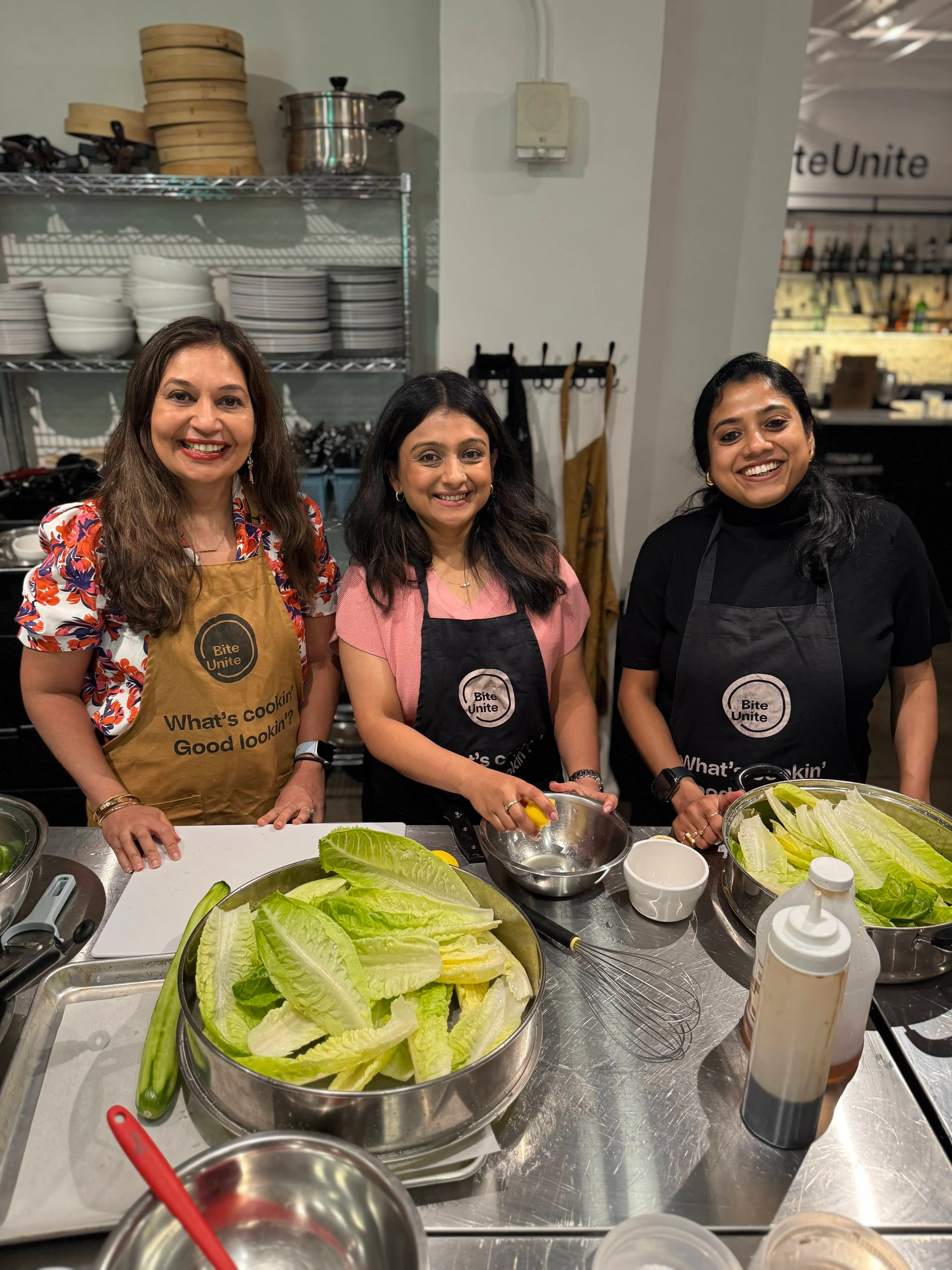
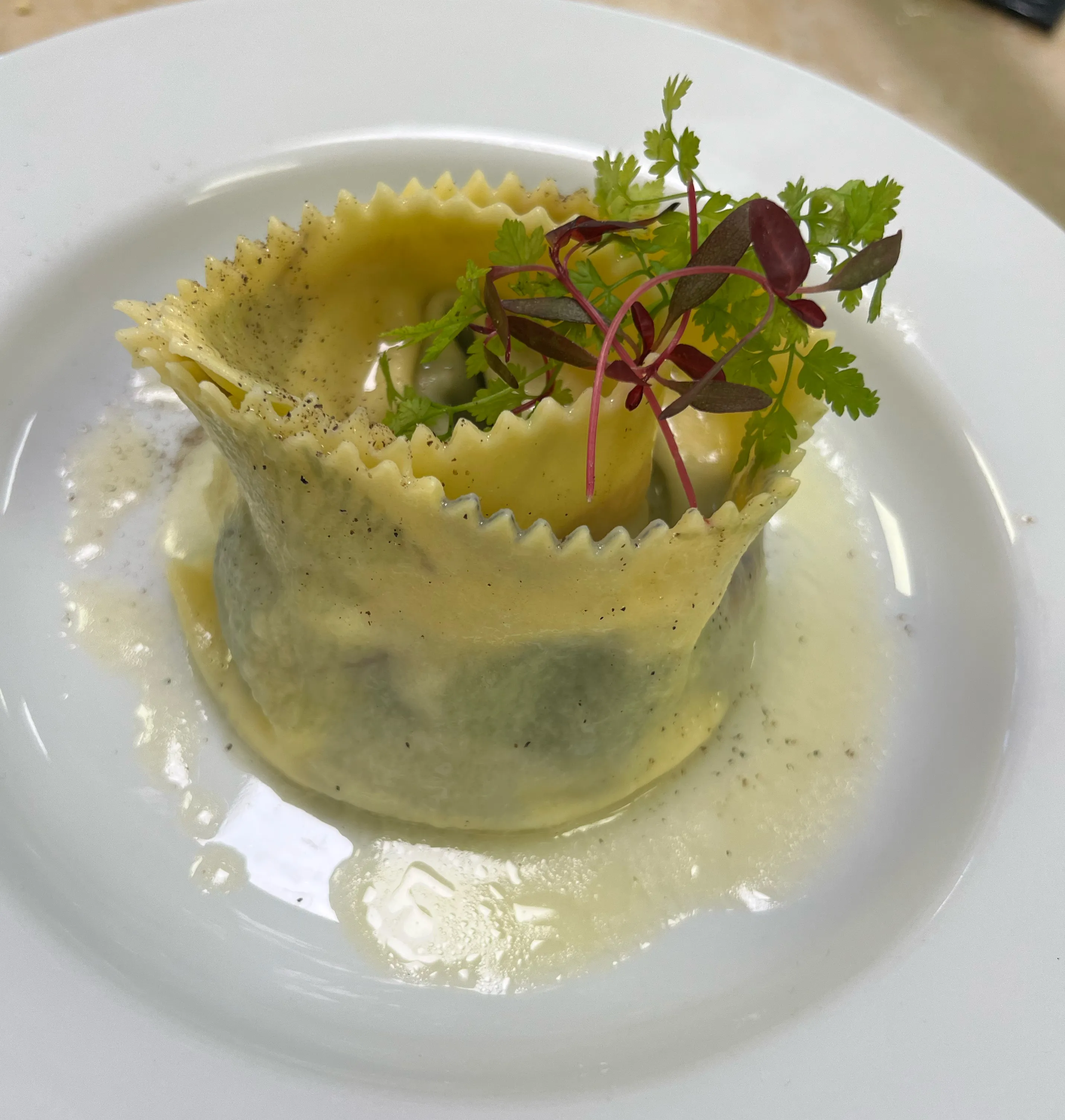
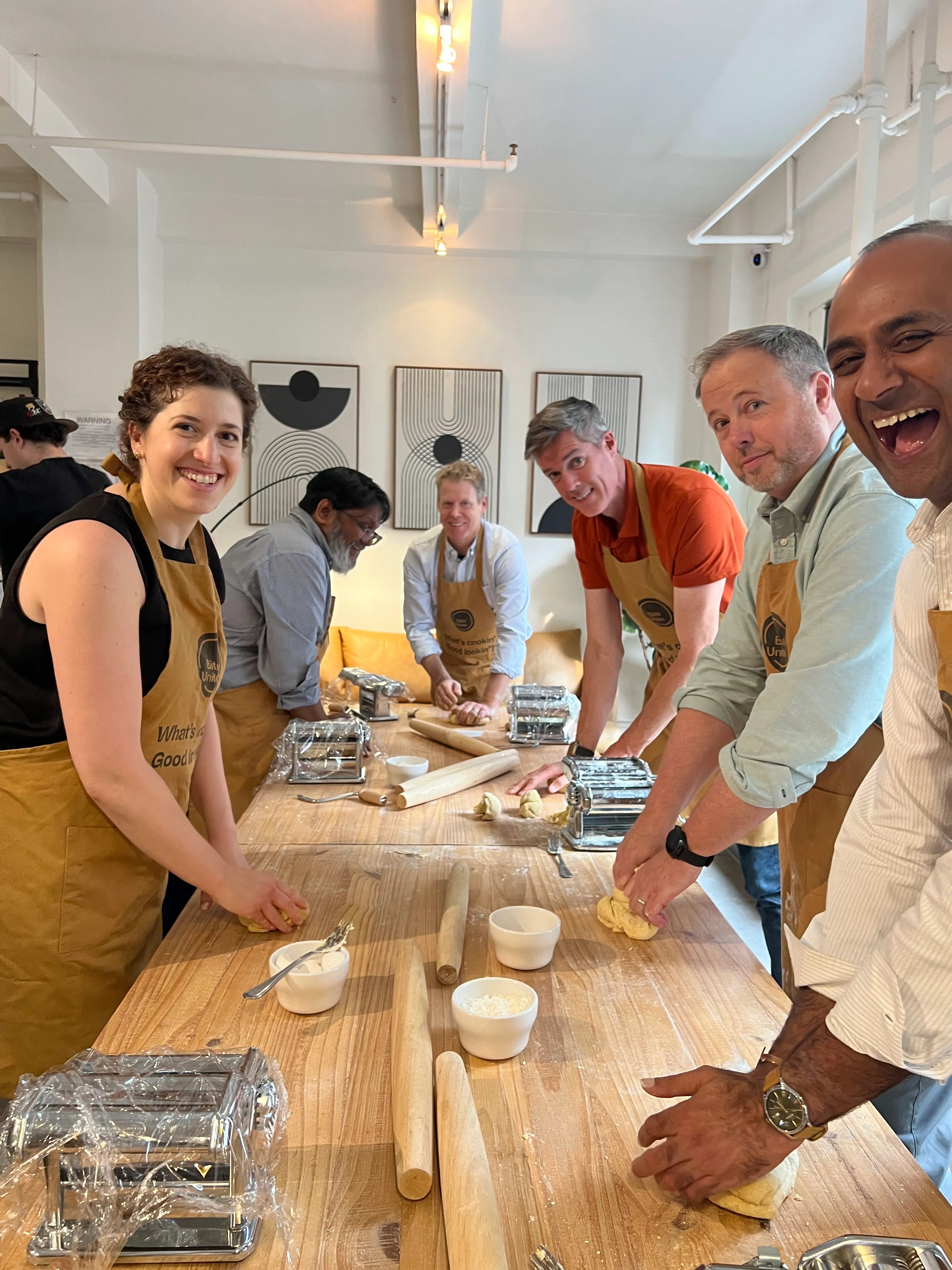
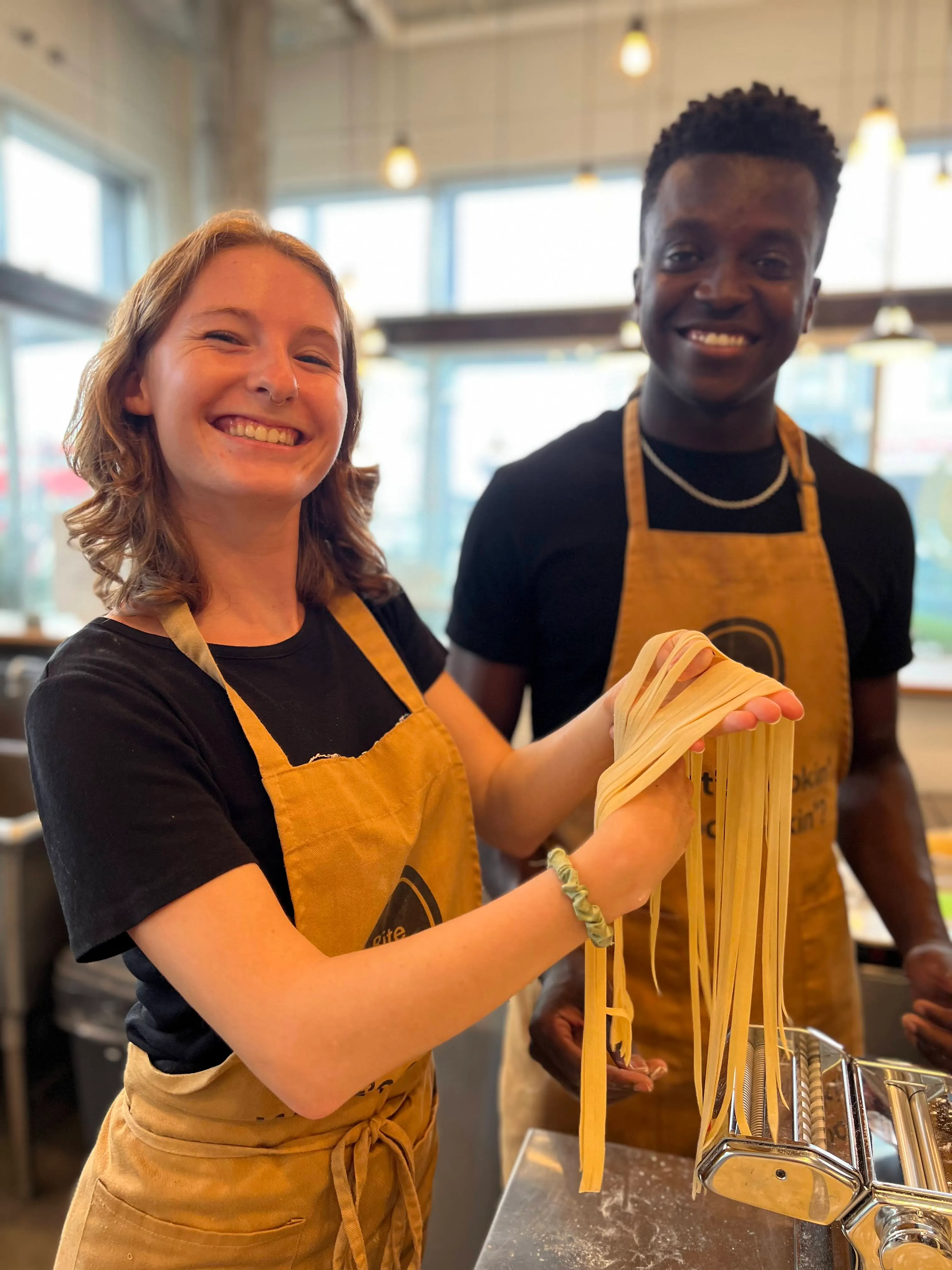
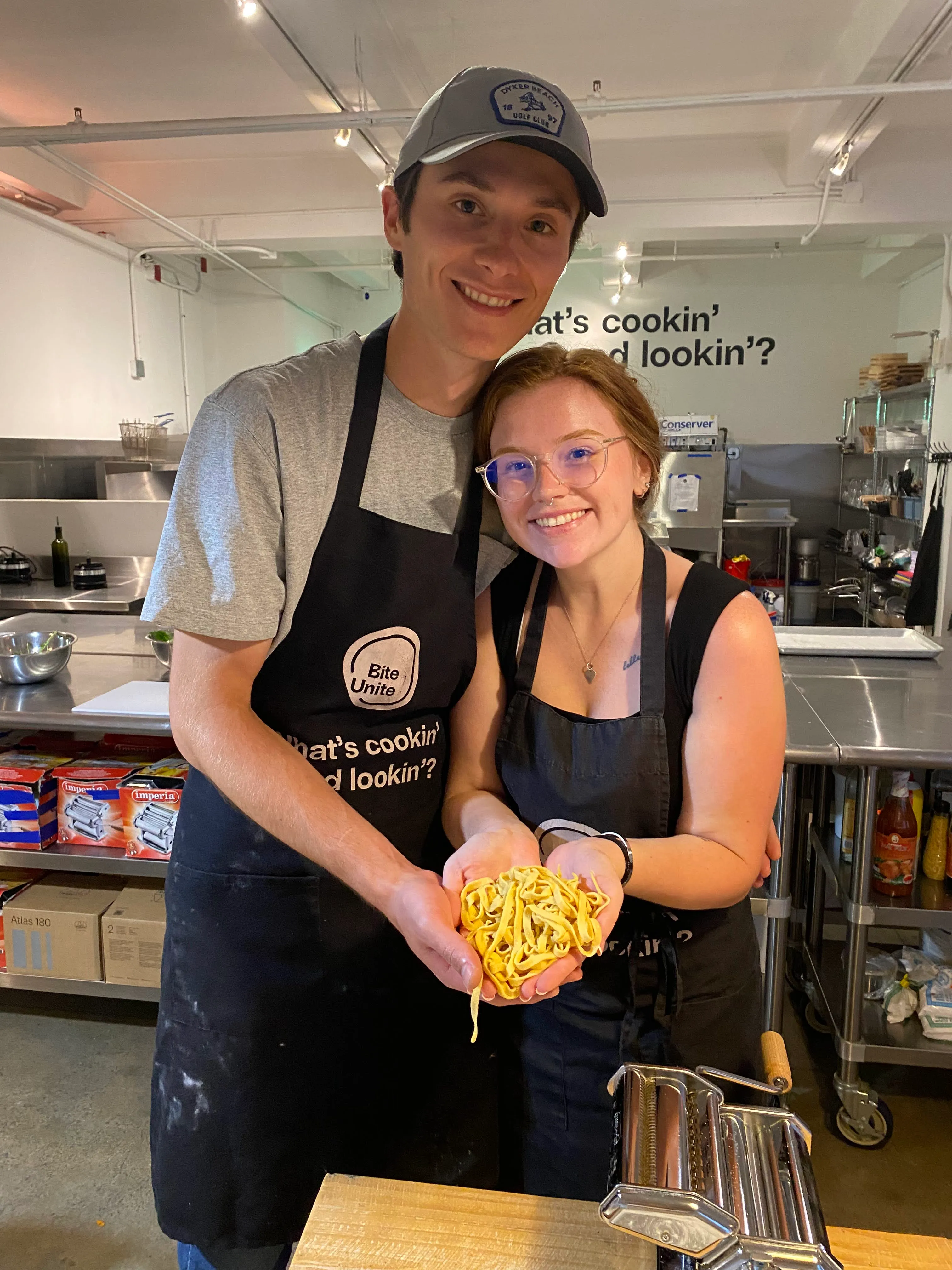
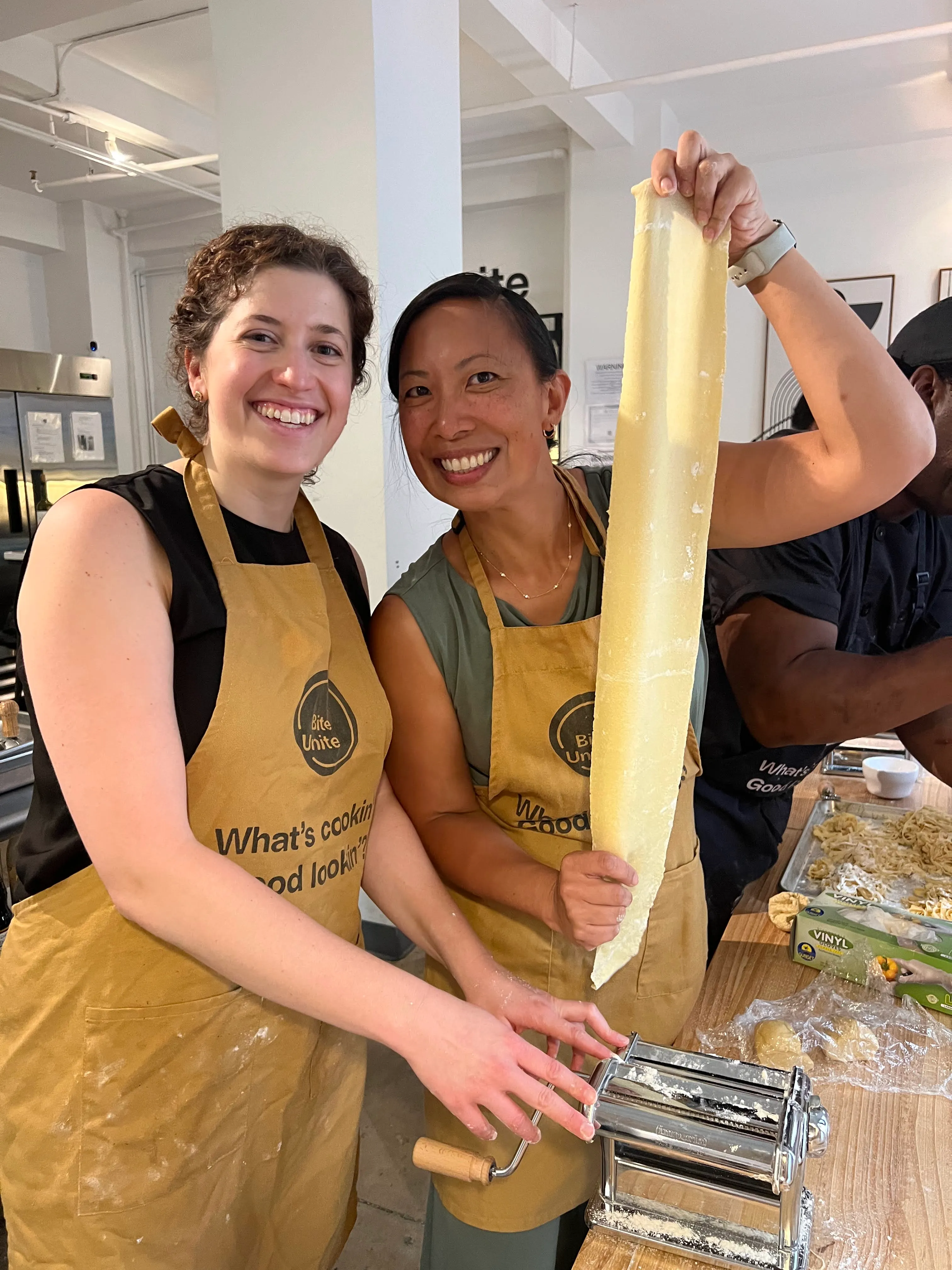
Hands-on chef-led classes are the most popular starting point. A professional chef guides teams through a full recipe from prep to plating, typically over 90–120 minutes. No cooking experience is needed, which makes this format genuinely inclusive. It works especially well for cross-functional groups meeting for the first time, since the shared task creates natural conversation without forced icebreakers. Biteunite’s San Francisco and New York cooking experiences are built around this format, covering cuisines from fresh pasta to Thai street food.
Competitive formats like “Battle of the Chefs” or Chopped-style cook-offs split teams into small groups that race to produce the best dish under time pressure. The Mystery Box variation adds a surprise-ingredient reveal phase, followed by rapid ideation, ingredient trading, cooking, plating, and judging. This structure builds negotiation, time management, and fast role definition, making it a strong fit when leadership identification or creative problem-solving is the explicit goal.
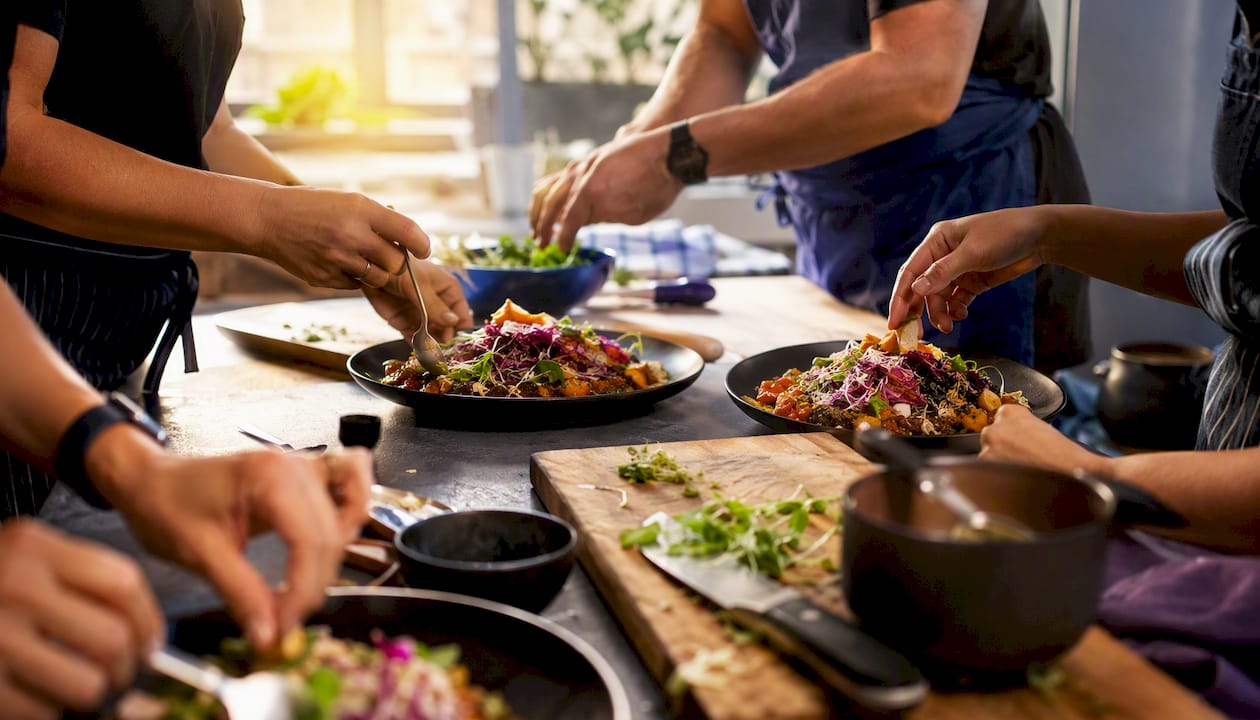
Bake-off and dessert challenges tend to run a little lighter in tone. Teams compete on presentation and taste, and the lower-stakes atmosphere makes this a natural choice for morale events or holiday parties where the priority is fun over skill development.
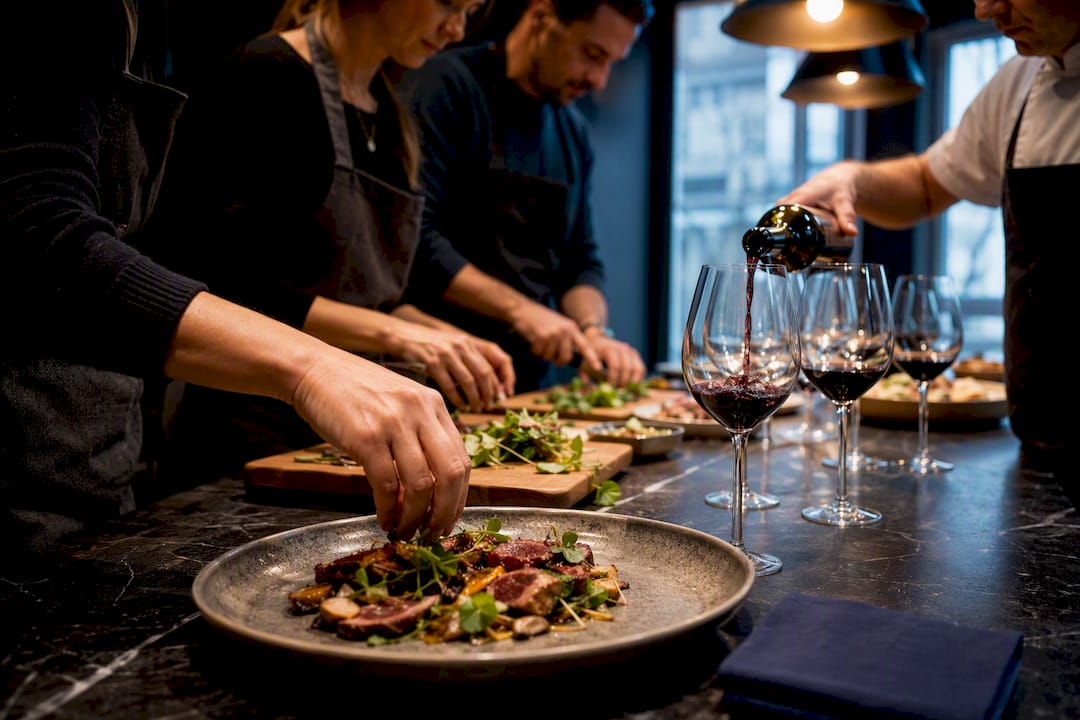
Demo plus tasting sessions work well for larger groups or mixed-skill audiences. A chef demonstrates technique while teams observe, then everyone eats together. It’s lower-intensity, easier to scale, and pairs naturally with wine or cocktail pairings for a celebratory feel.
Virtual and hybrid cooking experiences ship ingredient kits to remote participants before the event, then a live chef leads the session over video. This format has become a reliable option for distributed teams, and LVLS’s corporate planning guide notes that hybrid adaptations require clear pre-event logistics, including kit delivery windows and tech checks, to run smoothly.
Customization options across all formats typically include themed menus (Italian, Asian fusion, farm-to-table), custom aprons or branded prizes, dietary accommodations (vegan, gluten-free, allergen-aware menus), and post-event recipe cards. Ask your provider about these at the quote stage, not the week before.
Pro Tip: For groups of 20 or more, request sub-team station assignments in advance. Pre-assigned roles reduce the awkward first five minutes and get everyone cooking faster.
What outcomes can your team expect?
Cooking together works because it mirrors real workplace constraints: limited time, shared resources, unclear roles at the start, and a result everyone can see and taste. Offsiteio’s planning guide reports that cooking activities can improve teamwork and communication measures by up to 30%, and the mechanism is straightforward: the kitchen forces communication that the conference room doesn’t.
Concrete outcomes planners regularly cite after culinary team-building events:
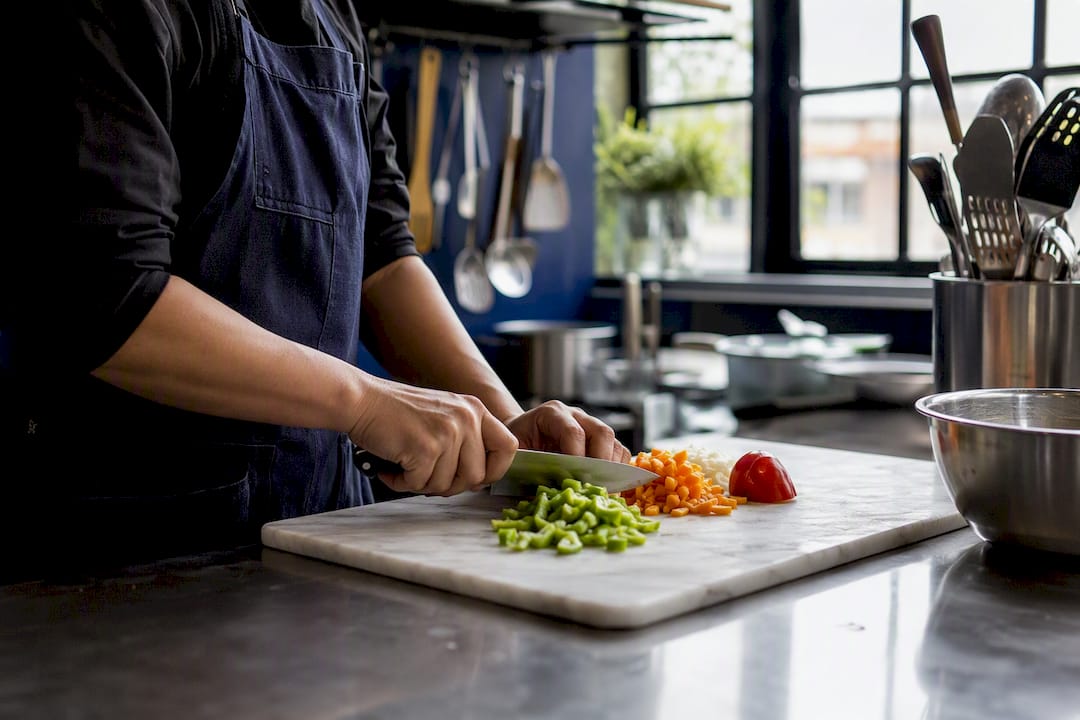
- Clearer role definition. Teams naturally self-organize around tasks (chopping, sautéing, plating), which surfaces informal leadership and reveals who steps up under pressure.
- Faster decision-making. Time constraints in competitive formats push teams to commit quickly rather than deliberate indefinitely.
- Improved cross-team communication. Coordinating across stations requires real-time verbal handoffs, which translates directly to fewer dropped balls in project work.
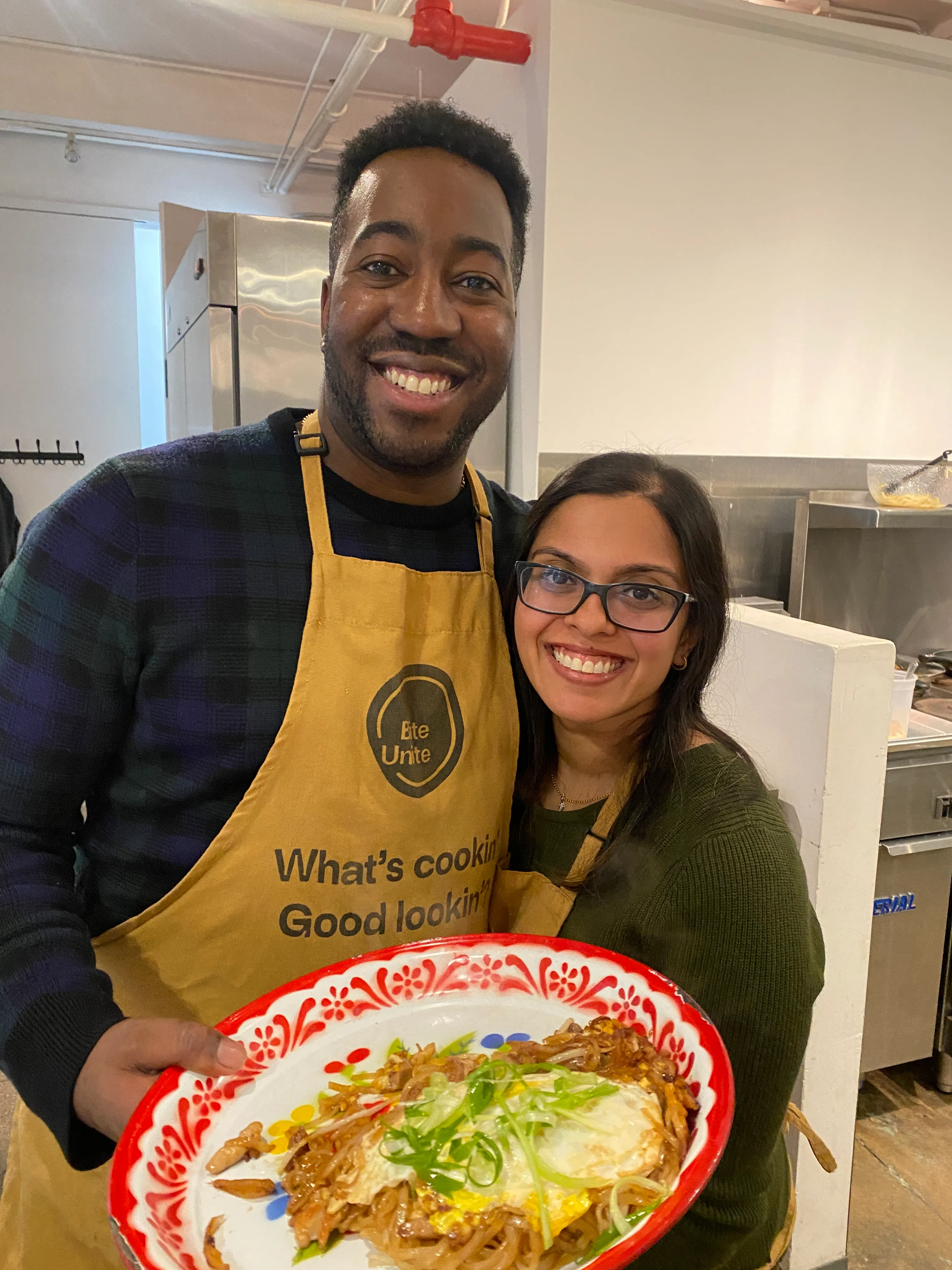
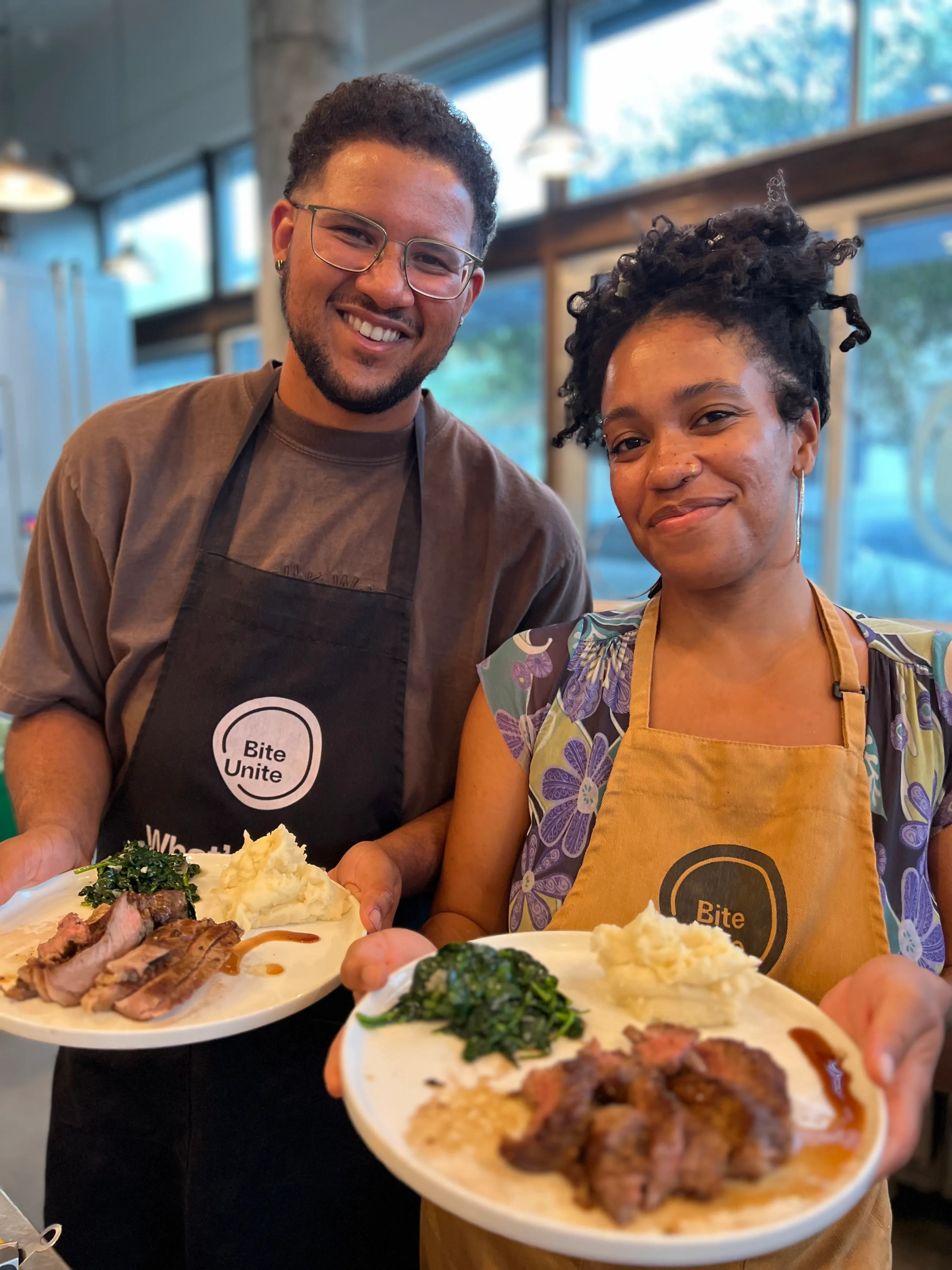
- Morale and shared celebration. Eating what you made together is a genuine shared win, which is harder to manufacture in a conference room.
- Creative problem-solving. Mystery Box and competitive formats specifically require improvisation with limited ingredients, a direct analog to resource-constrained project work.
For more on the morale side of the equation, Biteunite’s own team morale research covers the evidence in depth.
Pro Tip: Schedule a 15–20 minute structured debrief immediately after the meal. Ask two questions: “What role did you naturally take on?” and “Where did communication break down?” Those answers transfer directly to the next sprint or project kickoff.
How do logistics, timing, and group size work?
A well-run culinary team-building event follows a predictable arc. Here’s a sample timeline for a three-hour session:
| Phase | Duration | What happens |
|---|---|---|
| Arrival and welcome | 15 min | Introductions, apron distribution, safety briefing |
| Chef demo and briefing | 20 min | Chef explains the menu, technique overview, team assignments |
| Hands-on cooking | 90–120 minutes | Teams cook at stations with chef guidance |
| Plating and judging | 15 min | Presentation, scoring (competitive formats), photos |
| Shared meal and debrief | 15–20 minutes | Eating together, structured reflection, prizes |
For group size, the general rule is:
- 8–20 people: Single-station workshop, one chef facilitator, high interaction.
- 20–50 people: Multiple stations with sub-teams of 4–6; one lead chef plus one or two assistants.
- 50+ people: Requires a dedicated event coordinator, multiple chef facilitators, and a venue with adequate kitchen infrastructure.
Venue options range from Biteunite’s own dedicated kitchen spaces in Manhattan and San Francisco to hotel function rooms fitted with portable cooking stations. For San Francisco planners, Biteunite’s event space guide covers local venue capacity and setup considerations in detail.
Before confirming any venue, check these four things:
- Adequate ventilation and fire suppression for live cooking
- ADA accessibility for all participants
- Sufficient counter space (roughly 3–4 linear feet per participant)
- Refrigeration and cold-storage capacity for perishable ingredients
Pro Tip: Always confirm dietary restrictions at registration, not the day of the event. A provider who asks for this information at booking, not at the door, is a green flag.
How do you pick the right culinary team-building provider?
The difference between a forgettable afternoon and a genuinely useful team experience almost always comes down to the facilitator, not the menu. Teami highlights role clarity and structured briefings as the two factors most correlated with successful group events, and both depend on your provider’s facilitation quality.
Ask every provider these questions:
- What are the chef’s credentials and corporate facilitation experience?
- Can you accommodate our specific dietary restrictions (allergies, vegan, halal)?
- What is the staff-to-participant ratio for our group size?
- What does your cancellation and refund policy look like?
- What is the minimum lead time you need to confirm our booking?
- Can you share a sample agenda and a client reference from a similar-sized corporate group?
Red flags to watch for:
- Pricing quoted as a single headline number with no line-item breakdown
- No mention of dietary planning or allergen protocols
- A facilitator who is a chef only, with no experience managing group dynamics
- No references, testimonials, or corporate client list available on request
Trust signals worth requesting: chef bios, a sample event agenda, documented food-safety certifications, and at least two corporate client references. A provider who offers all four without hesitation is worth your deposit.
Pro Tip: Ask specifically whether the chef facilitates the team dynamics or only demonstrates technique. The best providers do both, and that distinction drives most of the workplace-relevant outcomes.
What does a culinary team-building event typically cost?
Pricing varies by city, group size, format, and what’s included in the package. Here’s a realistic range for U.S. corporate events:
| Package tier | Typical per-person range | Usually includes |
|---|---|---|
| Basic class | $80–$120 | Chef, ingredients, instruction, shared meal |
| Full corporate package | $140–$200 | Above plus facilitation, equipment, cleanup, venue |
| Premium / competitive | $200–$300 | Above plus prizes, custom aprons, branded materials, beverage pairing |
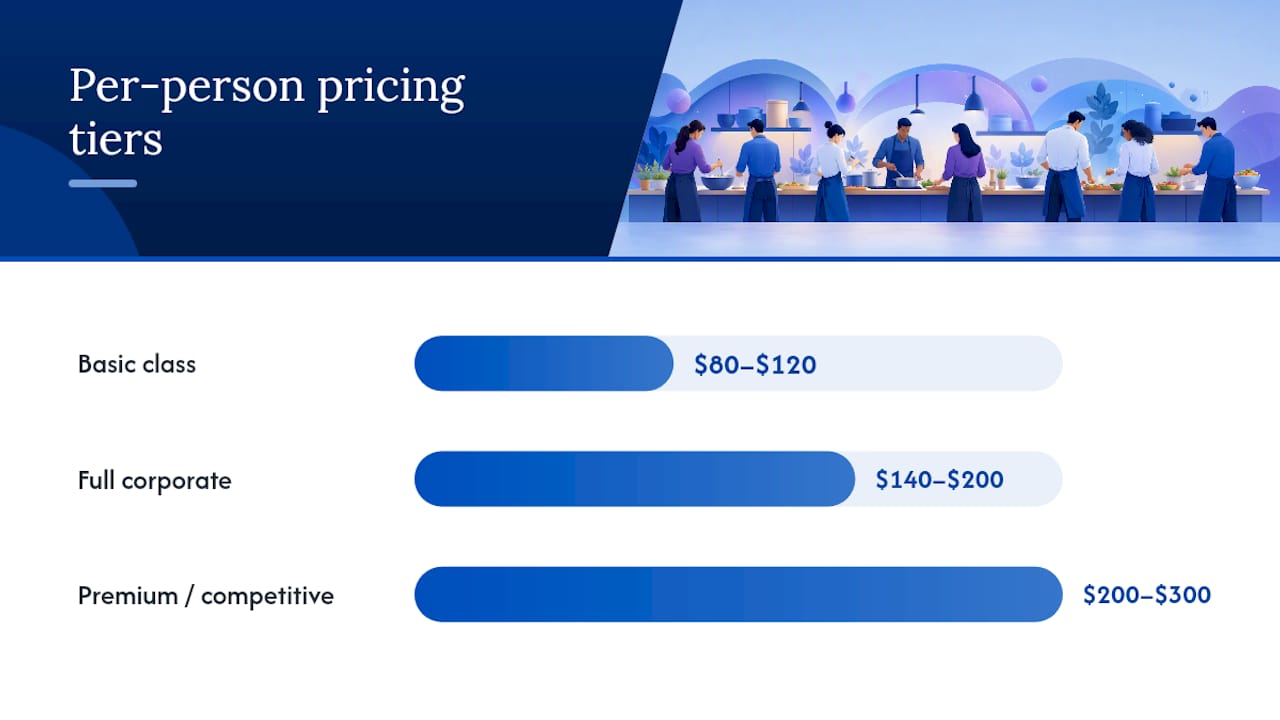
Offsiteio’s budget breakdown estimates a total budget for a 20-person, three-hour cooking challenge, which works out to roughly an average per-person cost when venue, ingredients, chef fees, and extras are combined.
Booking checklist:
- Confirm total headcount and any dietary restrictions before requesting quotes.
- Ask for a line-item breakdown, not just a per-person price.
- Clarify what the deposit covers and what the cancellation window is.
- Confirm lead time requirements (2–4 weeks for small groups, 4–8 weeks for 30+).
- Verify liability insurance and food-safety certification.
- Get the final agenda in writing at least one week before the event.
When comparing quotes, watch for venue fees that appear separately from the per-person rate. A $90 per-person quote that adds a $1,500 venue fee for 20 people is actually $165 per person.
Pro Tip: Request an all-inclusive quote from the start. “What is the total cost for our group, including venue, ingredients, staff, and cleanup?” is the one question that eliminates most pricing surprises.
Why does cooking actually work for teamwork?
The evidence behind culinary team-building activities is more specific than “people like food.” Naboo’s activity research explains that shared cooking engages multiple senses simultaneously and mirrors real business constraints: a fixed budget of ingredients, a deadline, and a shared deliverable. Those conditions activate the same communication and coordination behaviors that matter in project work.
Chef-led facilitation is the key variable. Practitioner observations from professional chefs leading corporate groups consistently point to explicit instruction and small-team engagement tactics as the drivers of inclusive, pedagogically useful experiences. A chef who only demonstrates technique produces a cooking class. A chef who also manages group dynamics, assigns roles, and runs a debrief produces a team-building event.
The structured debrief is where the learning transfer actually happens. Without it, participants leave with a good memory. With it, they leave with a shared vocabulary for how their team communicates under pressure, which is the outcome planners are actually paying for.
Pro Tip: Send a one-page debrief summary to participants within 24 hours of the event. Include the two or three observations that came up most often. Teams that receive this follow-through show stronger retention of the collaboration behaviors the event was designed to build.
When hands-on, competitive, or virtual formats work best
Hands-on chef-led classes are the right default for most groups. They’re inclusive regardless of cooking skill, they scale from 8 to 50 people without major structural changes, and they produce the warmest post-event feedback. If your goal is general morale, cross-team connection, or onboarding a new cohort, start here.
Competitive formats earn their place when the group already knows each other and needs a higher-energy challenge. A “Battle of the Chefs” or Mystery Box event works well for high-performing teams that would find a standard class too low-stakes. The caveat: competitive formats can inadvertently spotlight weaker participants. Keep sub-teams small (4–5 people) and ensure the chef facilitator actively manages group dynamics to keep the energy inclusive.
Virtual and hybrid sessions are the practical choice for distributed teams, but they require more pre-event coordination than in-person formats. Ingredient kits need to ship with enough lead time for delivery confirmation, and a tech check 30 minutes before the session is non-negotiable. For teams spread across time zones, a recorded demo-plus-live-Q&A hybrid can work better than a fully synchronous cook-along.
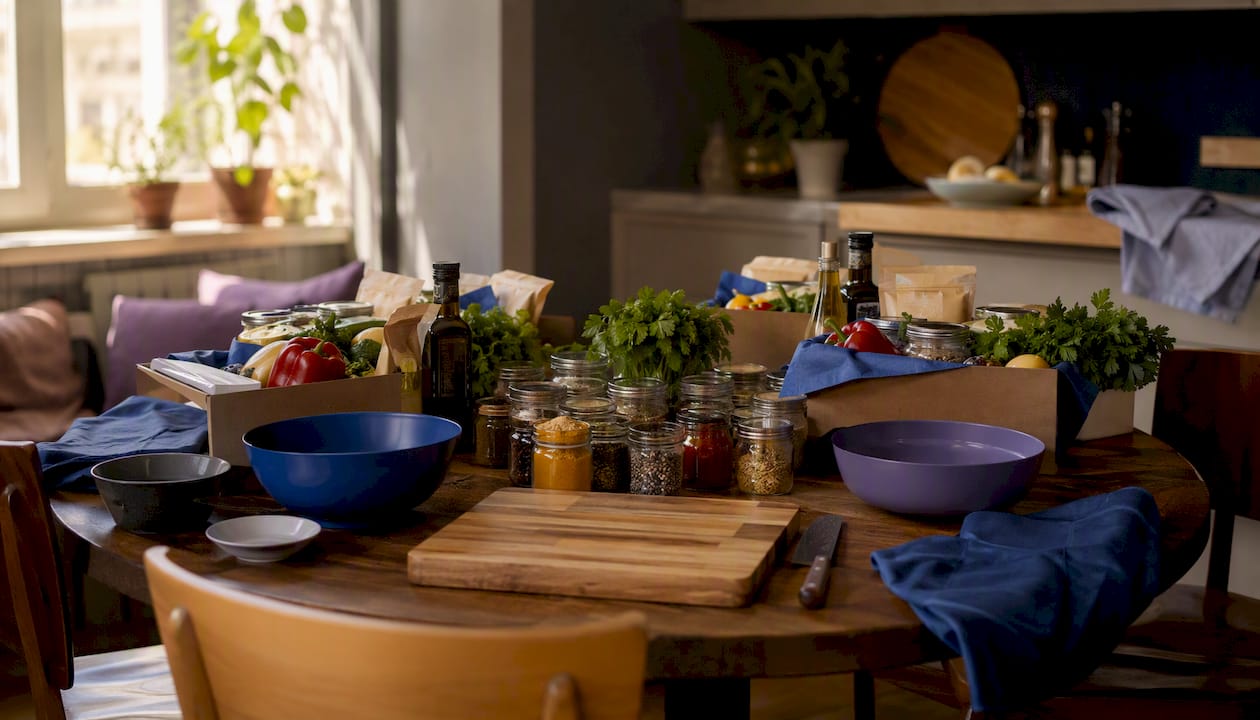
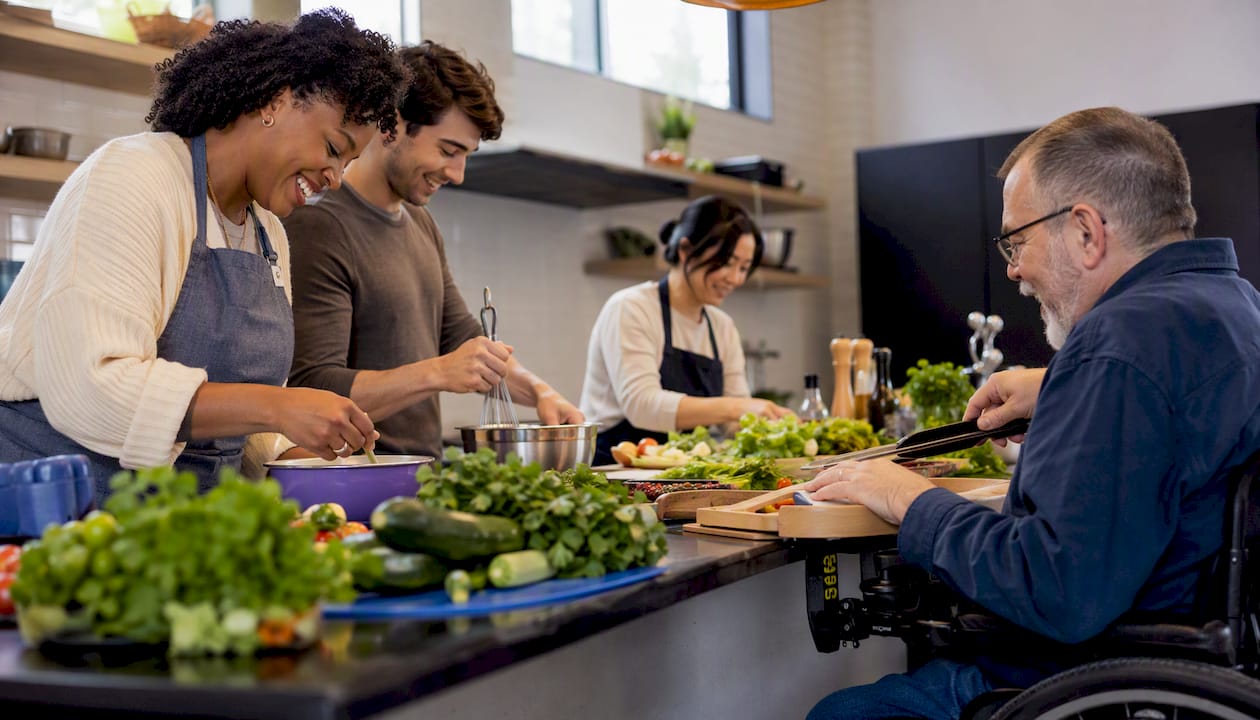
On accessibility: always ask participants about mobility, dexterity, or standing-tolerance limitations before the event. Good providers design stations that accommodate seated participants and offer alternative roles (plating, timing, judging) for anyone who can’t stand at a counter for 90 minutes. For non-culinary team-building options that complement an offsite agenda, corporate outdoor programs can round out a full-day event.
Biteunite brings the kitchen to your corporate team
Biteunite is the direct, done-for-you option for corporate teams that want a chef-led culinary experience without the venue-hunting, ingredient-sourcing, or facilitation planning. Every corporate package includes a professional chef, all ingredients, hands-on instruction, facilitation, and cleanup. You show up, you cook, you eat, and you leave with a team that’s actually talked to each other.
Biteunite operates in New York, San Francisco, and Hong Kong, with virtual options for remote teams. Corporate groups can customize menus, add branded aprons or prizes, and request dietary accommodations at the time of booking. The format library covers hands-on classes, competitive cook-offs, and demo-plus-tasting sessions, so you’re not locked into one approach.
To reserve your date, book a Manhattan group class directly online or contact Biteunite for a custom corporate quote. Bring your headcount, your preferred date, and any dietary restrictions, and the team will handle the rest.
Sources
These are the core planning resources cited throughout this article:
- How to Organize a 3-Hour Team Cooking Challenge That Fosters Teamwork | Offsiteio Learn
- 20 impactful culinary team building ideas | Naboo
- Team building escape room: your 2026 corporate guide
- How to Improve Team Collaboration for Event Success - team I





























.webp)