25 Holiday Team Building Ideas for Every Team and Budget

The best holiday team-building formats for most corporate planners are quick icebreakers, low-cost gift exchanges, hands-on experiential classes, charitable giving projects, and hybrid-friendly games. Each one works because it gives people a shared task, a reason to laugh, and a memory that outlasts the party playlist.
Here are the top picks to get you started:
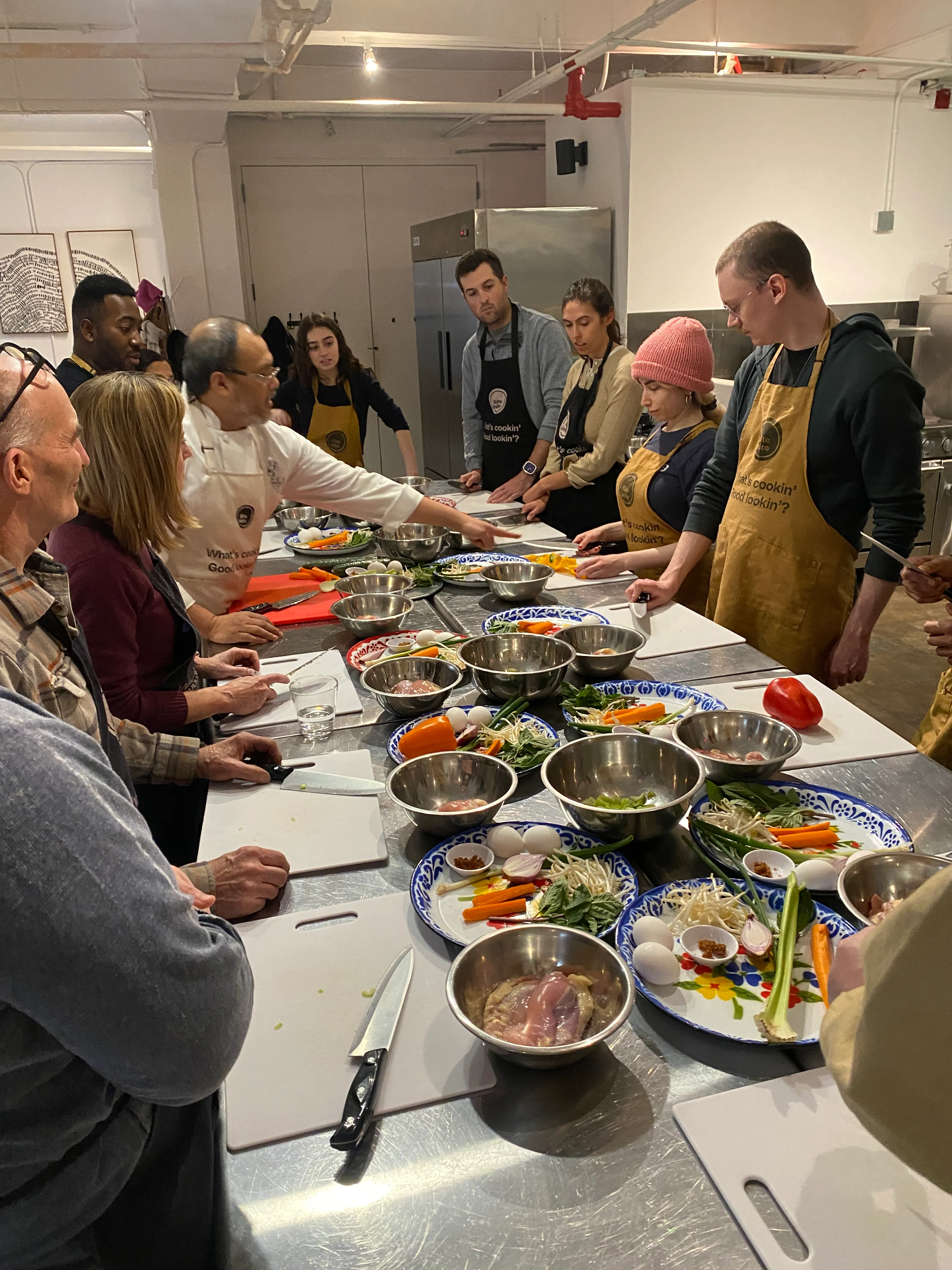
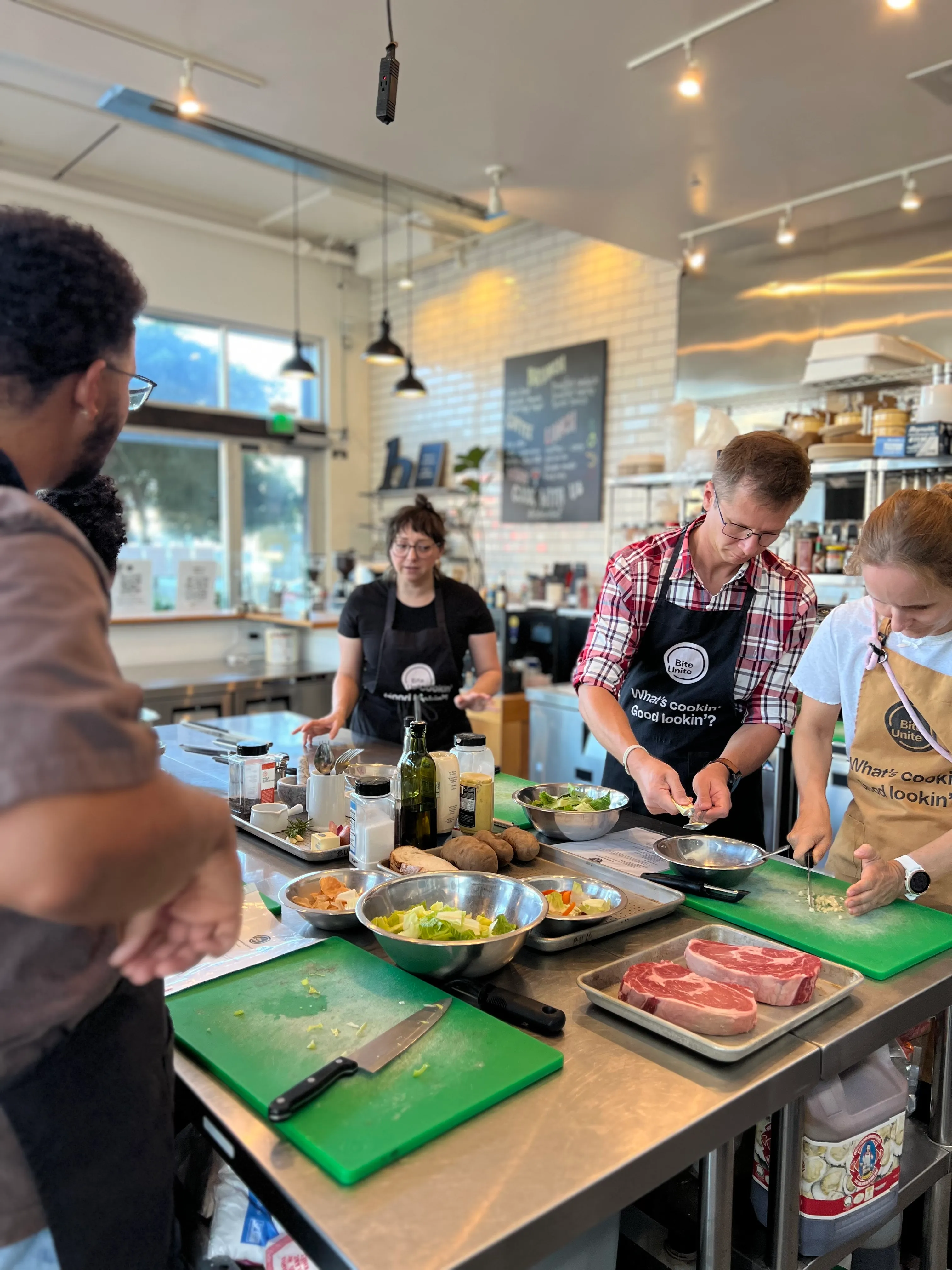
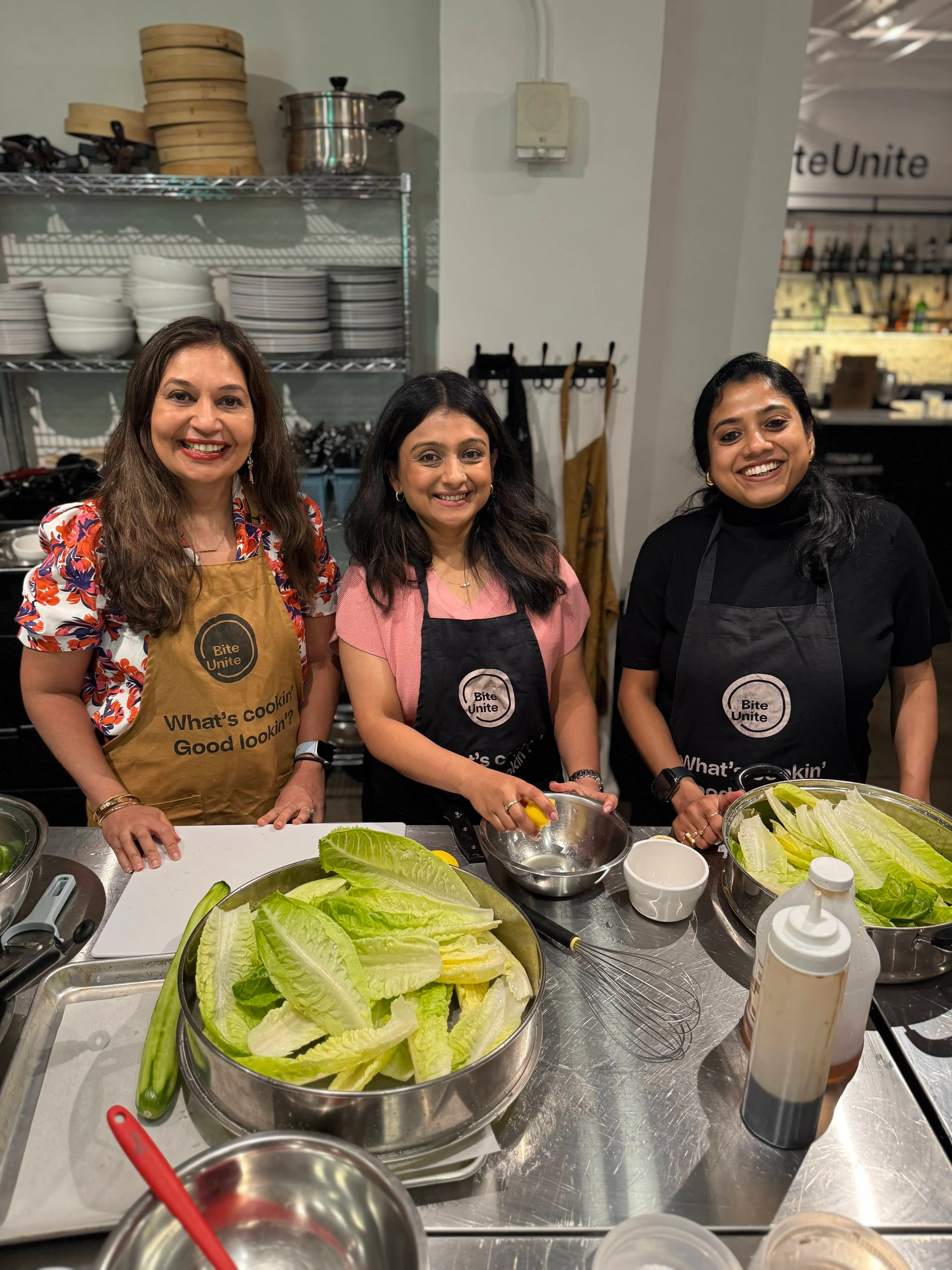
- Hands-on cooking class (Biteunite): Best for groups of 10–40 who want a high-energy, memorable experience with a real deliverable. Plan for 90 minutes. Cooking classes consistently tie collaboration to a tangible outcome that people talk about long after the event.
- White elephant or Secret Santa exchange: Best for any size team on a tight budget. Runs 20–30 minutes and requires almost no setup.
- Holiday trivia or game show: Best for hybrid teams of 15–100. Runs 60–90 minutes and scales easily across locations.
- Volunteer or donation drive: Best for purpose-driven teams. Can run asynchronously over a week or as a single 2-hour in-person session.
- Cookie or ornament decorating contest: Best for in-office groups of 8–25. Runs 45–60 minutes and costs very little when supplies are sourced in bulk.
- Virtual scavenger hunt: Best for fully remote teams. Runs 30–45 minutes and needs nothing more than a video call and a shared list.
Modern corporate holiday events are shifting toward wellbeing-centered and inclusive experiences rather than lavish parties, and options like gratitude walls, opt-in volunteering, and hands-on workshops resonate strongly with diverse teams. Hosted, timed experiences in the 60–90 minute range with a clear facilitator reduce awkward lulls and increase participant satisfaction compared with loosely structured party games.
Table of Contents
- The best holiday team building ideas, organized by category
- How to run a holiday team-building activity from start to finish
- Budget and timing cheat sheet for holiday activities
- Virtual and hybrid adaptations that actually work
- Why a hands-on cooking class is one of the best holiday team-building choices
- Key Takeaways
- The activity that actually sticks
- Biteunite makes holiday team events delicious and stress-free
- Useful sources and further reading
The best holiday team building ideas, organized by category
Twenty-five ready-to-run activities, sorted so you can scan straight to the format that fits your team.
In-person activities
1. Ugly sweater contest Everyone wears their most outrageous holiday sweater. A panel of three judges (or a team vote via raised hands) scores on creativity, humor, and effort. No materials needed beyond a prize for the winner.
- Group size: Any
- Time: 15–20 minutes as a standalone opener
- Budget tip: Free. Pair it with a team photo for a lasting keepsake.
- Accessibility note: Frame it as optional so no one feels pressured to spend money on a costume.
2. Gingerbread house competition Split into teams of 3–5 and give each group identical kits (pre-built house shells, icing, candy). Judge on design, structural integrity, and theme. Step-by-step setup and judging criteria make this easy to run without a professional facilitator.
- Group size: 10–40
- Time: 45–60 minutes
- Budget tip: Buy pre-assembled kits in bulk from a craft store to cut prep time.
3. Cookie decorating contest Provide plain sugar cookies, royal icing in several colors, and sprinkles. Teams or individuals decorate and then vote on a winner. Works beautifully as a low-key, seated activity for mixed-ability groups.
- Group size: 8–30
- Time: 30–45 minutes
- Accessibility note: Confirm dietary restrictions in advance; gluten-free or vegan cookie bases are widely available.
4. Holiday scavenger hunt Hide clues around the office tied to seasonal themes (find the item that keeps you warm, find something that sparkles). First team to complete all clues wins. Facilitation and space planning matter here: map the route before the event so teams don’t bottleneck.
- Group size: 10–50
- Time: 30–45 minutes
- Budget tip: Free. Print clue cards in-house.
5. Ornament-making workshop Provide plain glass or foam ornaments, paint, markers, and ribbon. Each person decorates one to keep or contribute to a shared office tree. Simple, tactile, and genuinely inclusive across cultures.
- Group size: Any
- Time: 30–45 minutes
- Budget tip: Bulk ornament sets cost roughly $1–$2 per person at craft supply stores.
6. Photo booth with holiday props Set up a backdrop (wrapping paper works) and a box of props: Santa hats, tinsel boas, signs with holiday puns. Teams rotate through in 2–3 minutes each. A printed photo strip makes a great takeaway.
- Group size: Any
- Time: 15–30 minutes total rotation
- Budget tip: Props can be reused year after year.
7. Holiday trivia Run 4–6 rounds covering pop culture, food traditions, winter history, and company trivia. A host (internal or hired) keeps energy high. Game-show–style packaging in a 60–90 minute window with scoring and a prize wrap-up turns a simple quiz into a full event.
- Group size: 10–100
- Time: 45–75 minutes
- Budget tip: Free to build in-house using a slide deck and a polling tool like Mentimeter.
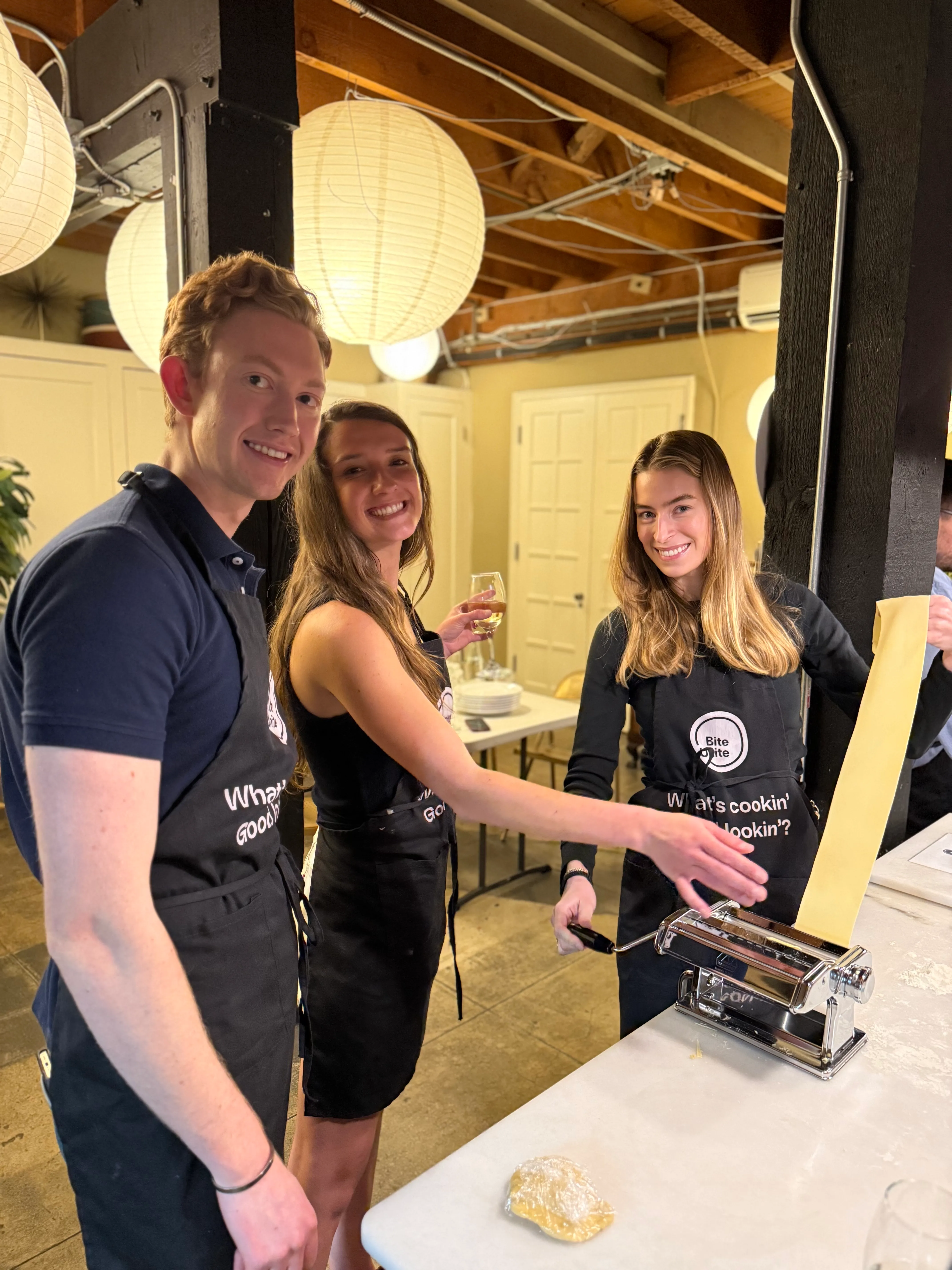
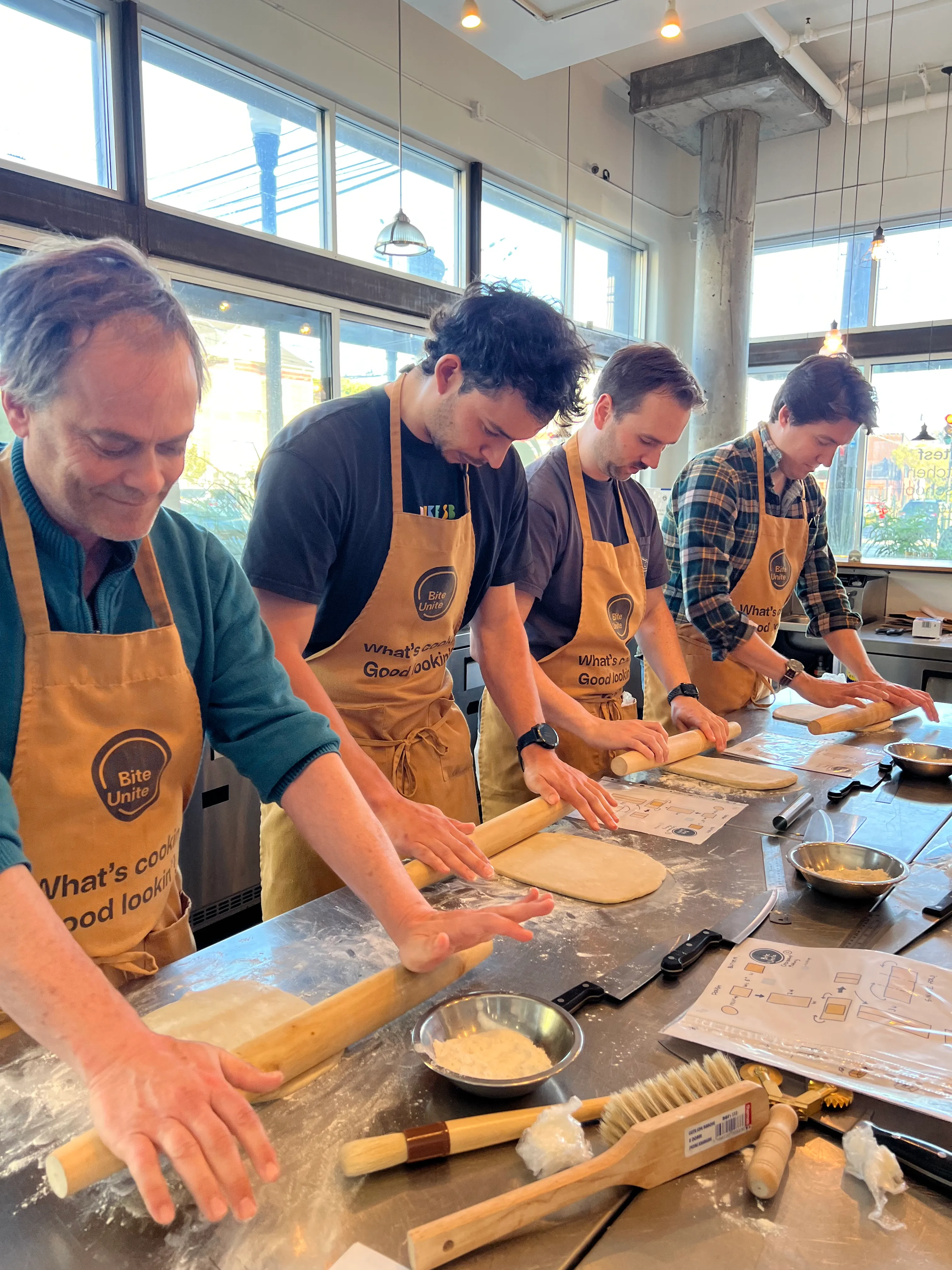
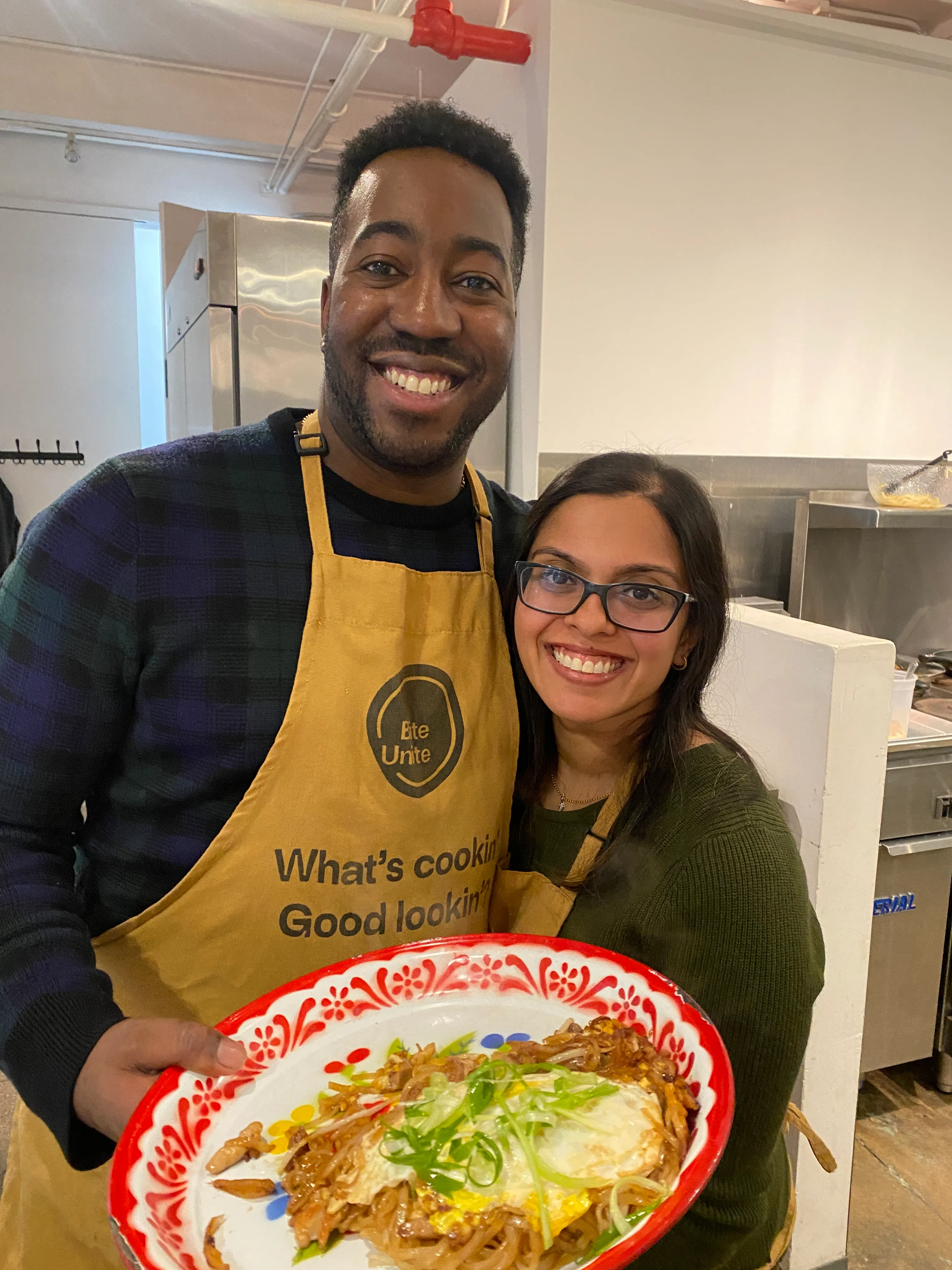
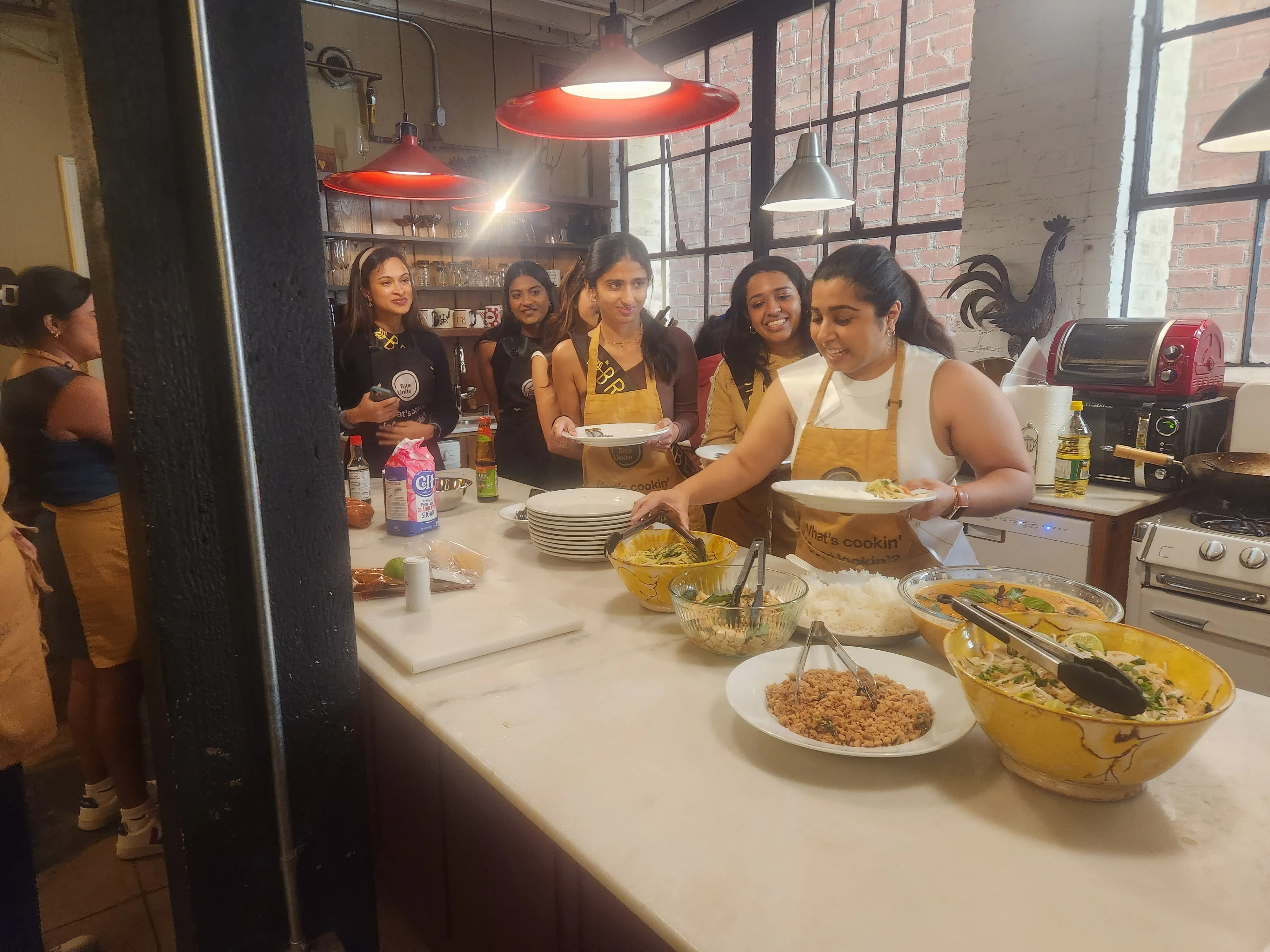
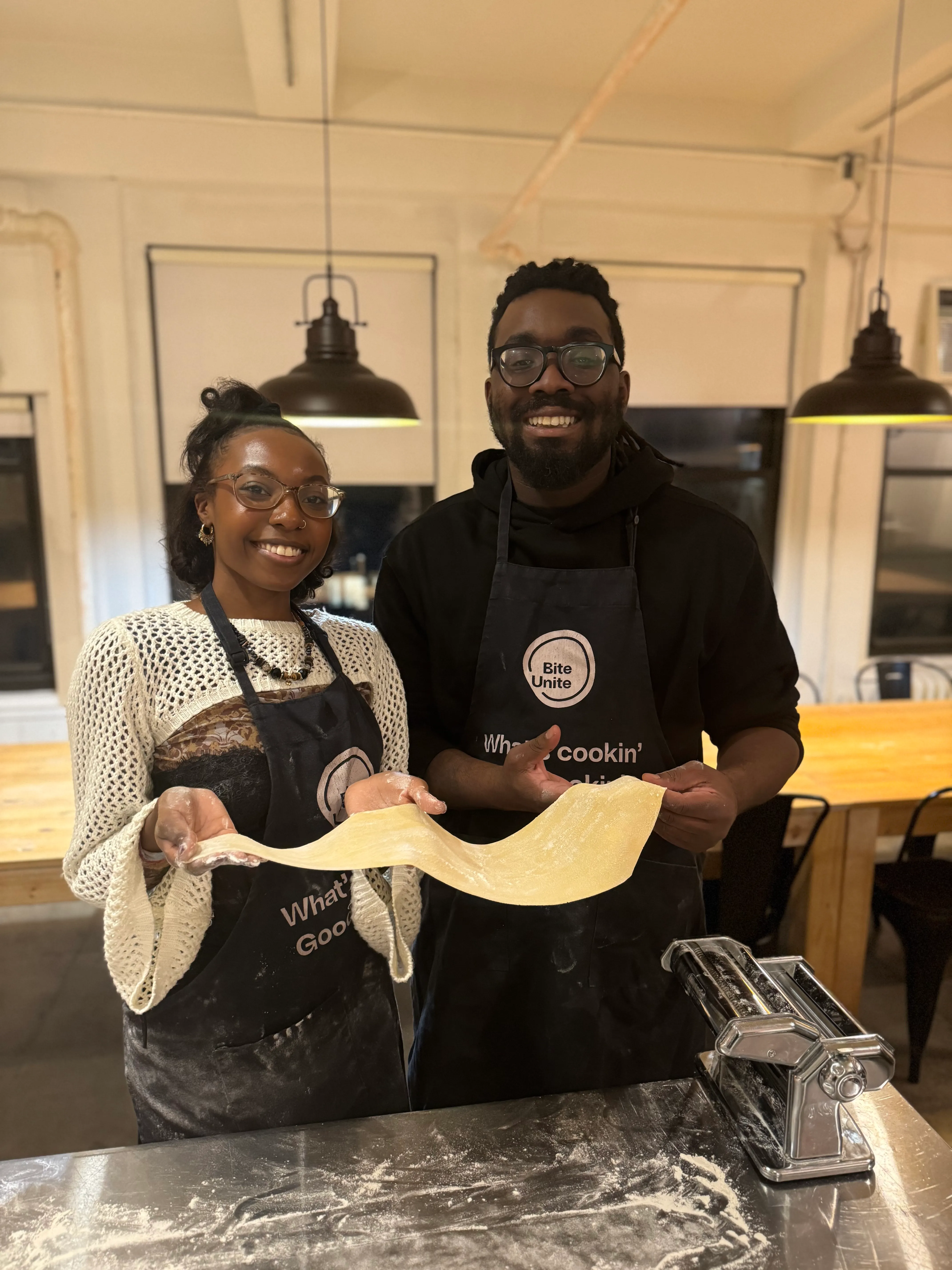
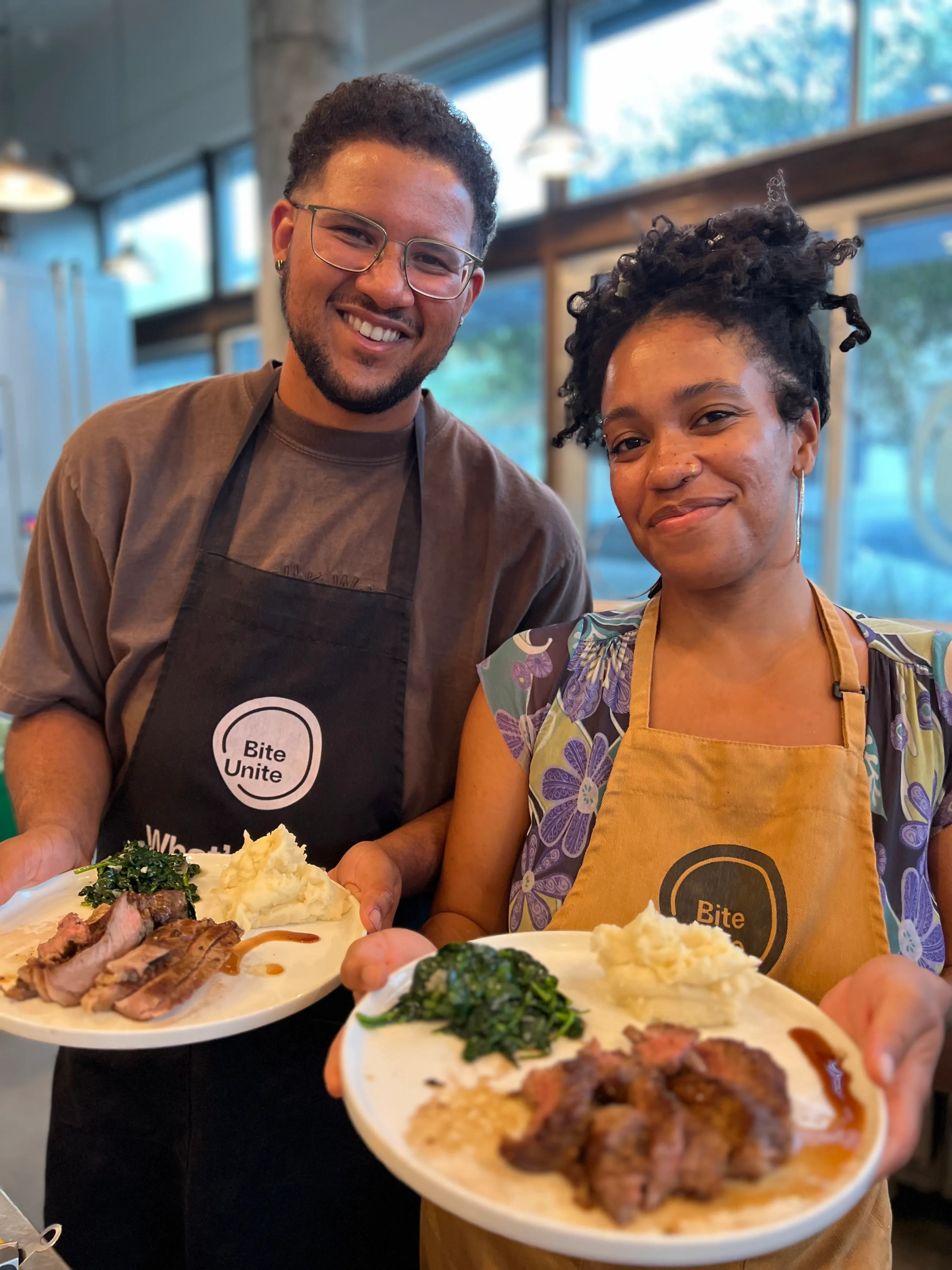
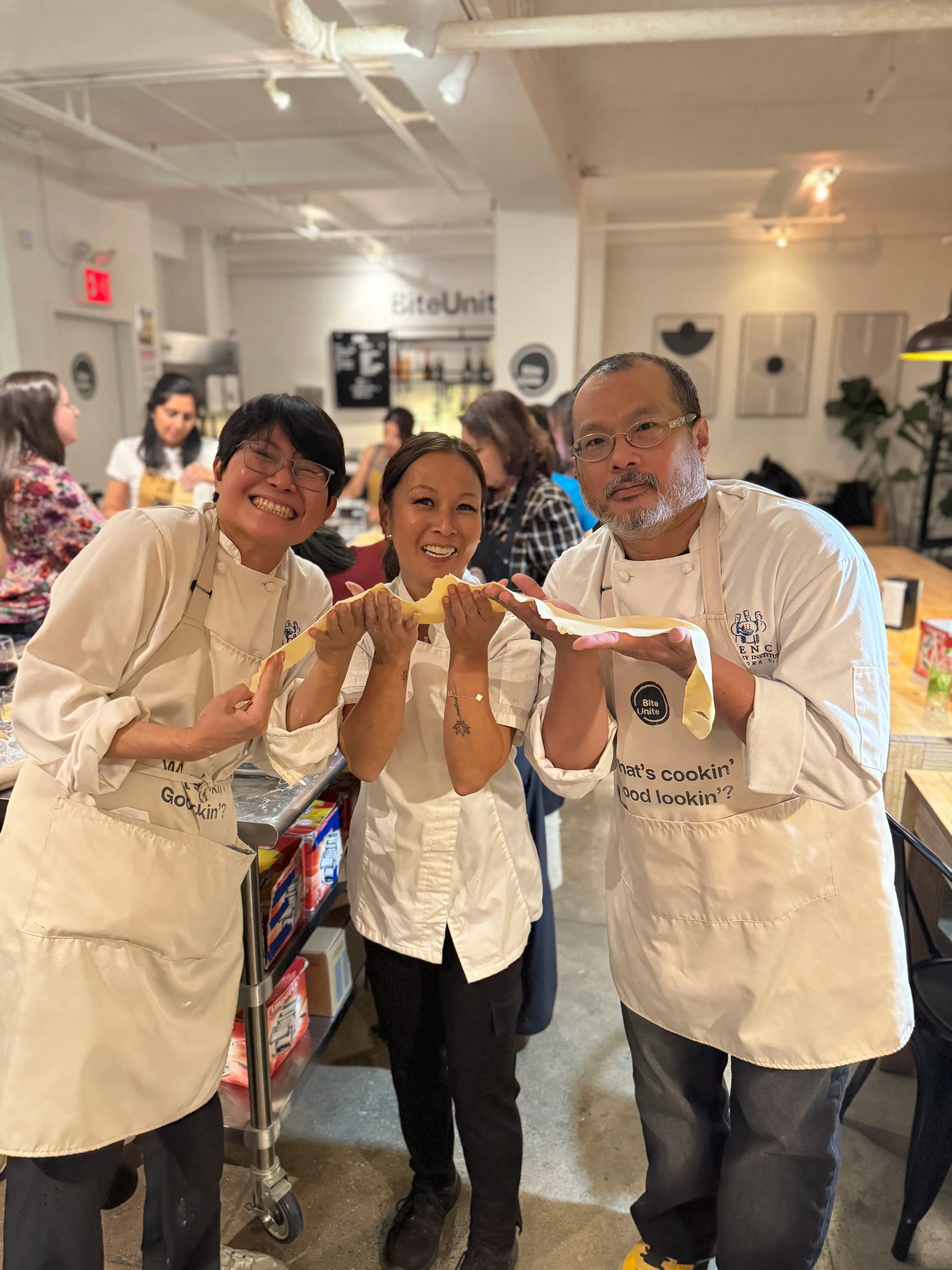
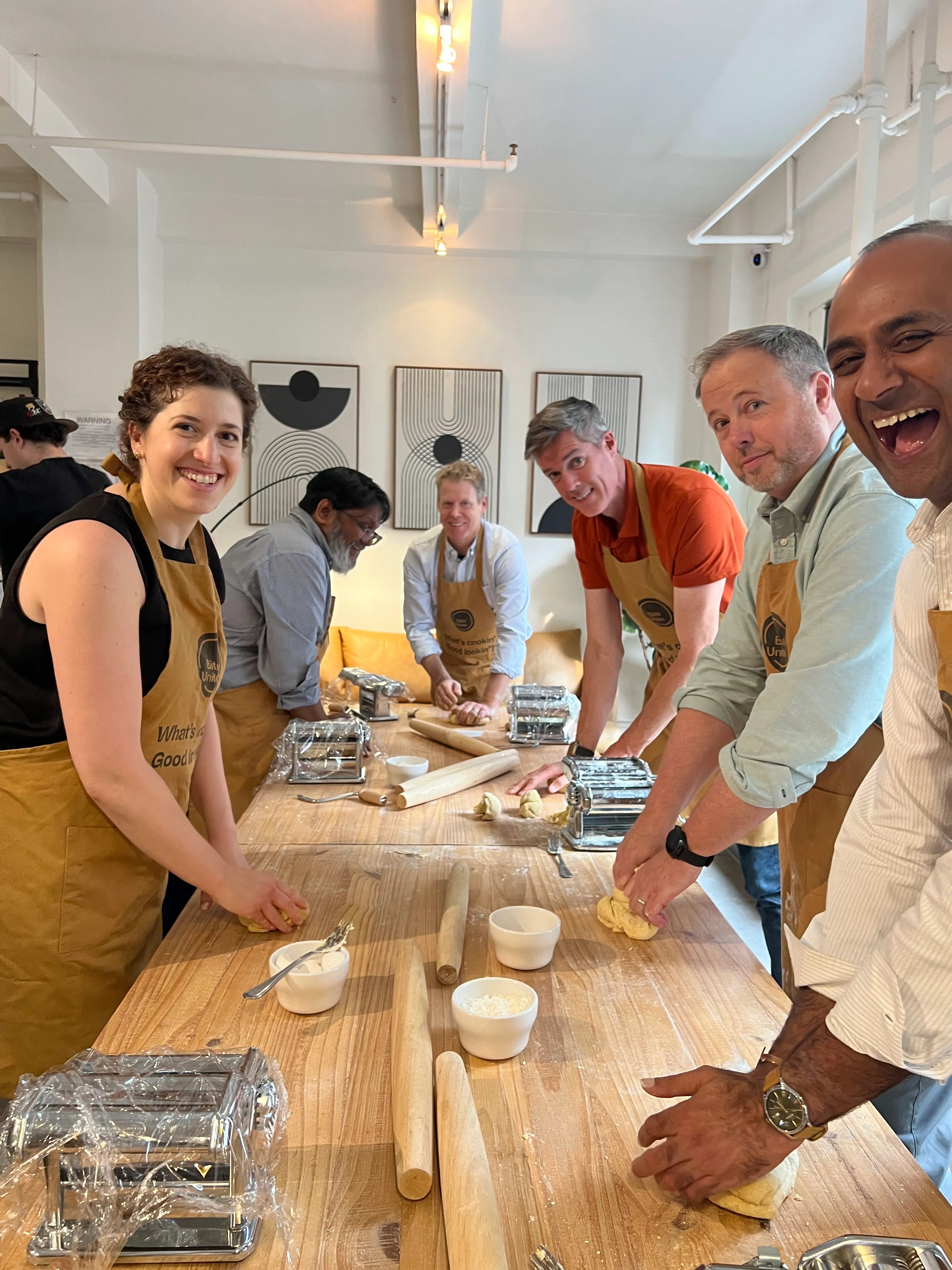
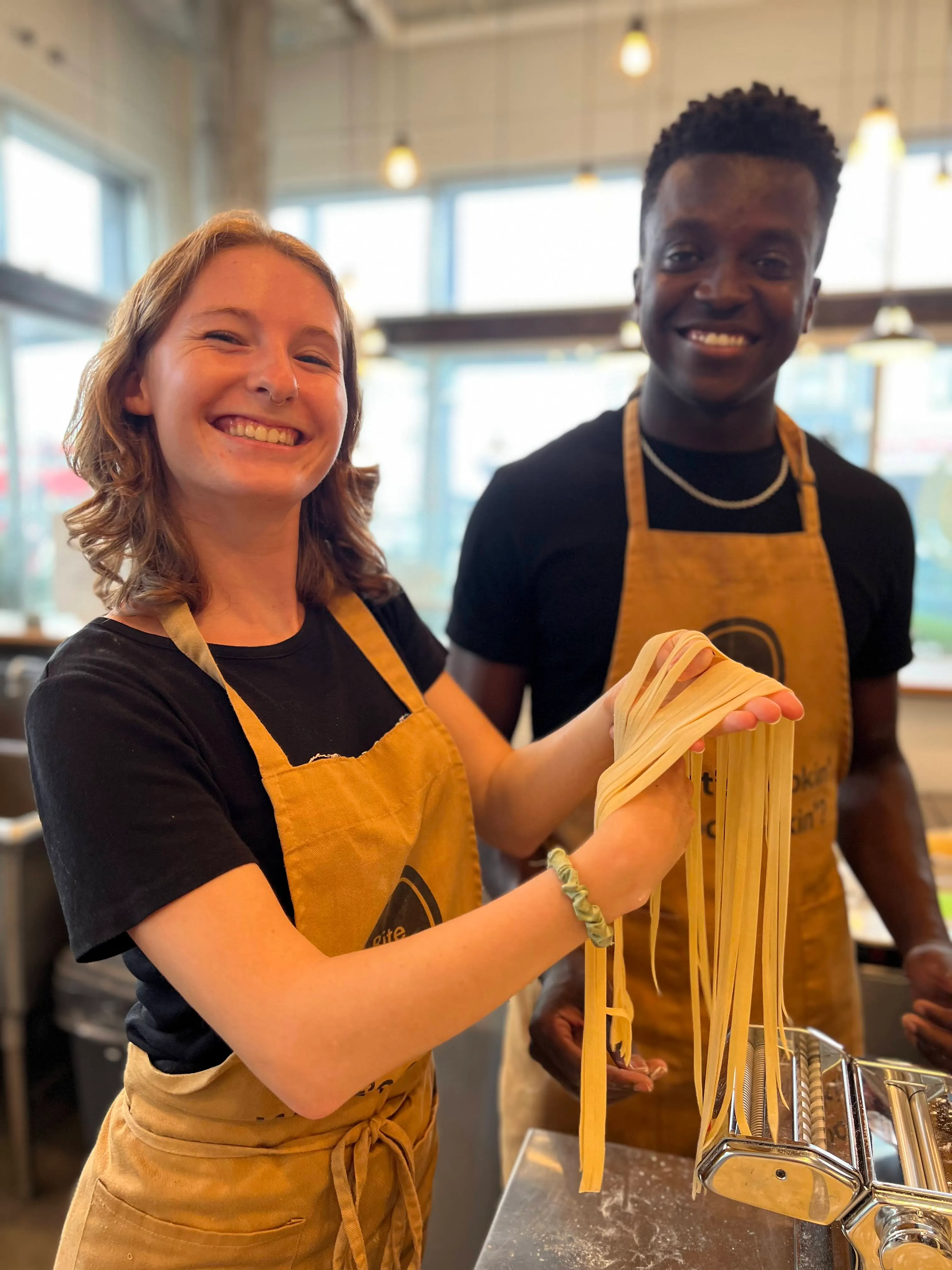
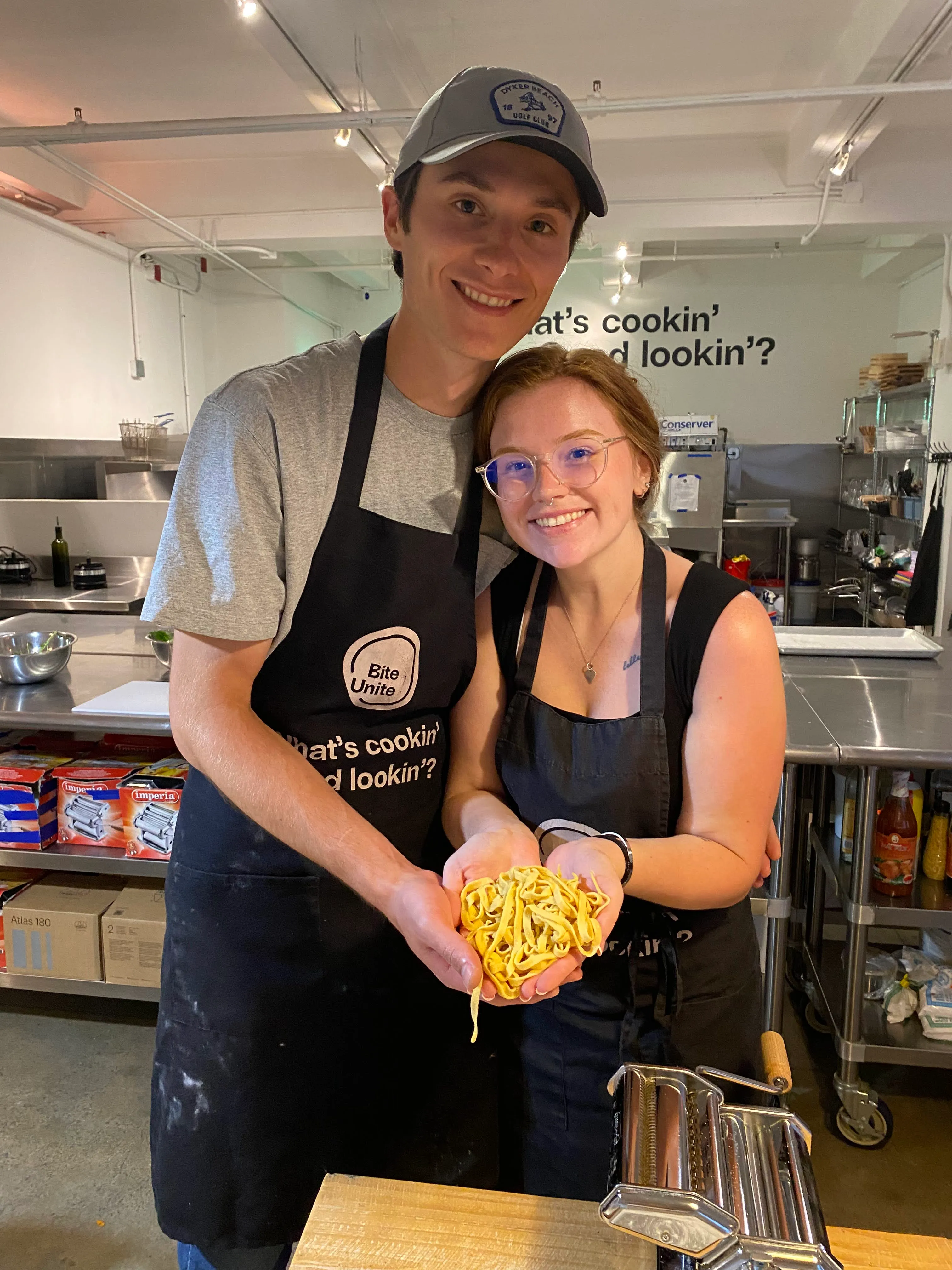
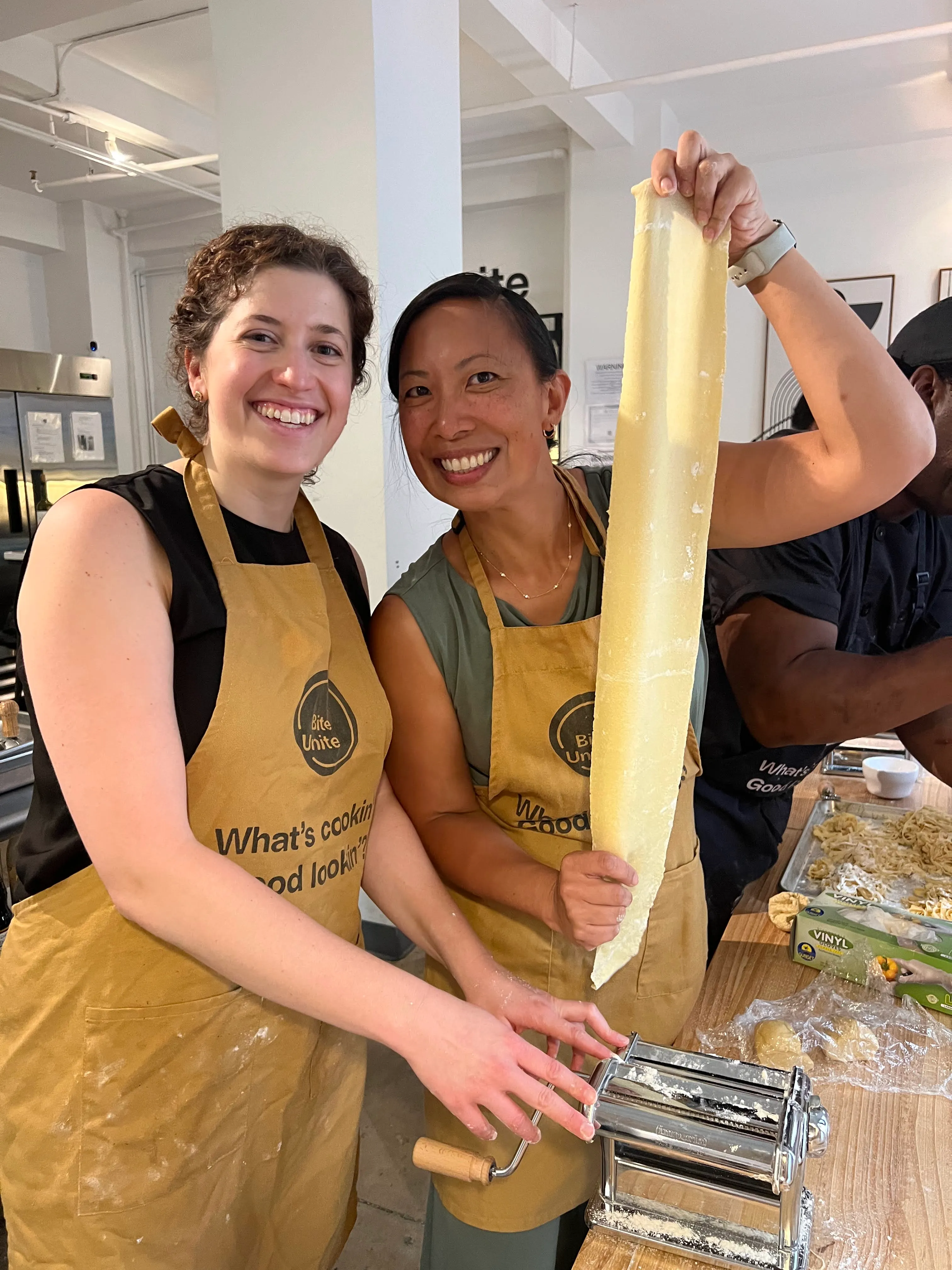
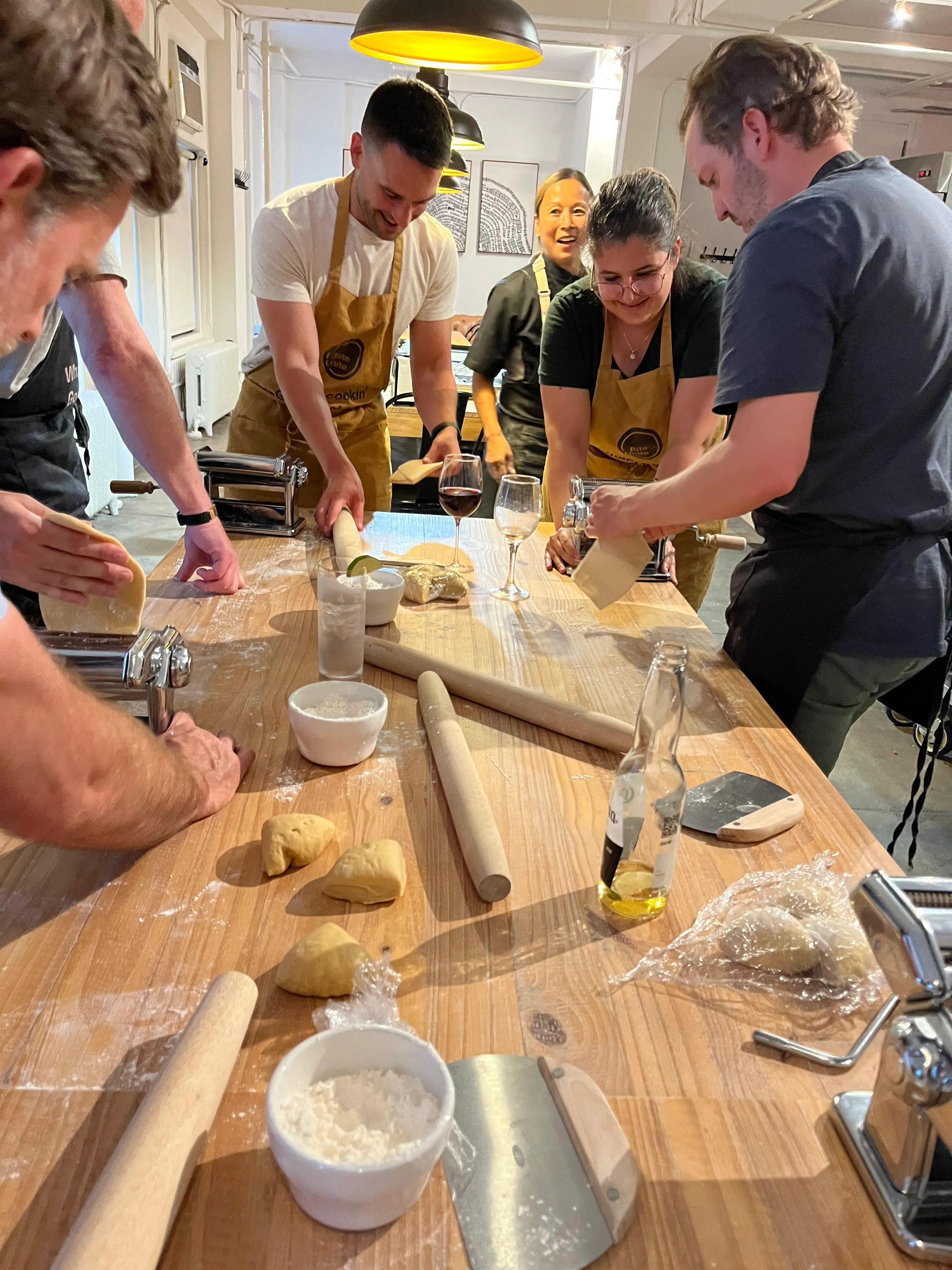
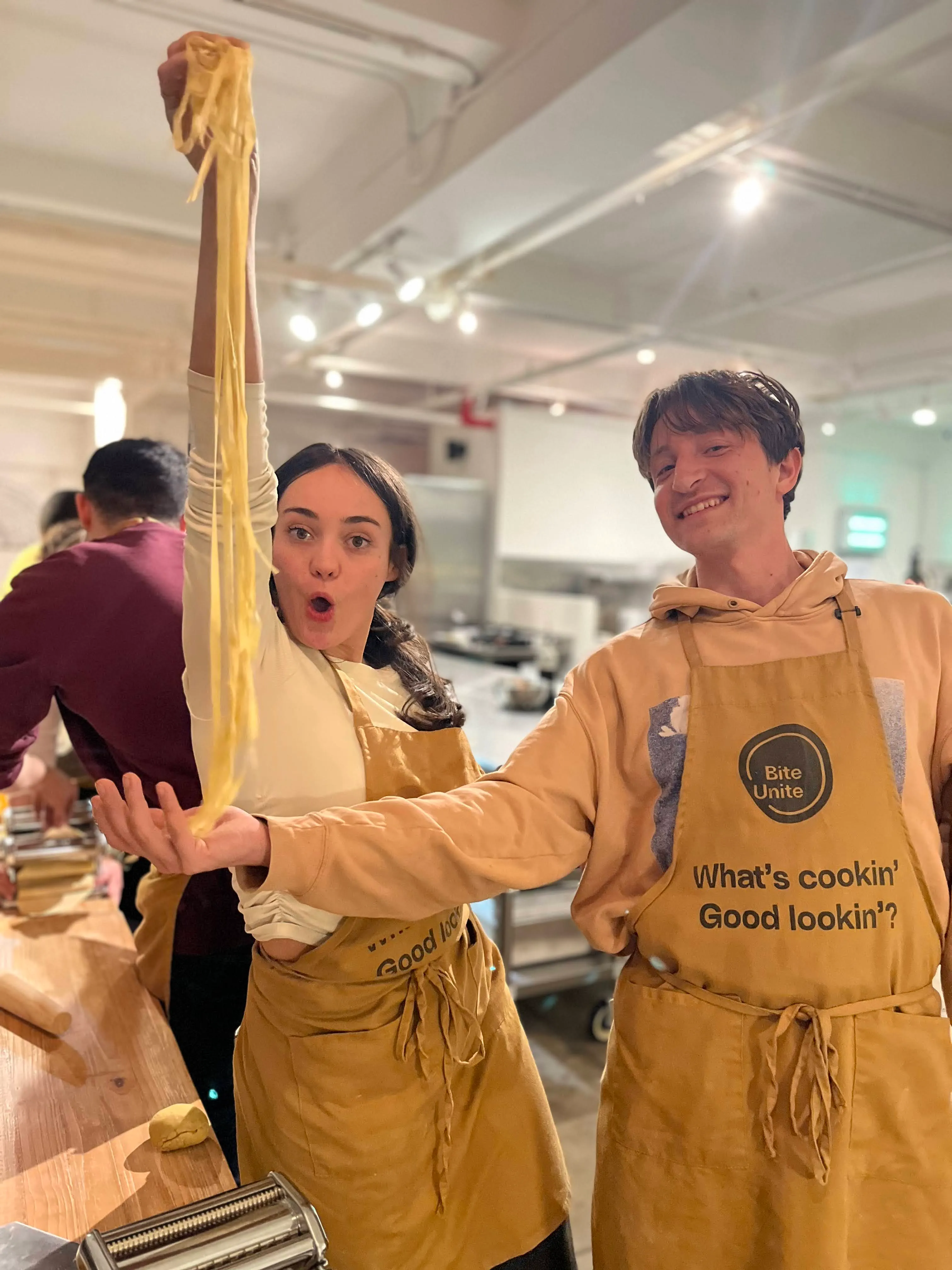
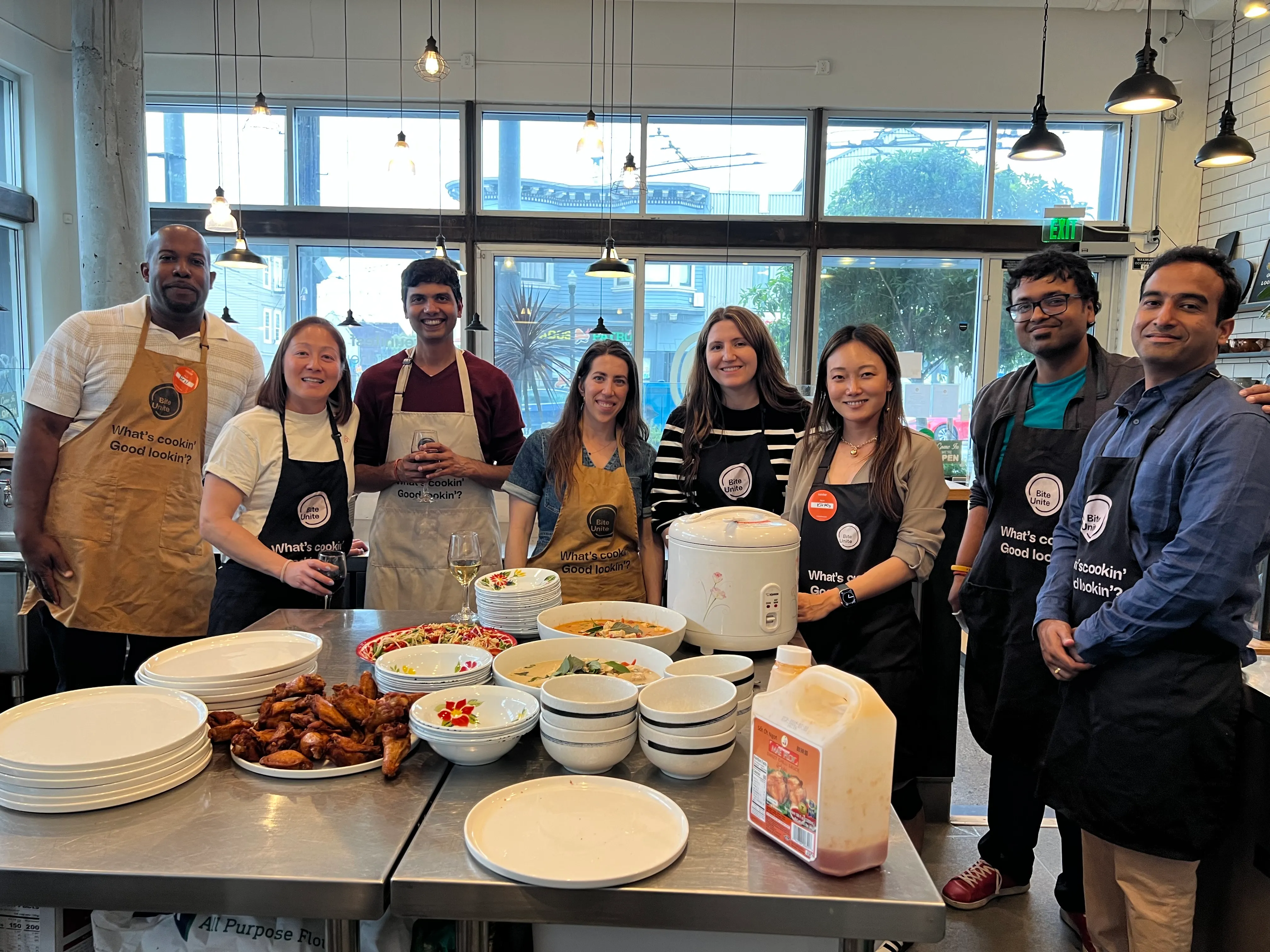
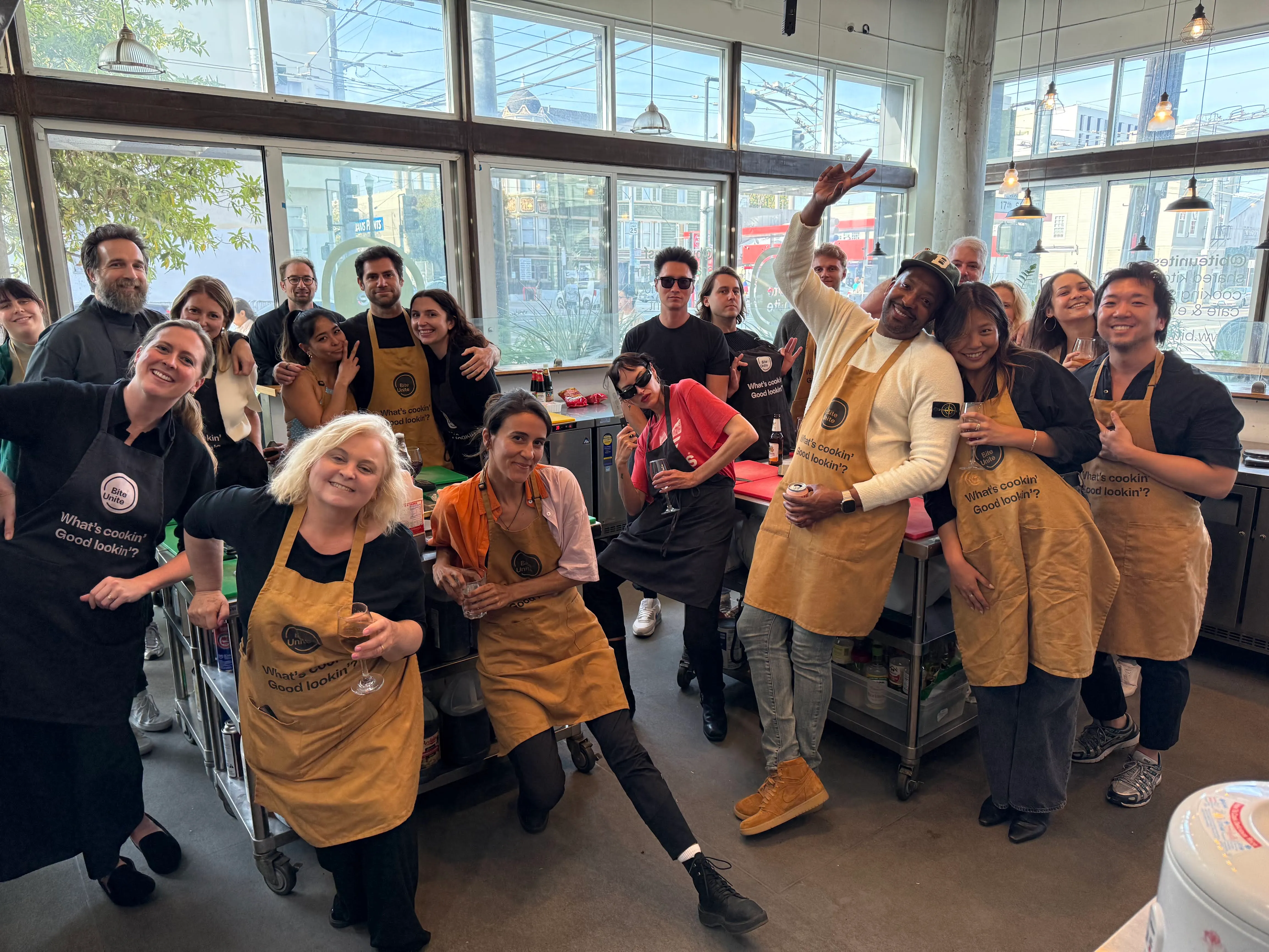
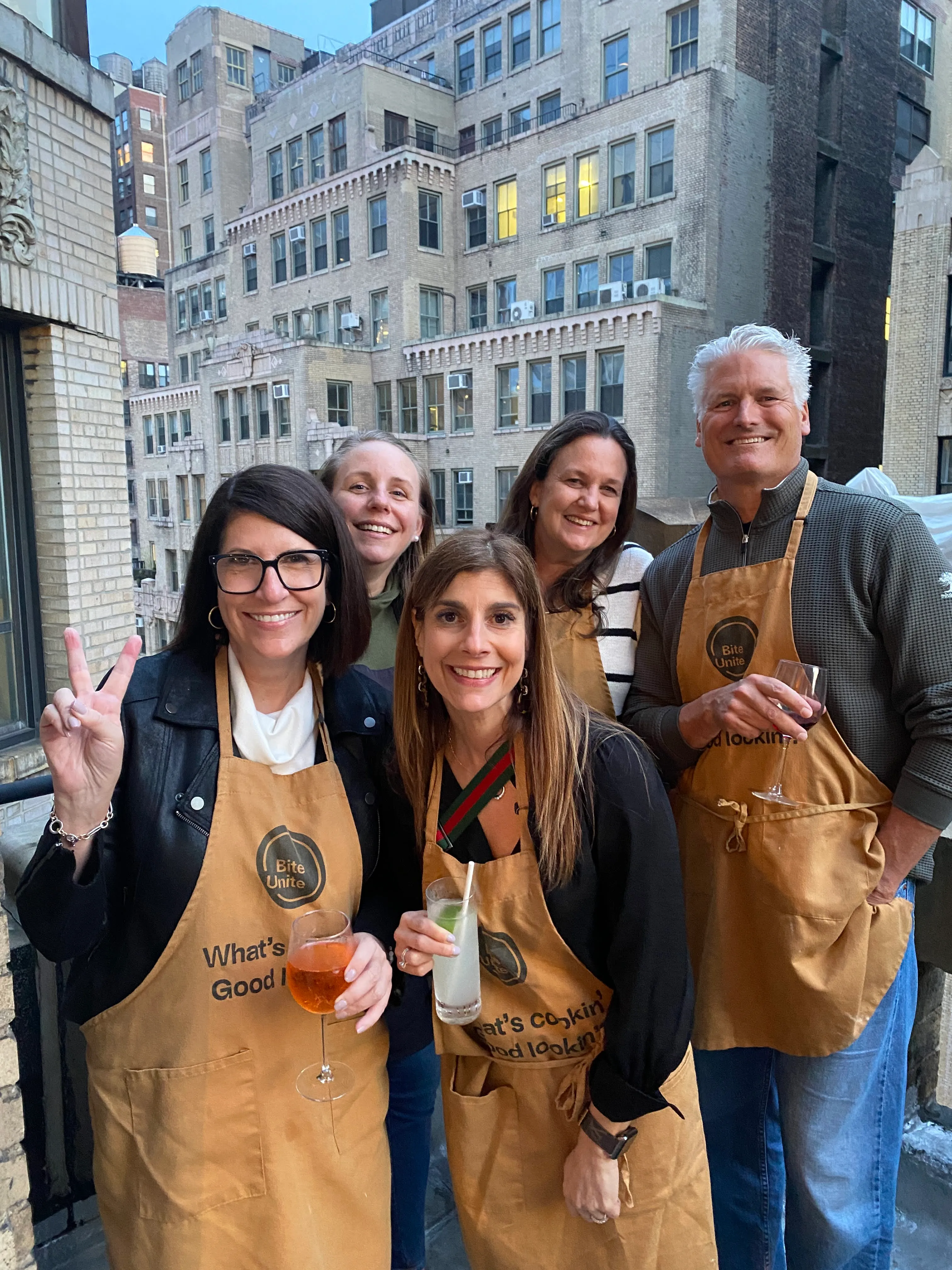
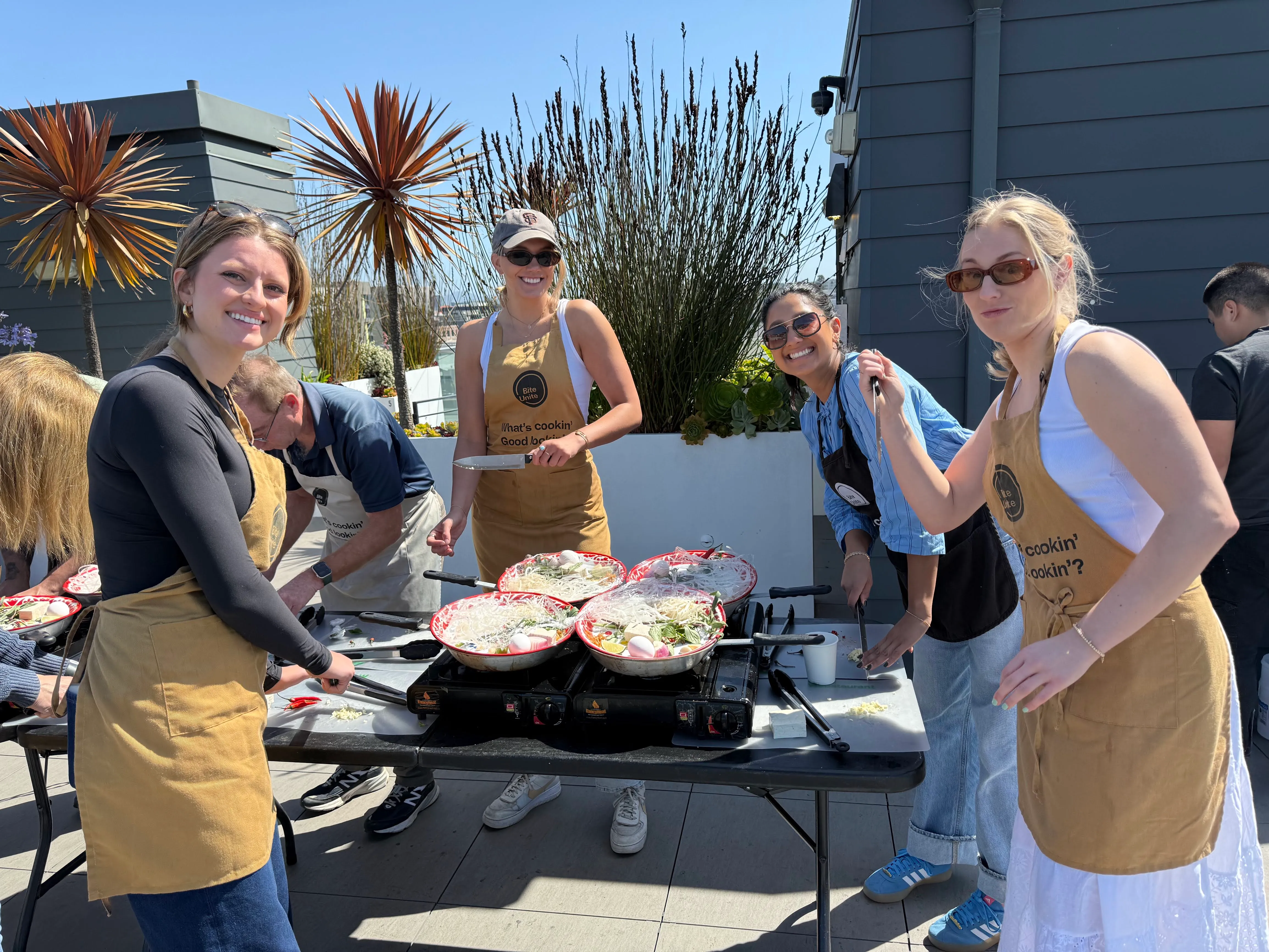
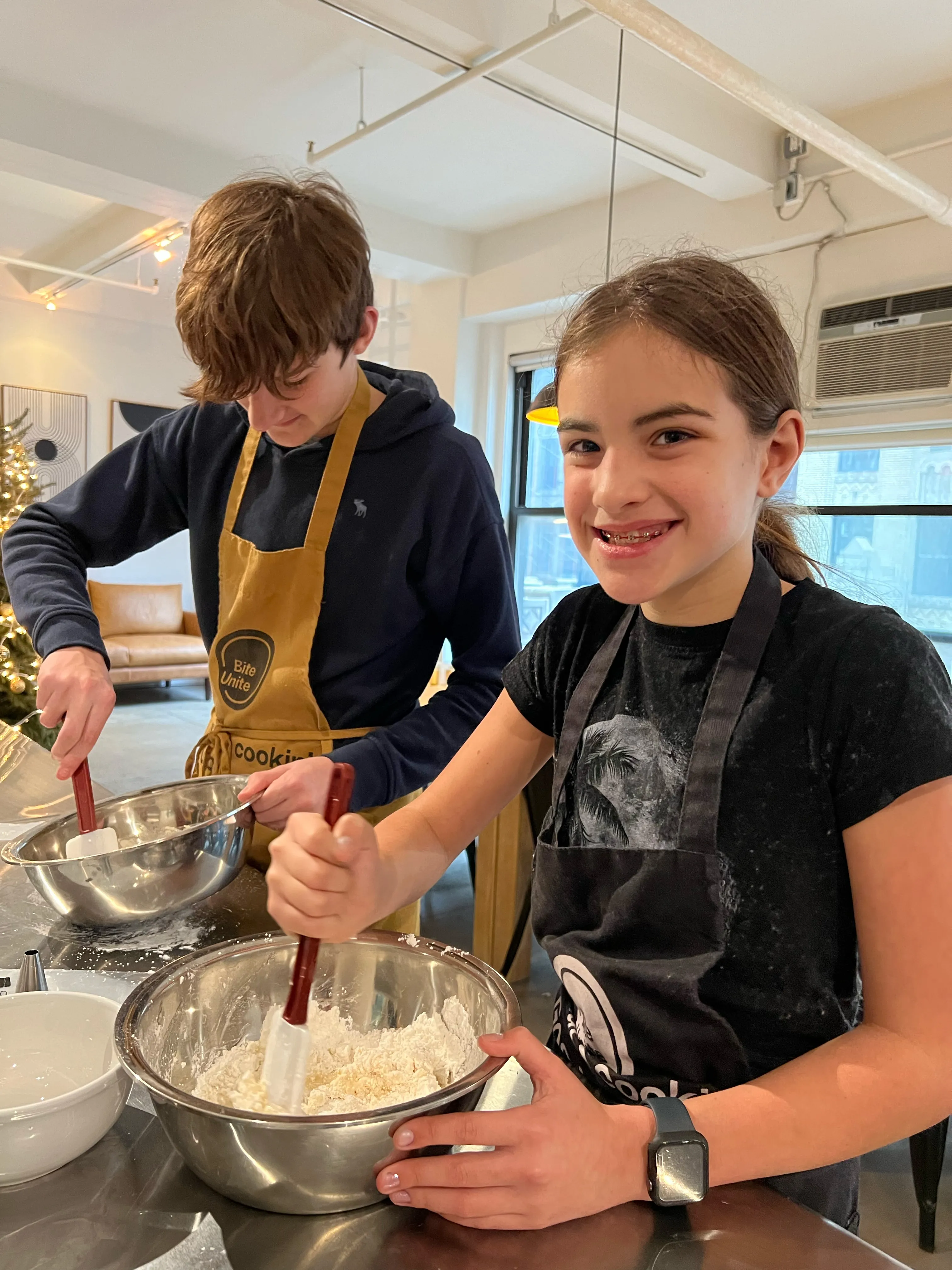
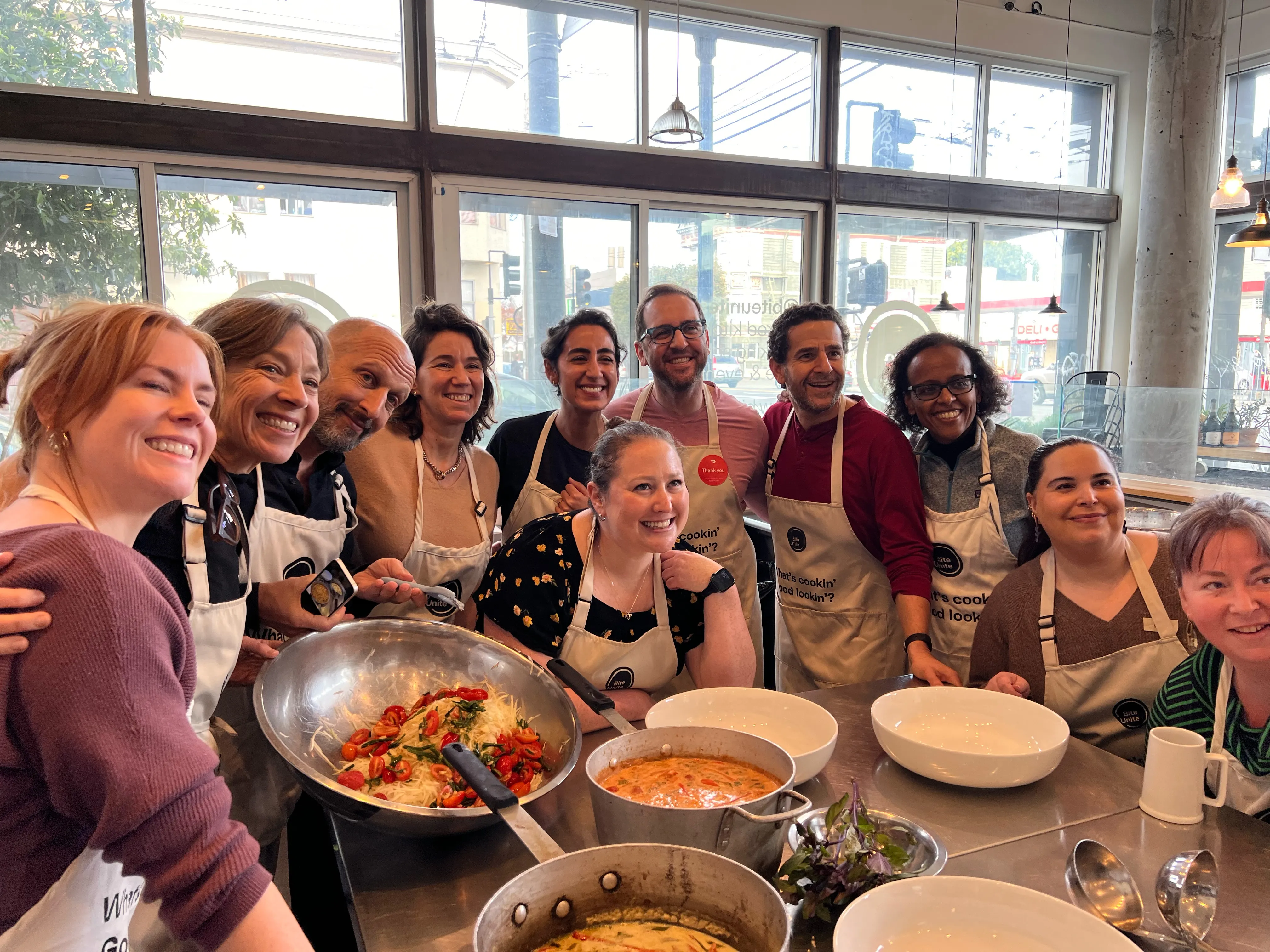
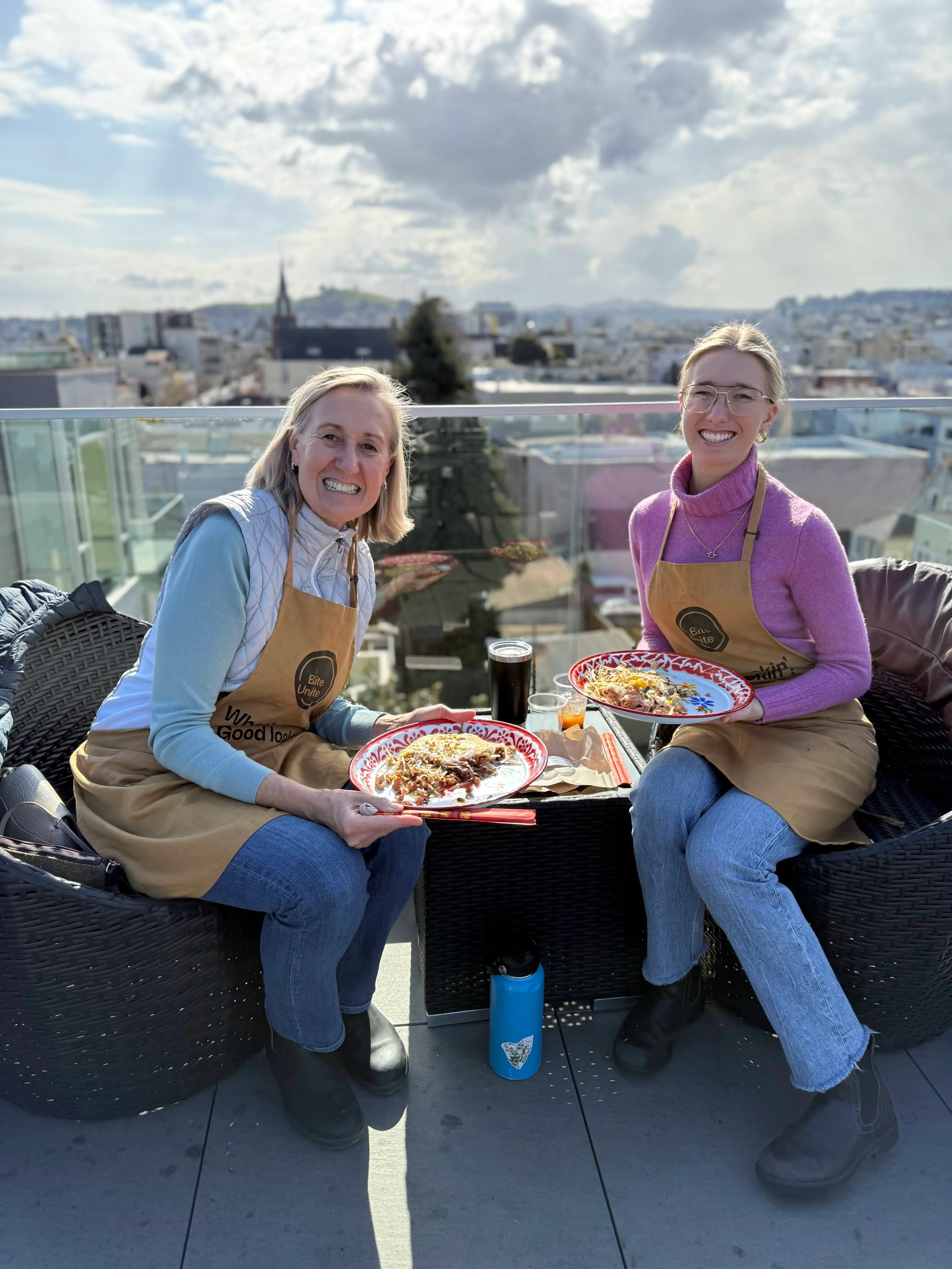
8. Hands-on cooking class (Biteunite) Chef-led, collaborative, and delicious. Teams cook a full menu together, then eat what they made. See the full breakdown in the Biteunite section below.
- Group size: 10–40
- Time: 90 minutes
- Budget: Premium tier ($50+ per person), but the shared meal and skill takeaway make it the highest-value experiential option on this list.
Virtual and hybrid activities
9. Virtual white elephant Use a platform like Elfster or a simple spreadsheet to assign gift pairs. On the day, everyone joins a video call, reveals their gift on camera, and “steals” via a chat-based voting system. Template-based gift exchanges scale easily from 10 to 200 participants.
- Group size: Any
- Time: 30–45 minutes
- Tech tip: Use Zoom breakout rooms for small-group reveals before a full-team debrief.
10. Emoji holiday Pictionary One player types a holiday movie, song, or tradition using only emojis in the chat. Others guess in real time. No drawing skills required, no extra software needed.
- Group size: 8–30
- Time: 20–30 minutes
- Accessibility note: Works for any language background since emojis are visual.
11. Virtual holiday bingo Generate custom bingo cards (free tools like MyFreeB ingo or Bingo Baker work well) with holiday phrases, office in-jokes, or seasonal images. Call cards live on video.
- Group size: Any
- Time: 20–30 minutes
12. Remote desk decorating contest Ask team members to decorate their home workspace and share a photo in a dedicated Slack channel or during a video call. Vote with emoji reactions. Optional, asynchronous participation keeps this low-pressure and time-zone friendly.
- Group size: Any
- Time: Async over 2–3 days; 15-minute reveal call
- Budget tip: Free. No materials required from the organizer.
13. Virtual mocktail or cocktail lab Ship ingredient kits to participants’ homes in advance, then run a live mixology session with a bartender or chef on video. Offer a mocktail version by default so everyone can participate.
- Group size: 10–50
- Time: 60–75 minutes
- Accessibility note: Always include a non-alcoholic option; never make the alcoholic version the default.
14. Holiday movie bracket Teams vote in tournament-style brackets to crown the best holiday movie. Use a shared Lucidspark or Miro board for live voting. Digital templates make setup fast and the debate is genuinely fun.
- Group size: Any
- Time: 30–45 minutes
15. Virtual escape room or puzzle challenge Several platforms (Teambuilding.com, Weve, and others) offer holiday-themed virtual escape rooms. Teams solve clues on a shared screen within a set time limit.
- Group size: 6–50
- Time: 45–60 minutes
- Budget: Typically $20–$40 per person for a hosted session.
Low-budget activities (under $10 per person)
16. Gratitude wall Post a large sheet of paper (or use a digital board like Padlet) and ask everyone to add one thing they’re grateful for about a colleague. Read them aloud at the end of a meeting.
- Group size: Any
- Time: 15–20 minutes
- Cost: Near zero. Gratitude-focused activities align with wellbeing-centered holiday programming and resonate across diverse teams.
17. Holiday recipe swap Everyone submits a favorite seasonal recipe in advance. Compile them into a shared digital cookbook (Google Slides or Canva works perfectly). Share the finished doc as a team keepsake.
- Group size: Any
- Time: 15 minutes at a meeting to share favorites
- Cost: Free
18. White elephant gift exchange (budget cap) Set a $10–$15 cap and let creativity do the work. For gift ideas that hit that price point without feeling cheap, budget-friendly white elephant picks are a great starting point.
- Group size: 8–30
- Time: 20–30 minutes
19. Holiday playlist collaboration Each team member adds 2–3 songs to a shared Spotify playlist. Play it during the event or throughout the holiday week. Simple, personal, and surprisingly revealing about your colleagues.
- Group size: Any
- Time: Async setup; no meeting time required
- Cost: Free
Charitable and social-impact activities
20. Donation drive or toy collection Partner with a local organization (Toys for Tots, a food bank, or a shelter) and run a 2-week collection drive. Announce totals at a team meeting for a satisfying group moment.
- Group size: Any
- Time: 2 weeks async; 10-minute announcement
- Budget tip: Free to organize. The team’s donations are the investment.
21. Volunteer half-day Book a 3–4 hour slot at a local food bank, animal shelter, or community garden. Shared physical work builds camaraderie faster than most office games.
- Group size: 6–30
- Time: 3–4 hours
- Budget tip: Most volunteer organizations are free to join; budget for transportation.
22. Digital giving tree Create a shared digital board where team members can post a wish from a local family or individual in need. Others “pick” a wish and fulfill it anonymously. Digital giving trees are easy to run on Lucidspark or a simple shared doc.
- Group size: Any
- Time: Async over 1–2 weeks
Food and experiential activities
23. Tasting lab (cheese, chocolate, or charcuterie) Curate a tasting flight of 5–6 items and pair each with a brief story about origin or pairing. A facilitator (internal or hired) guides the group through each item. Works in-person or with shipped kits for remote teams.
- Group size: 8–30
- Time: 45–60 minutes
- Accessibility note: Confirm allergies and offer dairy-free or nut-free alternatives.
24. DIY edible gift workshop Teams make small batches of flavored salts, infused oils, or spiced nuts to package as gifts. Edible DIY gift ideas are a great starting point for sourcing recipes and packaging inspiration.
- Group size: 8–20
- Time: 60–75 minutes
- Budget: $10–$20 per person depending on ingredients.
25. Holiday dinner party games Pair a catered or potluck dinner with structured games: a “two truths and a holiday lie” round, a dish-guessing challenge, or a themed trivia set. Food-themed games and icebreakers that pair with a shared meal create the warmest, most relaxed team moments of the year.
- Group size: 8–30
- Time: 60–90 minutes
Pro Tip: For global or hybrid teams, always offer at least one activity that works across time zones without requiring everyone to be live at the same moment. Async options like a recipe swap, a gratitude wall, or a desk-decorating photo contest let international colleagues participate fully without a 6 AM or 11 PM call.
How to run a holiday team-building activity from start to finish
The single best planning rhythm: allow 2–4 weeks for events involving kits, vendors, or more than 20 people, and 48–72 hours for small in-office activities that need only internal supplies. Facilitation and timing are the two variables that separate a memorable event from a forgettable one.
Materials checklist
- Supplies or kits confirmed and on-site (or delivered)
- Dietary and allergy accommodations confirmed
- Scoring sheets or polling tool set up
- Prize(s) wrapped and ready
- Backup activity ready if participation lags (a quick trivia round or a “share your favorite holiday memory in one sentence” prompt works every time)
Pro Tip: If engagement drops mid-activity, the fastest fix is a micro-challenge with a 60-second timer. Urgency and a small prize snap attention back immediately.
Quick matching questions
- Is participation opt-in or mandatory? Opt-in formats need lower-stakes, lower-pressure activities.
- Is the team physically co-located, hybrid, or fully remote?
- Are there dietary restrictions, mobility considerations, or cultural sensitivities to account for?
- Does the team skew competitive or collaborative? Competitive formats need clear, fair rules.
- What’s the desired emotional outcome: laughter, connection, gratitude, or skill-building?
Red flags to watch for
- A vendor with no clear dietary accommodation process
- Activities that require physical ability without a seated alternative
- Rigid scheduling with no cancellation or rescheduling policy
- Hidden fees for facilitation, shipping, or platform access
- No clear facilitator role (unstructured events drift fast)
Questions to ask a vendor before booking
- What’s included in the per-person price (materials, facilitation, platform access)?
- How do you handle dietary restrictions or allergies?
- What’s your cancellation and headcount-change policy?
- Can you support hybrid participants, and what tech do you require?
- What’s your facilitator’s experience with corporate groups?
For a broader look at modern team-building formats that employees actually enjoy, it’s worth reviewing what’s shifted in corporate event planning over the past few years.
Budget and timing cheat sheet for holiday activities
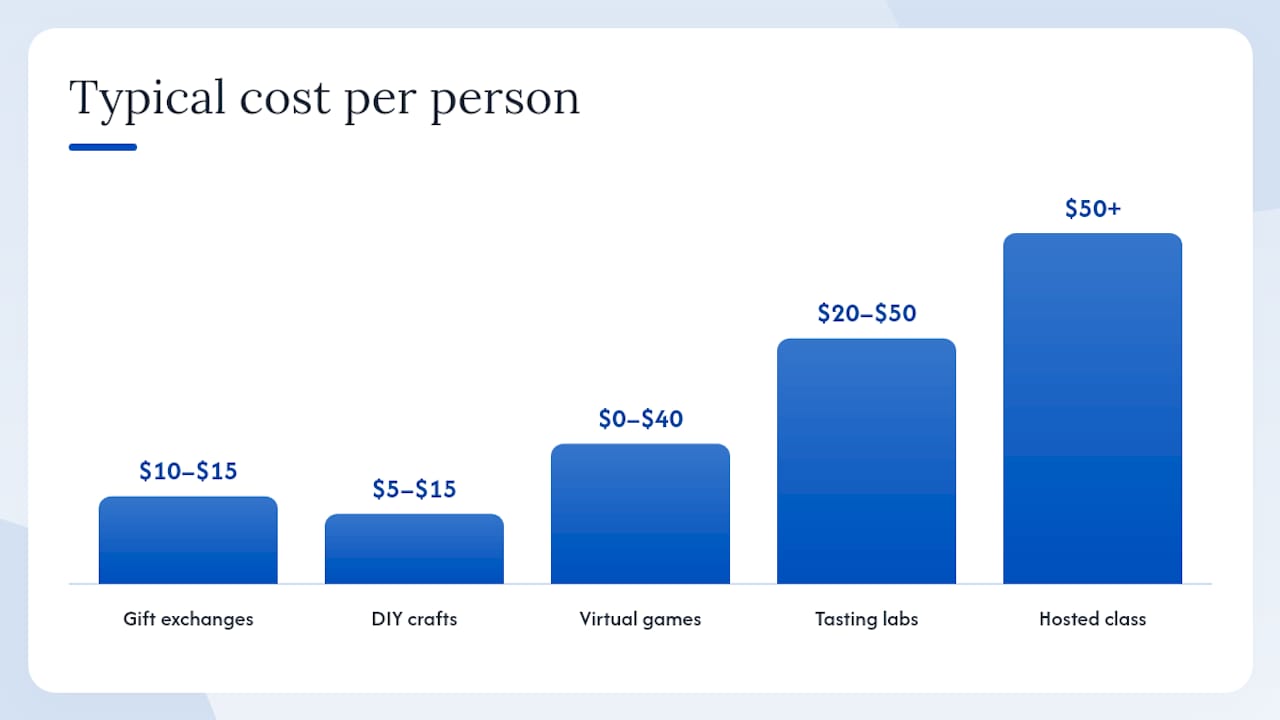
Most holiday activities fall into three tiers: free to under $10 per person, $10–$50 per person, and $50+ per person. Time buckets run 15–30 minutes (icebreakers), 30–60 minutes (games and contests), and 60–90+ minutes (experiential workshops and hosted events). Seasonal spending benchmarks from consumer data can help calibrate per-person kit and prop budgets when planning gift exchanges or costume-based activities.
| Activity category | Typical cost (per person) | Time | Group size |
|---|---|---|---|
| Icebreakers (ugly sweater, playlist, gratitude wall) | Free | 15–30 min | Any |
| Gift exchanges (white elephant, Secret Santa) | $10–$15 (gift cap) | 20–30 min | 8–50 |
| DIY crafts (ornaments, cookie decorating) | $5–$15 | 30–60 min | 8–30 |
| Trivia / game show (in-house) | Free–$10 | 45–75 min | 10–100 |
| Virtual games (bingo, Pictionary, escape room) | $0–$40 | 20–60 min | Any |
| Tasting labs / mocktail kits | $20–$50 | 45–75 min | 8–30 |
| Hosted experiential class (cooking, craft workshop) | $50+ per person | 90 min | 10–40 |
| Volunteer half-day | Free (transport only) | 3–4 hrs | 6–30 |
A note on kit shipping for distributed teams
For remote teams, shipped kits add $15–$30 per person in materials plus $10–$20 in domestic shipping, depending on weight and lead time. Order at least 10 business days before the event to avoid rush fees. Label kits with participant names and dietary notes at the point of packing, not on arrival, to avoid mix-ups. Experiential providers that offer kit-based remote participation typically handle labeling and dietary substitutions as part of their service, which is worth factoring into the cost comparison against a DIY approach.
Virtual and hybrid adaptations that actually work
The core principle: hybrid events succeed when remote participants have an equivalent activity and an equivalent facilitator, not a watered-down version of what the in-room group is doing. The most common pitfall is treating remote attendees as observers rather than full participants, and that gap shows up immediately in engagement.
Tech checklist
- Test audio and video on the platform at least 24 hours before the event.
- Set up breakout rooms in advance with pre-assigned groups.
- Have a polling or reaction tool ready (Mentimeter, Slido, or native Zoom polls).
- Prepare a shared whiteboard (Miro or Lucidspark) for collaborative activities.
- Keep a backup Zoom link in case the primary platform fails. Send it in the calendar invite so participants already have it.
Contingency plan for tech failures
If the platform goes down mid-event, move to the backup link immediately. If audio fails for one participant, switch them to phone dial-in. If a kit hasn’t arrived, send the participant a simple grocery-list alternative they can assemble in 5 minutes (for a mocktail lab: sparkling water, citrus, and a sweetener). Having these fallbacks written into your runbook means you handle them calmly instead of scrambling.
Low-tech alternatives when shipping isn’t feasible
- Async photo challenges (desk decorating, “show us your holiday mug”) submitted to a Slack channel
- A shared Spotify playlist built collaboratively over a week
- A digital gratitude wall on Padlet that stays open for 5 days
- A recipe swap compiled into a shared Google Slides deck
Optional, asynchronous participation options increase remote attendance and lower friction, especially for teams spread across multiple time zones.
Pro Tip: Assign a dedicated virtual facilitator whose only job is to watch the remote participants’ video feeds and call on quiet attendees by name. It takes one person about 10 minutes of prep to do this well, and the difference in remote engagement is immediate.
Why a hands-on cooking class is one of the best holiday team-building choices
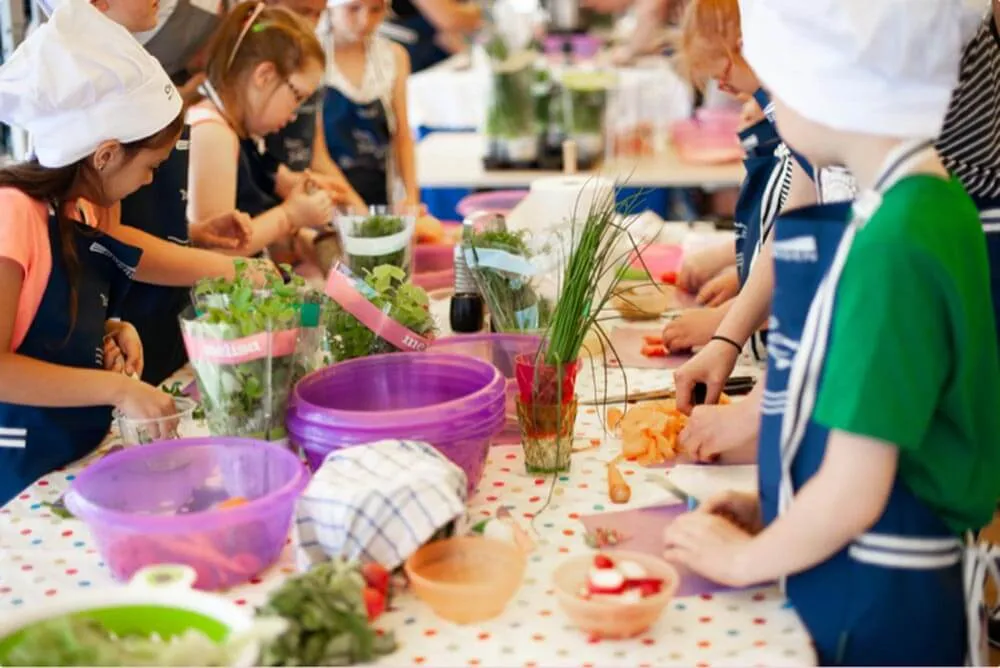
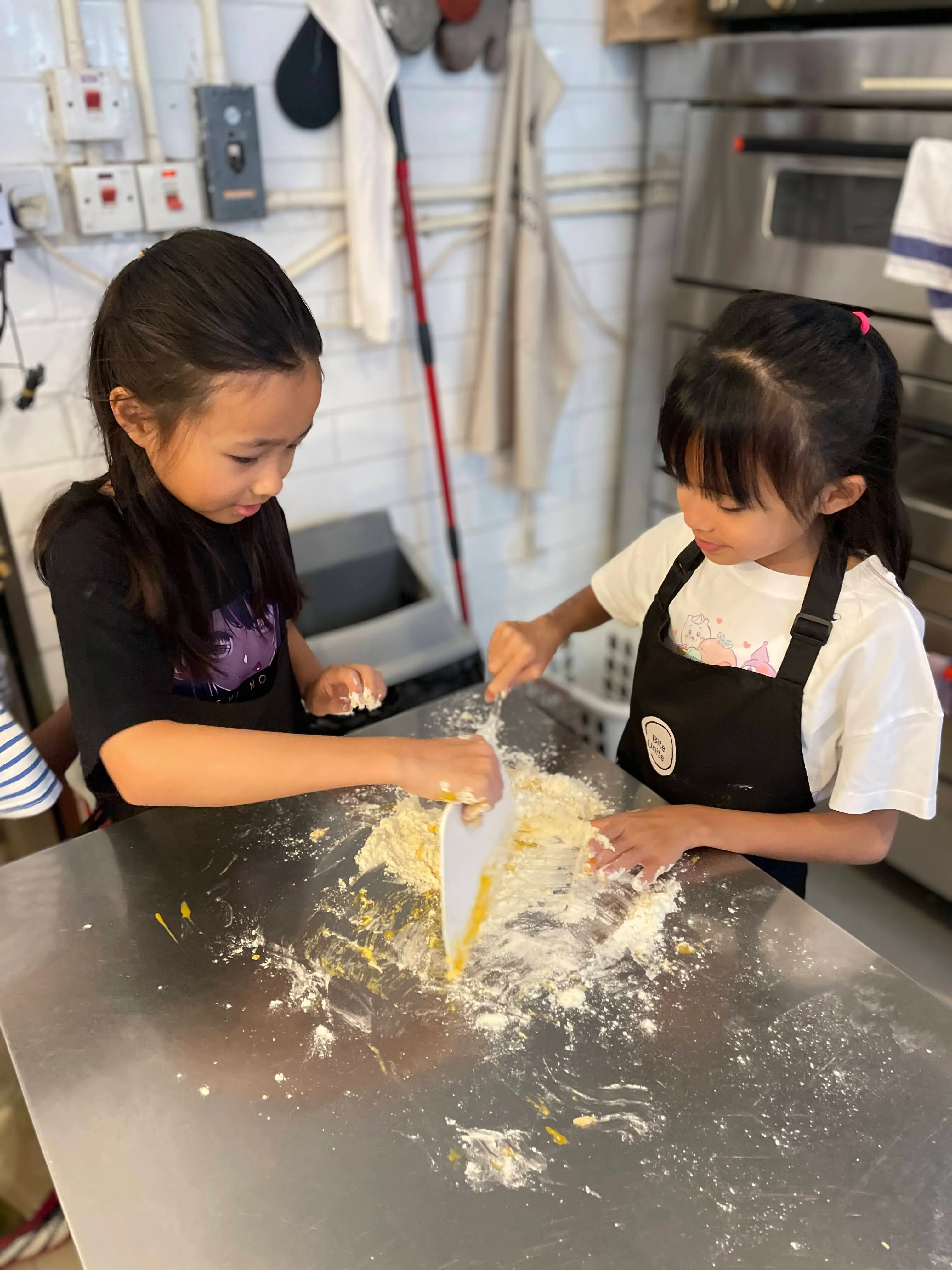
Hands-on cooking classes consistently deliver high-engagement, shared-outcome experiences that reinforce collaboration in a way that trivia and gift exchanges simply can’t match. The reason is structural: cooking requires genuine teamwork (someone chops, someone sauces, someone plates), produces a tangible result everyone shares, and creates sensory memories that stick.
What to confirm when booking
- Final headcount and any dietary restrictions (allergies, vegetarian, vegan, halal, kosher)
- Menu preference or cuisine theme (Italian, Thai, holiday baking, and others are available)
- AV needs for hybrid participants
- Cancellation and headcount-change policy
- Whether the session includes a recipe card or digital follow-up
Pro Tip: Book your holiday cooking class at least 3–4 weeks in advance. December slots fill quickly, especially for groups over 20. Biteunite’s team can help you customize the menu to fit your group’s dietary profile, so bring that list when you first reach out.
Key Takeaways
The most effective holiday team-building activities are inclusive, time-boxed to 60–90 minutes, and matched to your team’s hybrid setup before you commit to a format.
| Point | Details |
|---|---|
| Inclusivity comes first | Choose activities where every team member can participate fully, regardless of ability, diet, or time zone. |
| Match time and budget tiers | Free icebreakers run 15–30 min; experiential classes run 75–90 min at $50+ per person. Pick the tier your schedule and budget actually support. |
| Hybrid parity is non-negotiable | Remote participants need an equivalent activity and a dedicated facilitator, not a passive observer role. |
| Plan 2–4 weeks out | Vendor bookings, kit shipping, and dietary confirmations all need lead time; 48–72 hours works only for simple in-office activities. |
| Biteunite for high-impact events | Chef-led cooking classes in New York and San Francisco (and online) deliver shared-outcome experiences that strengthen team bonds in a single 90-minute session. |
The activity that actually sticks
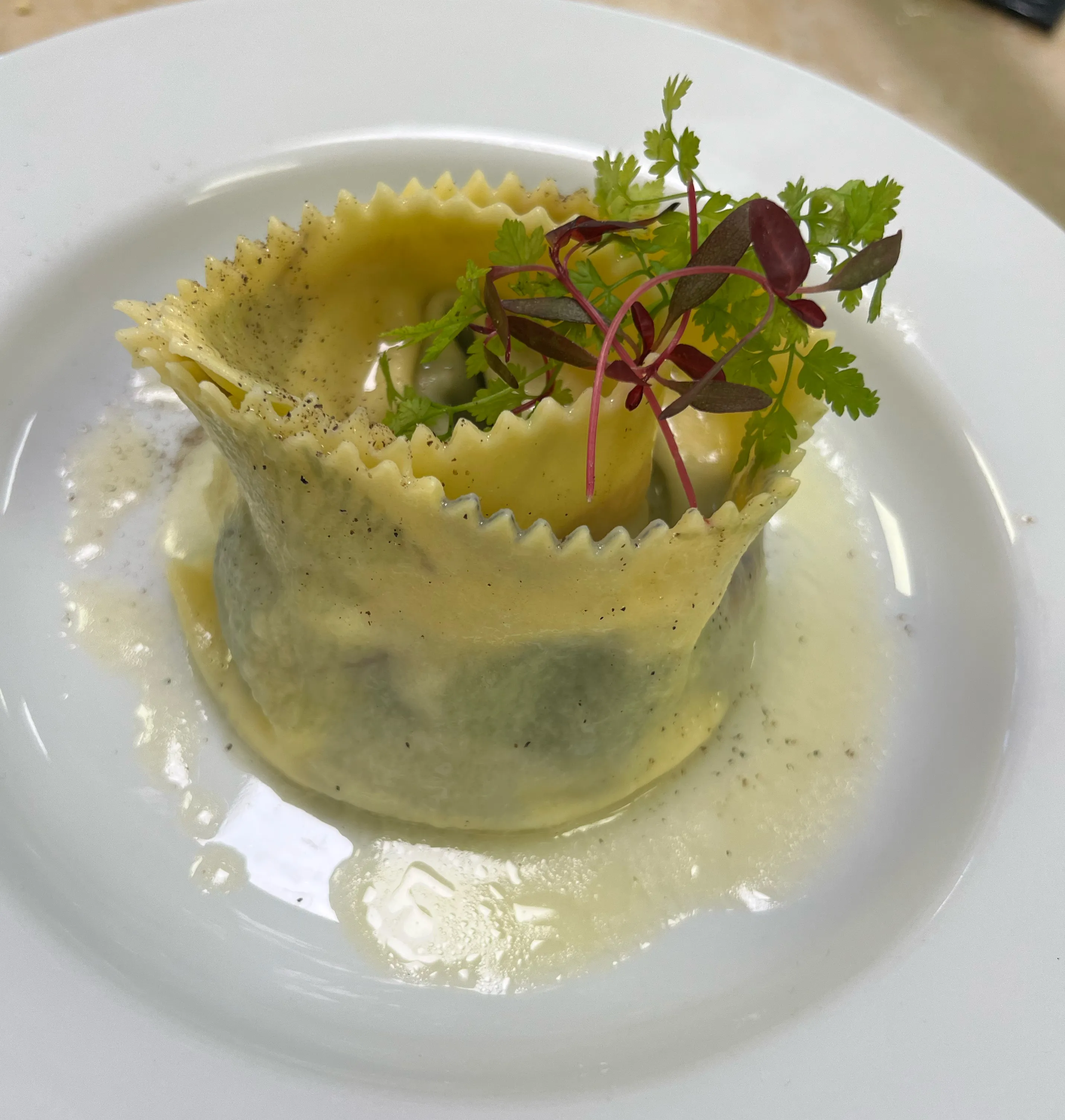
Most holiday events are forgotten by January. The ones that aren’t share a common trait: people made something together. A trivia score fades. A dish you cooked, plated, and ate with your team doesn’t.
The conventional wisdom in corporate event planning is to optimize for the lowest common denominator, which usually means a passive activity that offends no one and excites no one either. The better move is to find the format that gives people a genuine shared experience, even if it takes a little more coordination. A well-run cooking class, a real volunteer shift, or even a thoughtfully facilitated recipe swap creates the kind of moment people reference at the next holiday party.
The other thing planners underestimate: follow-up. Sending a photo recap, a shared recipe doc, or a short “what did you make?” Slack thread the next day extends the bonding effect by days. The event is the spark; the follow-up is what keeps it warm.
Biteunite makes holiday team events delicious and stress-free
Planning a holiday event for your team doesn’t have to mean hours of logistics and a mediocre result. Biteunite’s chef-led cooking classes give your group a hands-on, memorable experience where the food is genuinely good and the teamwork is built right into the recipe.
Classes run in New York and San Francisco, with online options for remote and hybrid teams. Menus are customizable, dietary needs are handled by the culinary team, and the whole experience is facilitated from start to finish so you can actually enjoy the event instead of running it. Whether you’re planning for 10 people or 40, Biteunite has a format that fits.
Book a group cooking class in Manhattan or explore San Francisco options and check availability for your holiday date. December books fast, so reach out early.
Useful sources and further reading
- 60 Gift & Activity Ideas to Celebrate Christmas With Your Team - Meditopia for Work
- 15 holiday team-building activities to feel the cheer all season long - Lucidspark
- 10 Holiday Team Building Activities That Work | Cocoon Flex Spaces
- 25 Best Christmas Team Building Activities & Events - Funattic
- Ultimate Holiday Game Show | In-Person Team Building - TeamBuilding.com
- 15+ Festive & Fun Holiday Team Building Activities - KraftyLab
- 8 Holiday Team Building Activities For The Office or Virtual - SnapComms
- Spending per costume in the U.S. - Statista






























.webp)






.webp)
.webp)
.webp)





.webp)


.webp)