90–120 Minute Chef Run Cooking Competitions for Corporate Teams
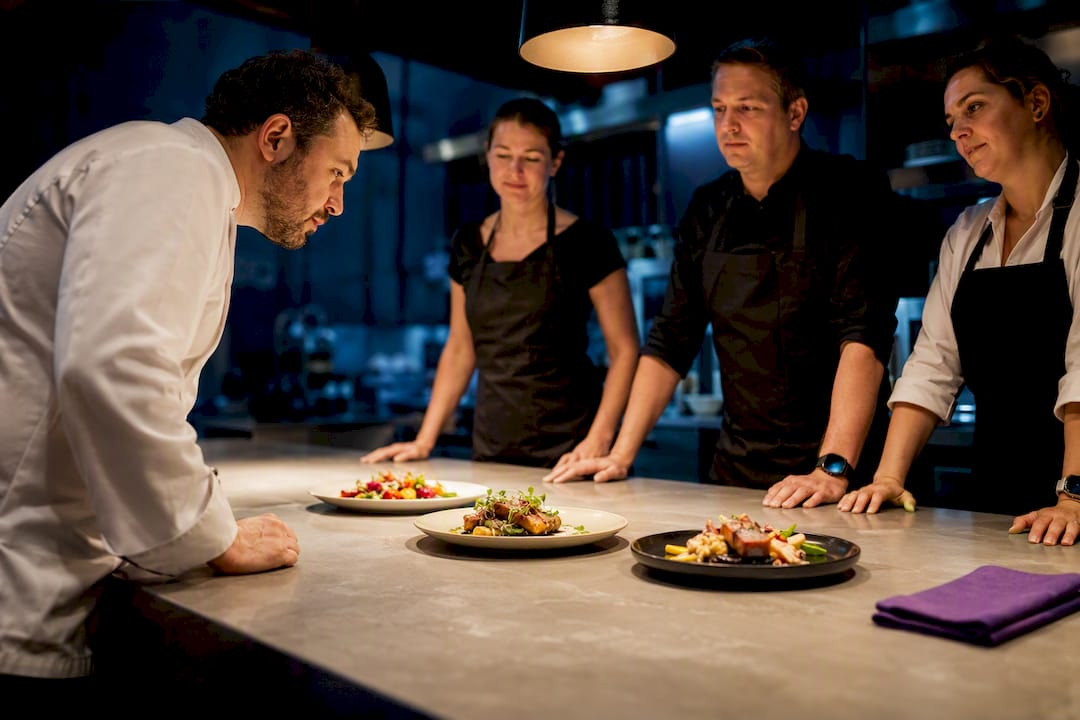
A chef-led mystery-box or Iron Chef style competition is the strongest team-building format for most corporate groups, and yes, it is worth booking. It forces communication, decision-making, and shared ownership of a result in about two hours, with a real chef guiding every station. This exact format is available as a straightforward option if you want it handled for you.
TL;DR:
- Mystery box challenges are quick to set up, easy to judge, and promote improvisation, especially suited for groups of 8 to 40 people.
- Iron Chef-style events are effective at revealing leadership and are better for smaller, high-touch executive groups with over 12 participants.
- These competitions improve team communication, decision-making, leadership emergence, and collaborative creativity under time pressure.
- Ensuring adequate venue power, safety protocols, dietary accommodations, and clear provider agreements are critical logistics before booking any cooking activity.
Table of Contents
- What Cooking Competition Team Building Formats Should You Choose?
- How Does a Cooking Competition Team Building Event Actually Run?
- What Do Teams Actually Gain From Competing in the Kitchen?
- What Logistics and Costs Should You Plan For?
- How Do You Make a Cooking Competition Work for Every Skill Level?
- Why Chef Facilitation Is the Difference Between Chaos and a Great Event
- What Other Formats and Twists Can Keep the Concept Fresh?
- What Should You Ask Before You Book a Provider?
- A Final Take on Why This Format Sticks
- Book a Chef-Led Cooking Competition With Biteunite
- Sources
What Cooking Competition Team Building Formats Should You Choose?
Not every kitchen challenge serves the same goal, and picking the wrong one wastes a good budget on the wrong outcome. Some formats reward speed, some reward creativity, and some are built purely so everyone gets a turn holding a knife.
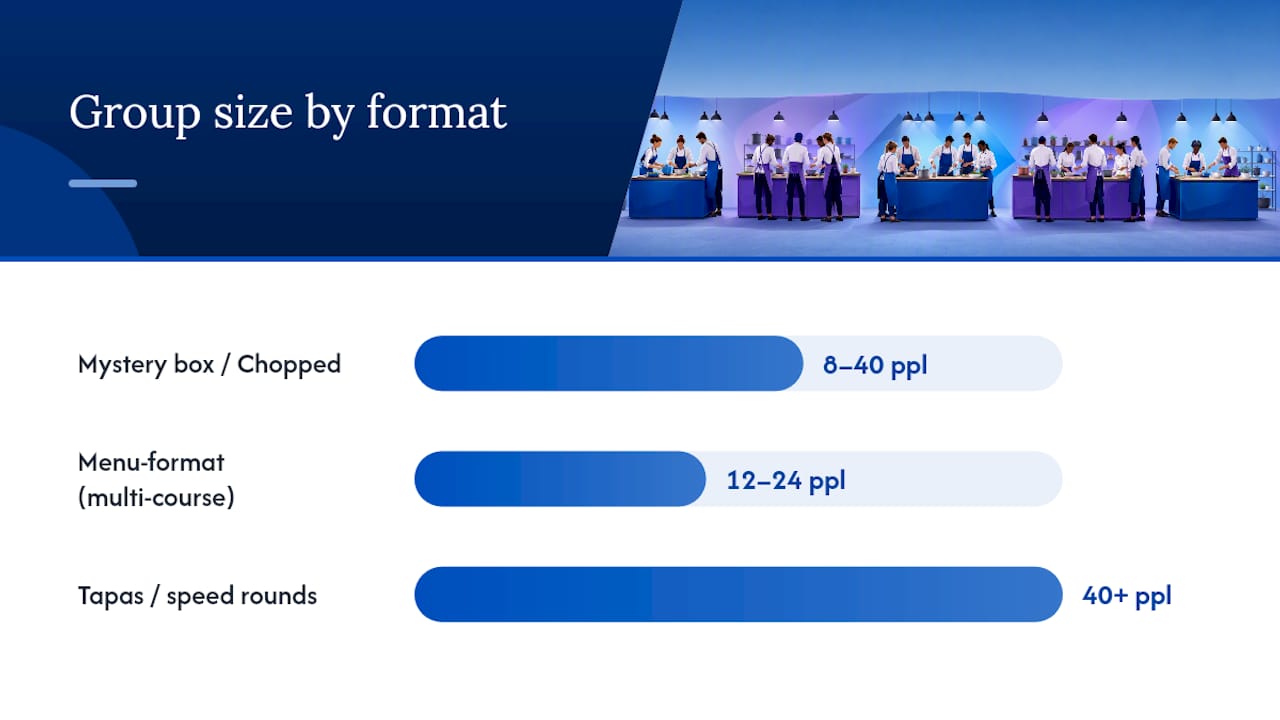
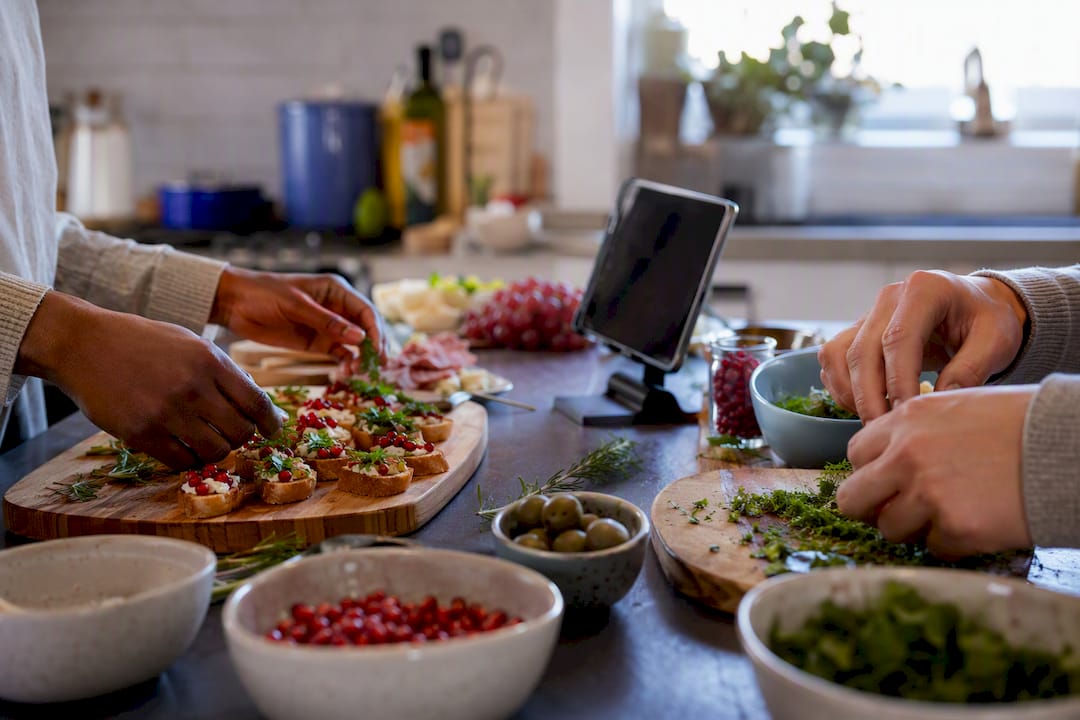
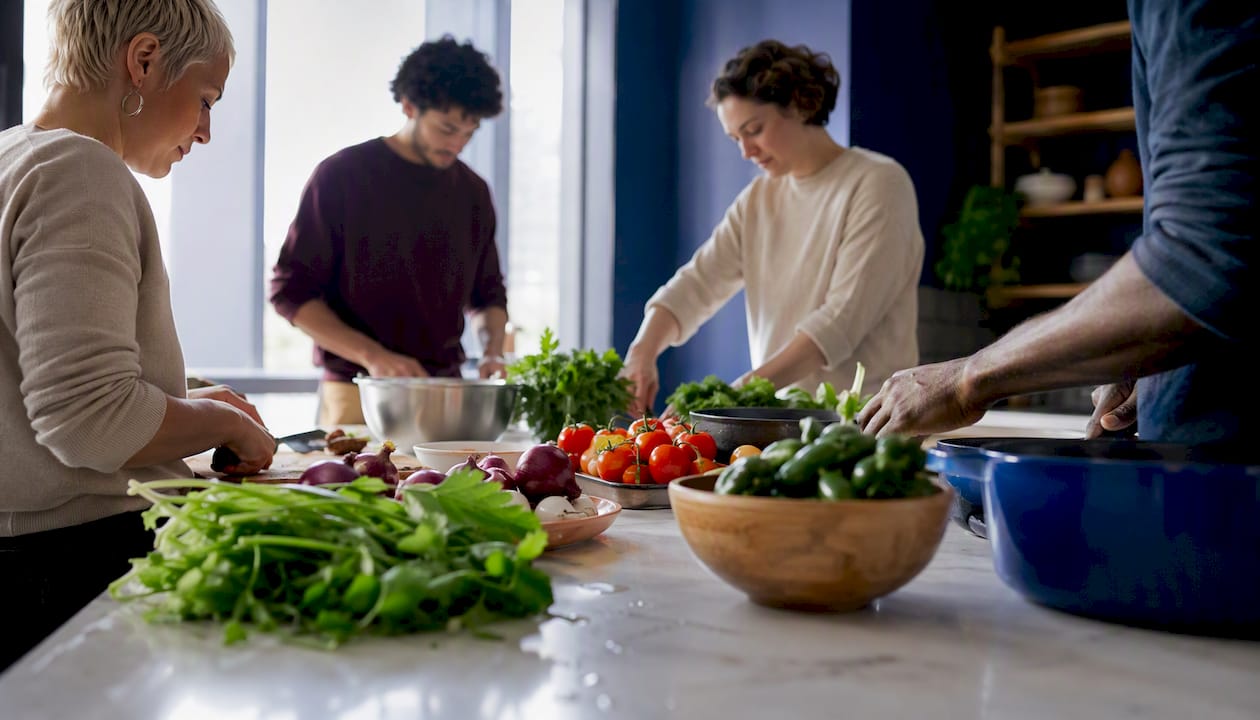
Mystery box and Chopped-style challenges hand each team a box of surprise ingredients and a time limit, usually 45 to 60 minutes, then ask them to build a dish around what they got. This format tests improvisation and forces teams to argue through constraints fast, which mirrors the kind of scrappy problem solving that happens during a product launch gone sideways. It works well for groups of 8 to 40, split into small teams of four to six.
Iron Chef style events give every team the same secret ingredient but let them choose their own direction, which shifts the pressure from “what do we have” to “what’s our angle.” This tends to surface natural leaders faster than mystery box formats because there is more room for a team to disagree on strategy before cooking even starts.
Menu-format, multi-course competitions stretch the event to a few hours and ask teams to build an appetizer, entrée, and dessert in sequence. These suit smaller executive groups, 12 to 24 people, who have the time and want a more restaurant-like experience with slower pacing and more coaching from the chef between courses.
Tapas and speed rounds compress everything into short short bursts of time across multiple stations. Good for large, high-energy groups (40 and up) where you want lots of small wins and constant movement rather than one long build toward a single dish.
Charity and volunteer variations redirect the competitive energy toward packing meals or assembling care kits after (or instead of) a cook-off, which works when the company wants a cause attached to the fun.
Sabotage and bonus-element rounds throw curveballs mid-competition, an ingredient swap, a surprise “judge’s twist,” a 60-second challenge to steal from another team’s station. These add unpredictability and usually get the loudest reactions, but they need a sharp facilitator to keep them fair.
A quick way to match format to goal:
- Fastest to set up and easiest to judge: mystery box or Chopped style.
- Best for surfacing leadership under pressure: Iron Chef style with a shared secret ingredient.
- Best for a slower, higher-touch executive event: multi-course menu format.
- Best for large groups needing constant movement: tapas or speed rounds.
- Best for adding unpredictability to a group that’s done this before: sabotage and bonus rounds.
Some things to weigh before locking a format:
- Group size and whether you need parallel stations to fit everyone.
- Available time, since anything under 90 minutes limits which formats feel complete.
- How competitive the culture actually is. Some teams thrive on rivalry, others need the pressure dialed down.
- Whether non-cooks on the team need a way to contribute without holding a knife.
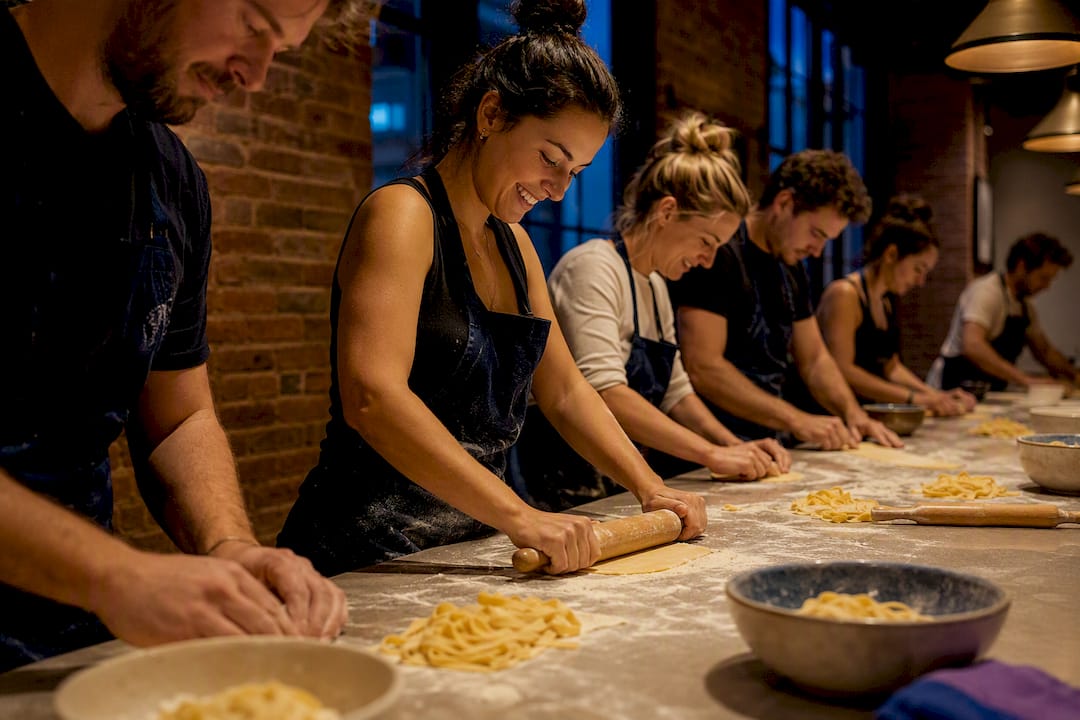
Formats like sushi rolling, “around the world” regional cooking, and edible craft nights show up often in cooking team building activities lists because they’re accessible entry points for groups with mixed skill levels, even if they’re not strictly competitive.
How Does a Cooking Competition Team Building Event Actually Run?
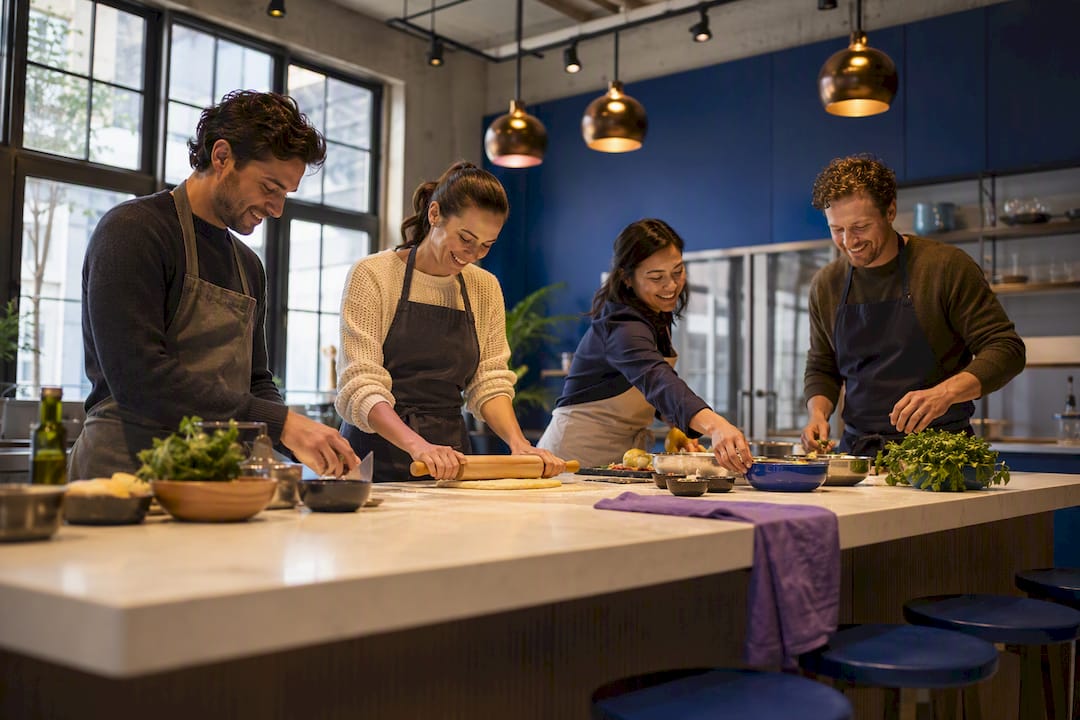
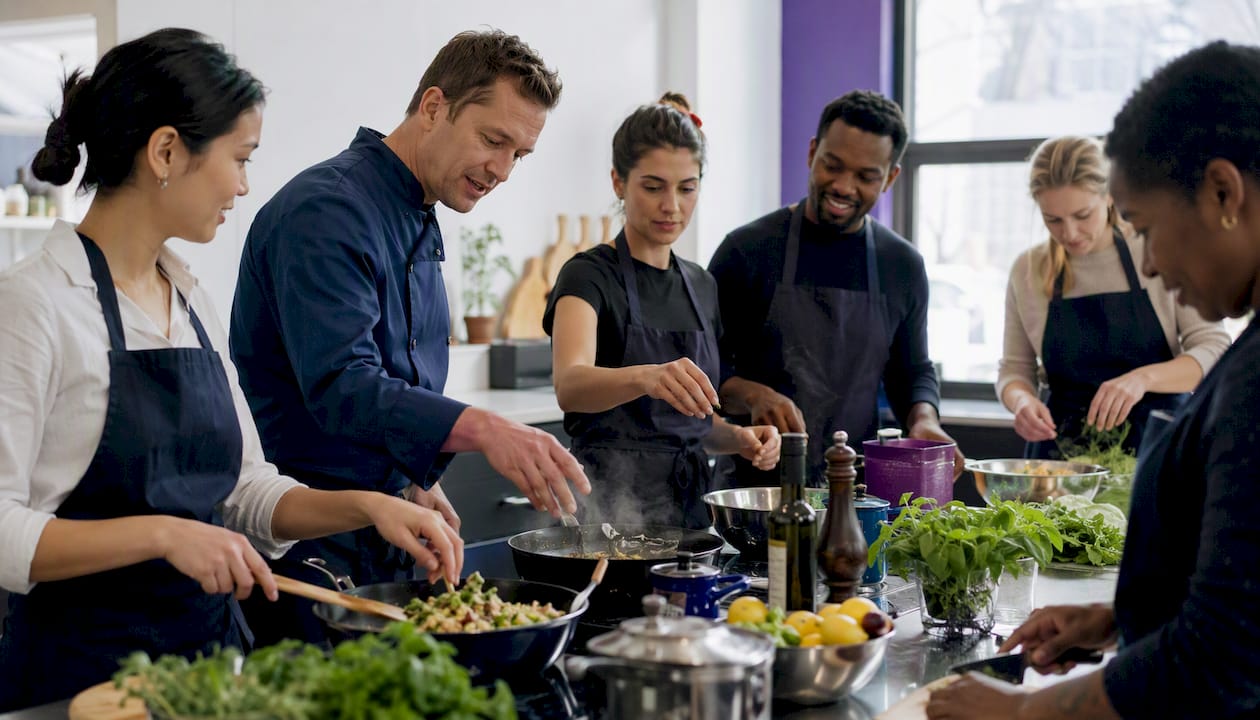
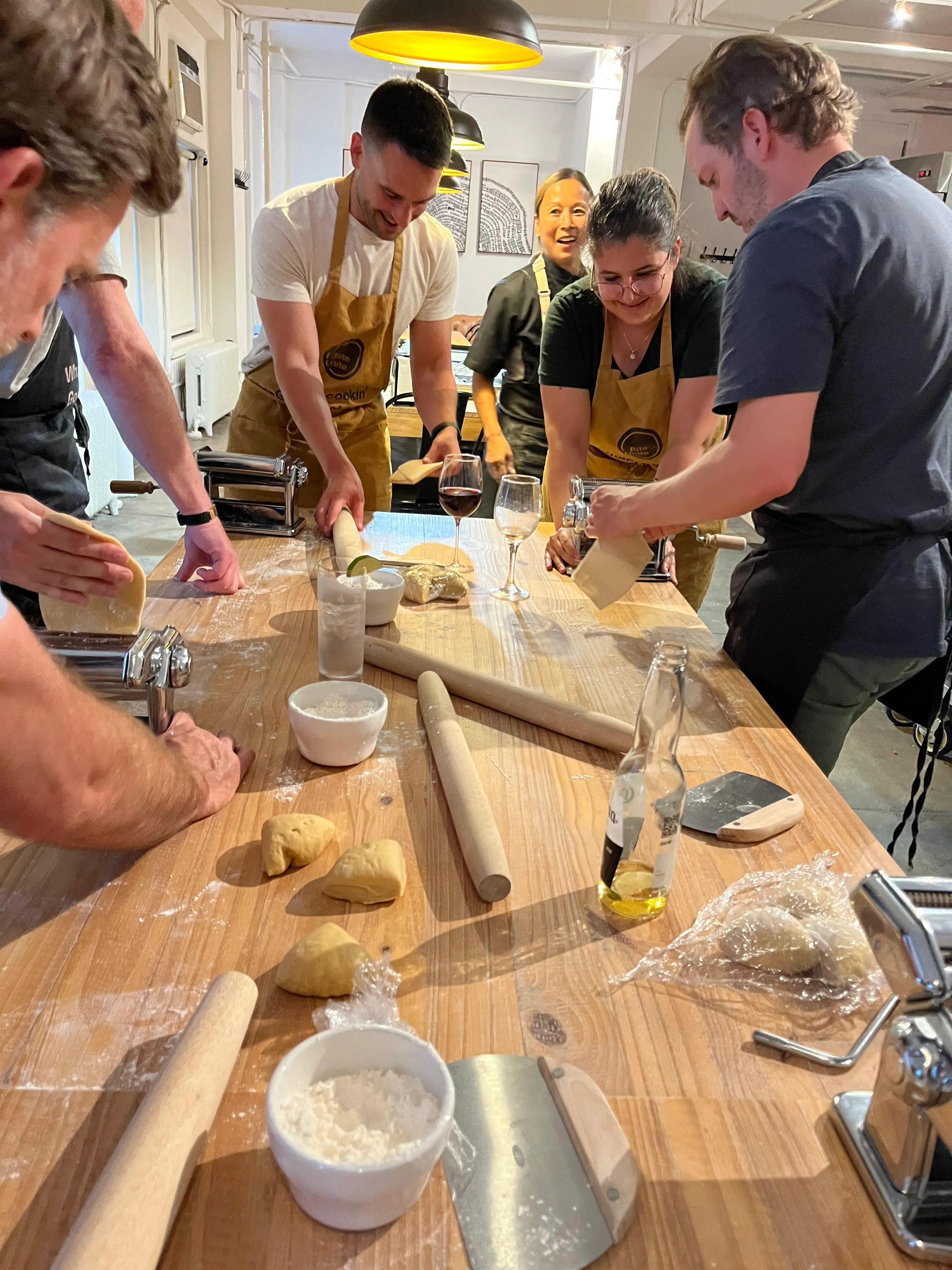
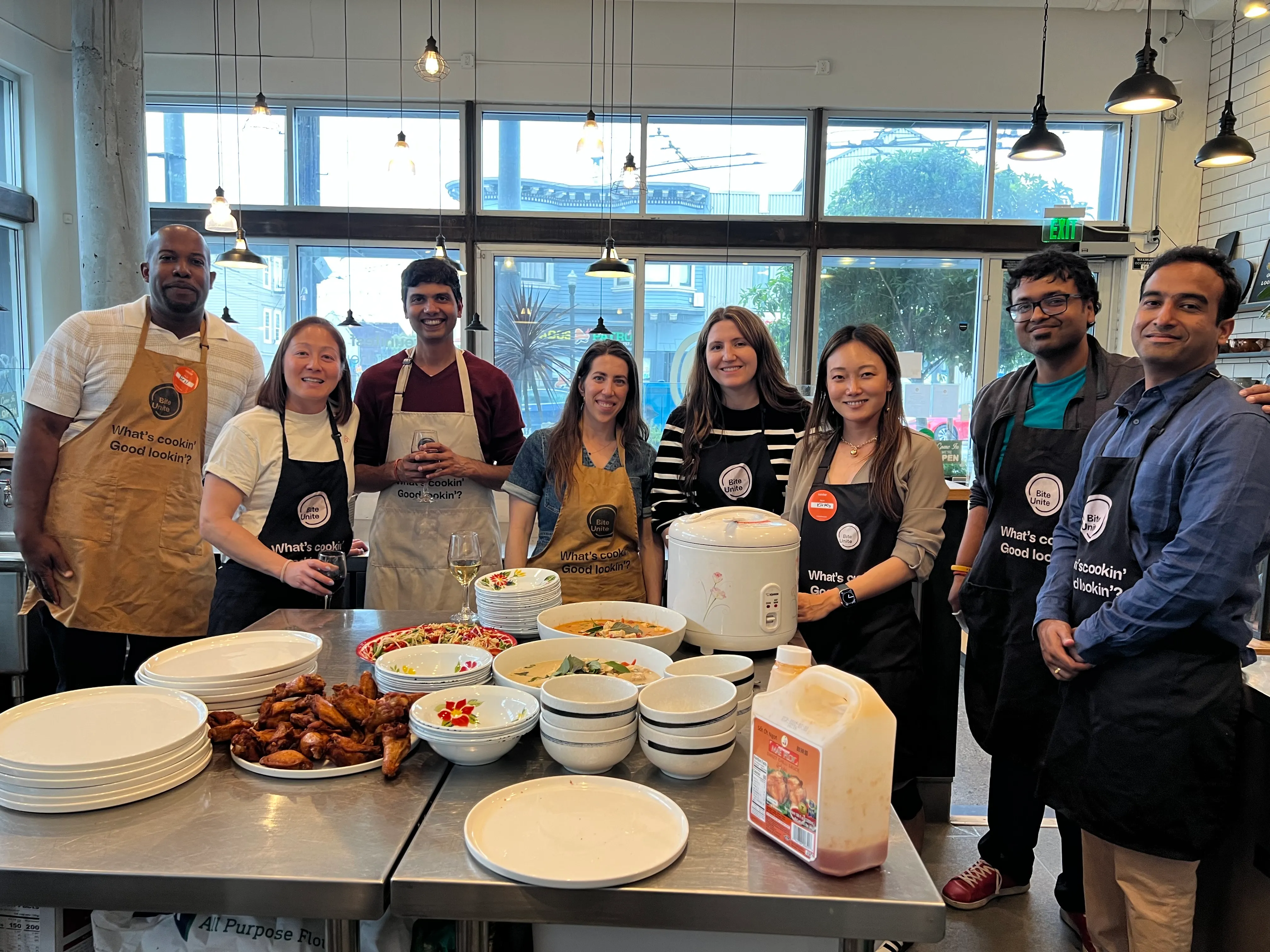
A typical chef-led competition runs around one and a half to two hours, and the shape of that time matters more than the recipe. Here’s a sample agenda for a 10 to 40 person group:
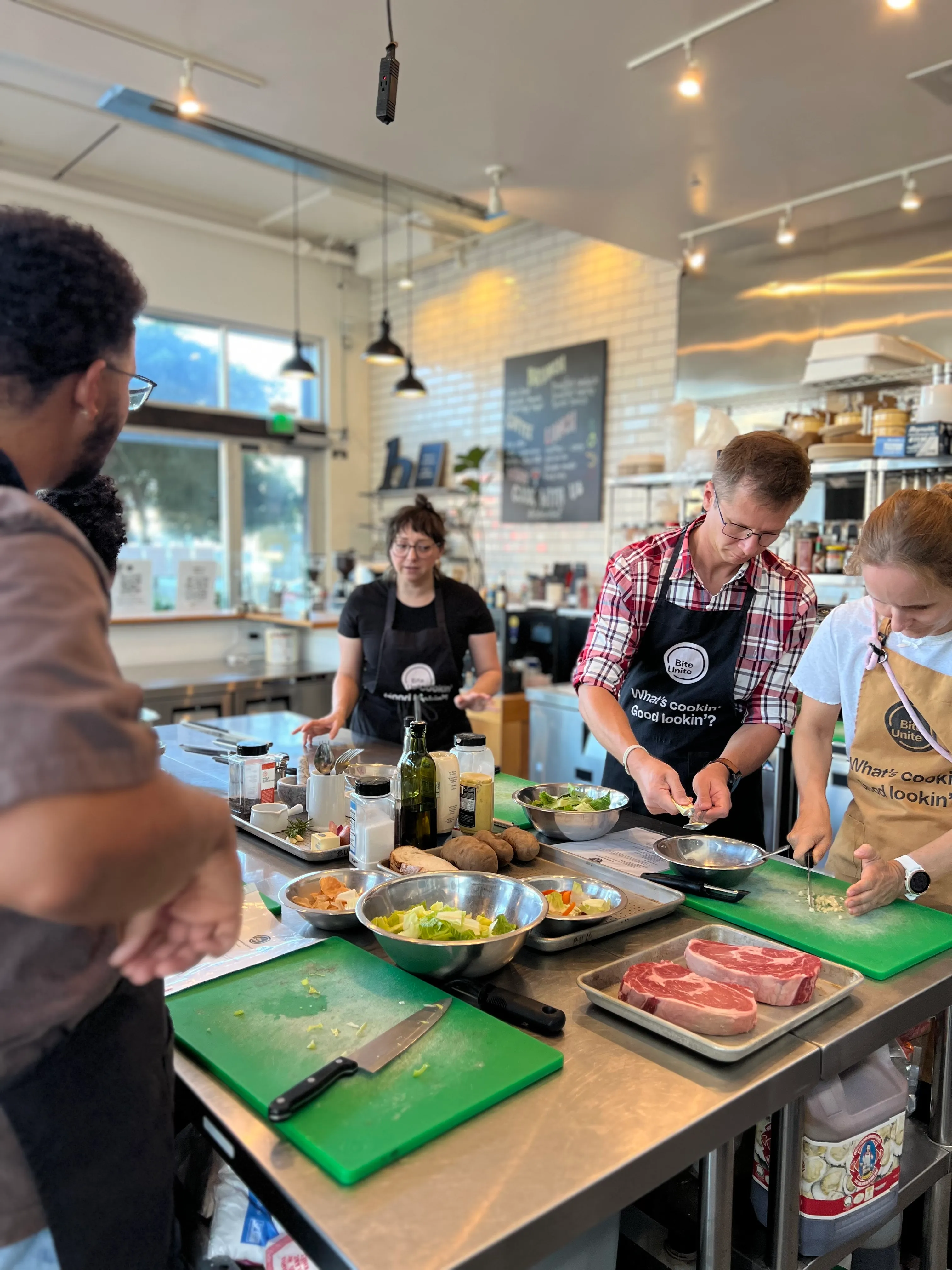
- Arrival and welcome (10 minutes). Guests get name tags, aprons, and a quick tour of their station.
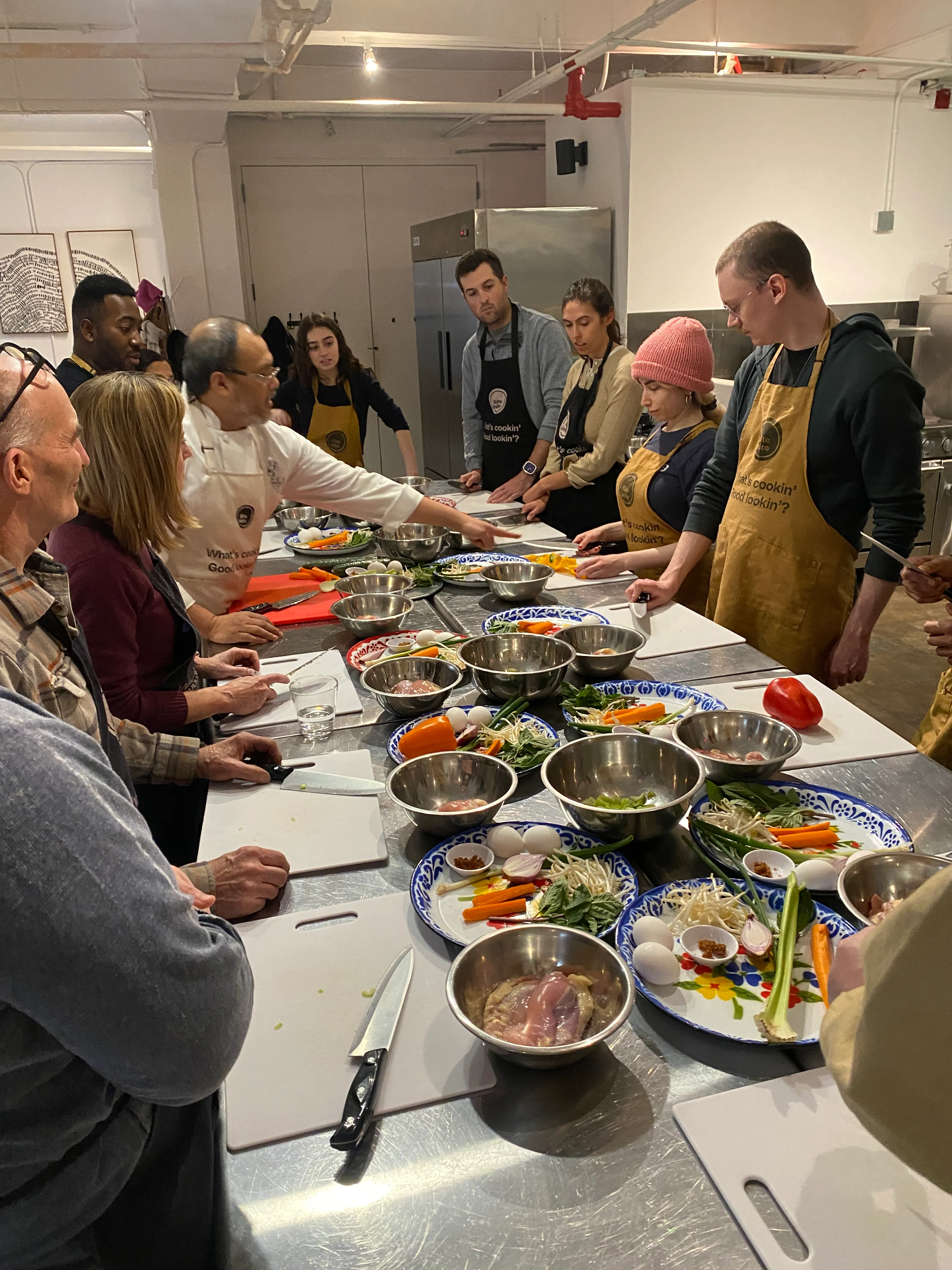
- Chef briefing and rules (10 to 15 minutes). The chef explains the challenge, judging criteria, and safety basics: knife handling, burner use, cross-contamination rules.
- Team formation and role assignment (5 to 10 minutes). Teams pick or are assigned a head chef, sous-chef, timekeeper/negotiator, and presenter.
- Cooking round one (a range of time for cooking). The main build, whether that’s a mystery box reveal or a shared secret ingredient.
- Plating and presentation prep (10 minutes). Teams finalize plating and prepare a short pitch for judges.
- Judging and tasting (15 to 20 minutes). Judges (often the chef plus a company leader or two) taste and score.
- Awards and debrief (10 to 15 minutes). Winners get a prize, and the facilitator leads a short conversation tying what happened in the kitchen back to how the team works day to day.
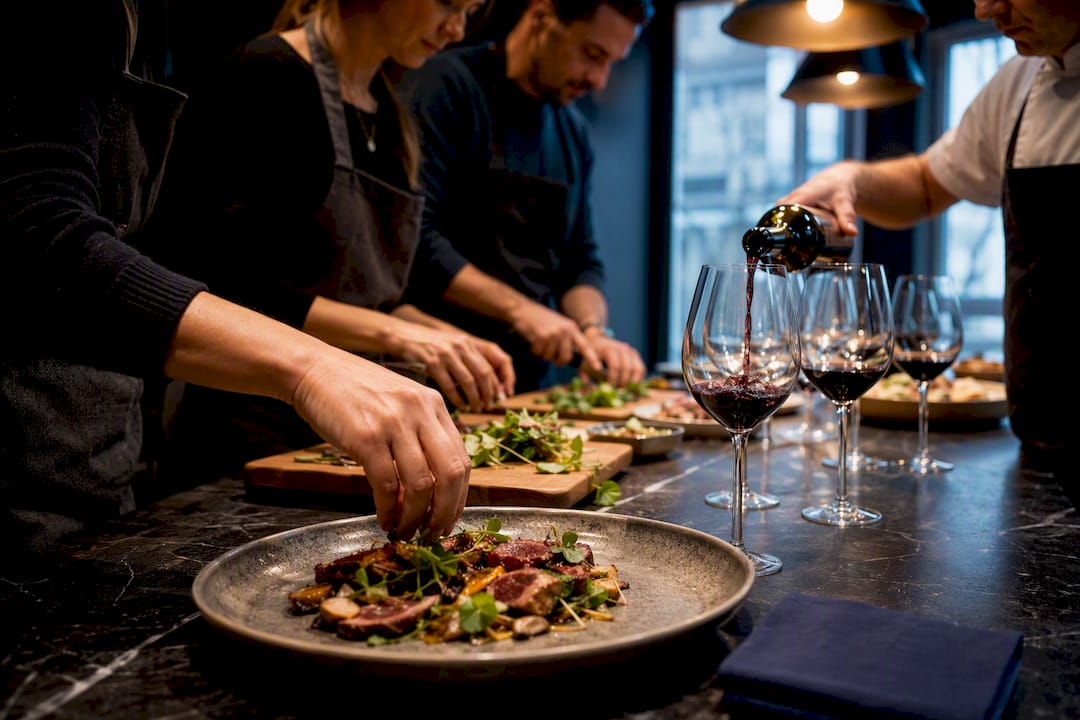
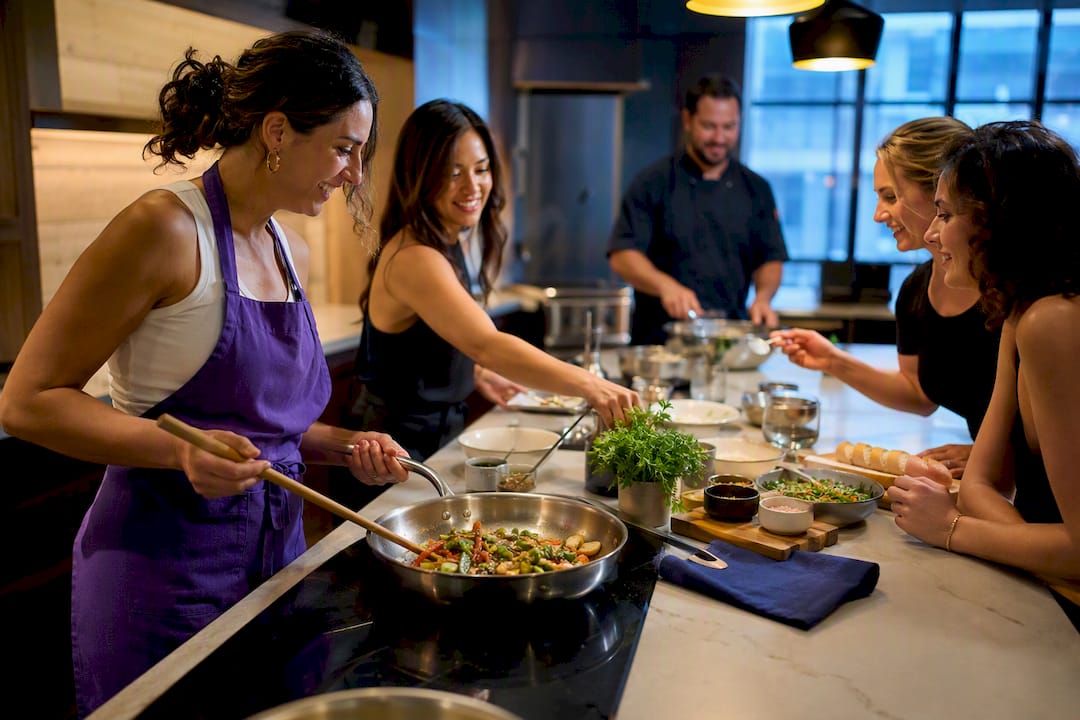
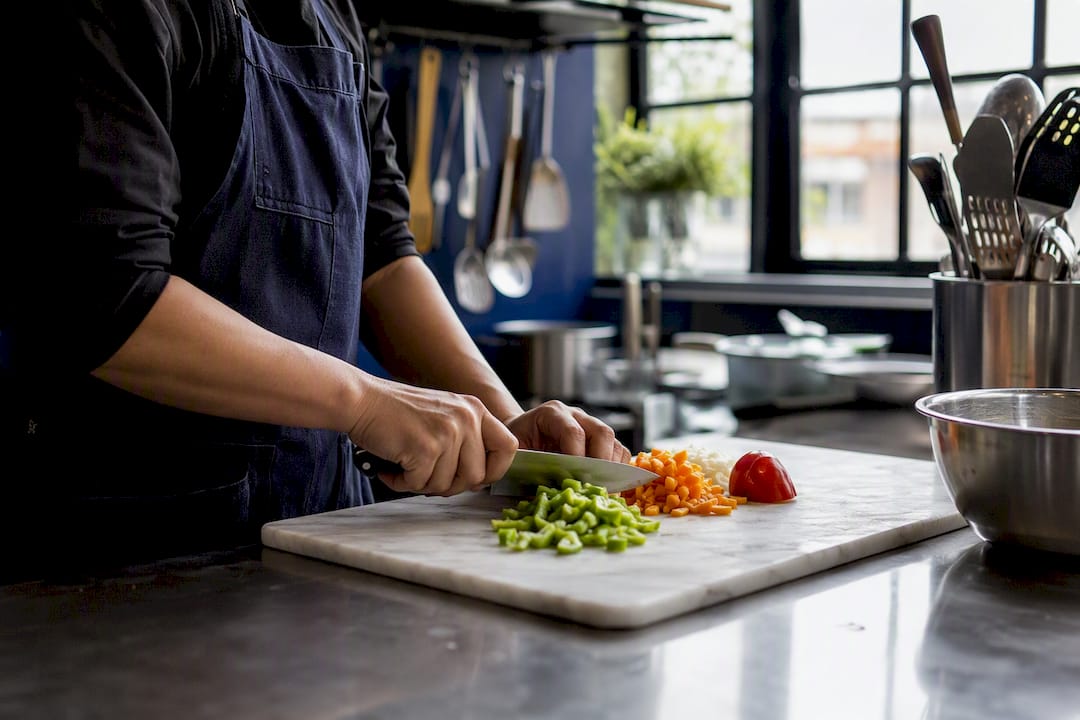
The role assignments do most of the heavy lifting here. A head chef makes final calls on the dish direction. A sous-chef manages execution and timing on the ground. A negotiator or timekeeper handles trades with other teams (in formats that allow ingredient swaps) and keeps everyone on schedule. A presenter pitches the dish to judges, which is often the role that pulls the quietest person in the group out of their shell.
Judging criteria typically cover taste, presentation, creativity, and how well the team followed the challenge brief, sometimes with bonus points for teamwork visible to the judges. Prizes range from a trophy and bragging rights to something tied to company culture, an extra PTO day, a team lunch, or a charitable donation in the winning team’s name.
A skilled facilitator does not just referee the cooking. Good chef-facilitators call out specific moments during the debrief, “your team split into pairs when the clock hit ten minutes left, that’s exactly what happened during last quarter’s crunch,” which turns a fun afternoon into something people actually reference later at work.
What Do Teams Actually Gain From Competing in the Kitchen?
The behavioral case for cooking competitions holds up because the format forces real-time coordination under a visible deadline, not because it’s simply a fun outing. Four outcomes show up consistently:
- Communication under pressure. Teams have to negotiate roles, timing, and ingredient use out loud, fast, with no time for the slow-walk meetings that plague office communication.
- Leadership that emerges rather than gets assigned. The person who steps up to call the shots in a 45-minute mystery box round is often not the person with the job title that would predict it.
- Faster decision-making. A ticking clock removes the option to overthink, which is a useful contrast for teams stuck in analysis paralysis back at the office.
- Collaborative creativity. Building a dish from unfamiliar ingredients is a small, low-stakes version of the same creative problem solving teams need for actual work challenges.
Hands-on, active group tasks like this support engagement and social bonding more reliably than passive activities, according to a review of experiential group learning in a public health journal. Cooking together specifically is also linked to better wellbeing and healthier habits, which is a nice secondary benefit for teams that spend most of their day eating lunch at their desks.
Pro Tip: Measuring “fun” is hard, but measuring behavior change is not. Send a short survey the next day asking, “Did you see a coworker take on a leadership role you didn’t expect?” That single question tells you more about ROI than a satisfaction score.
A few concrete ways to gauge impact beyond the applause at the end of the event:
- A short post-event survey asking what surprised people about a teammate’s strengths.
- Observational notes from managers on who stepped into leadership roles unprompted.
- A follow-up activity weeks later that references the event (“remember how we split the mystery box round? let’s use that approach for this deadline”).
- Tracking whether cross-department teams (mixed on purpose) report feeling more comfortable collaborating afterward.
What Logistics and Costs Should You Plan For?
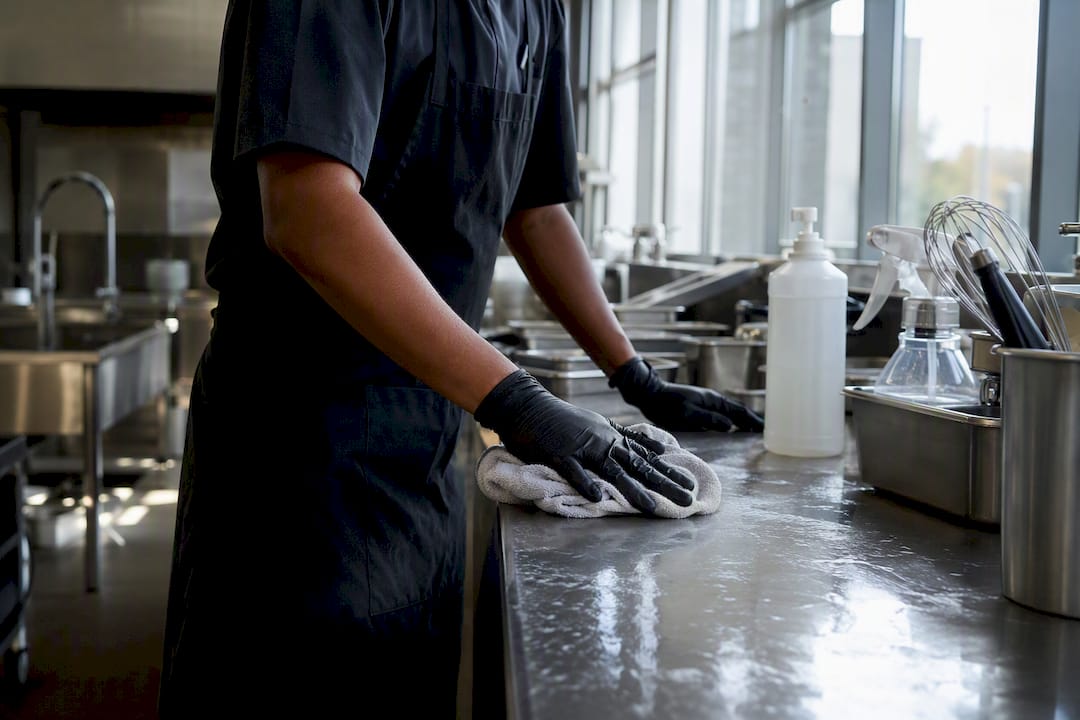
Every cooking competition depends on three things going right before anyone touches a knife: power, space, and food safety, and all three cost more to fix on-site than to confirm ahead of time.
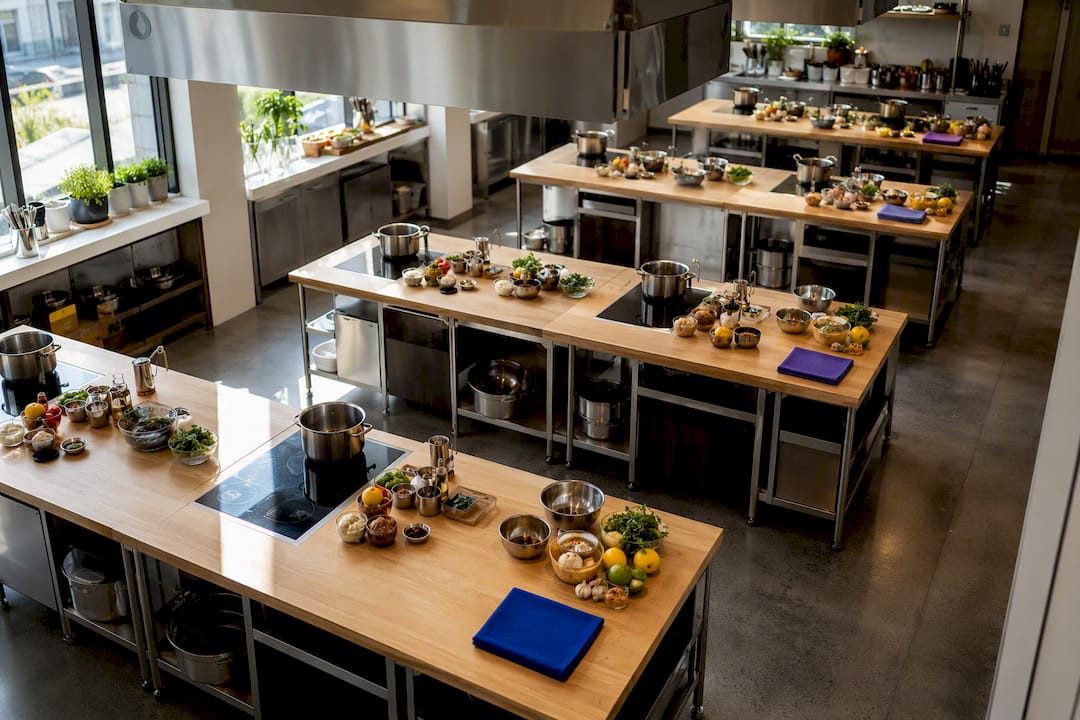
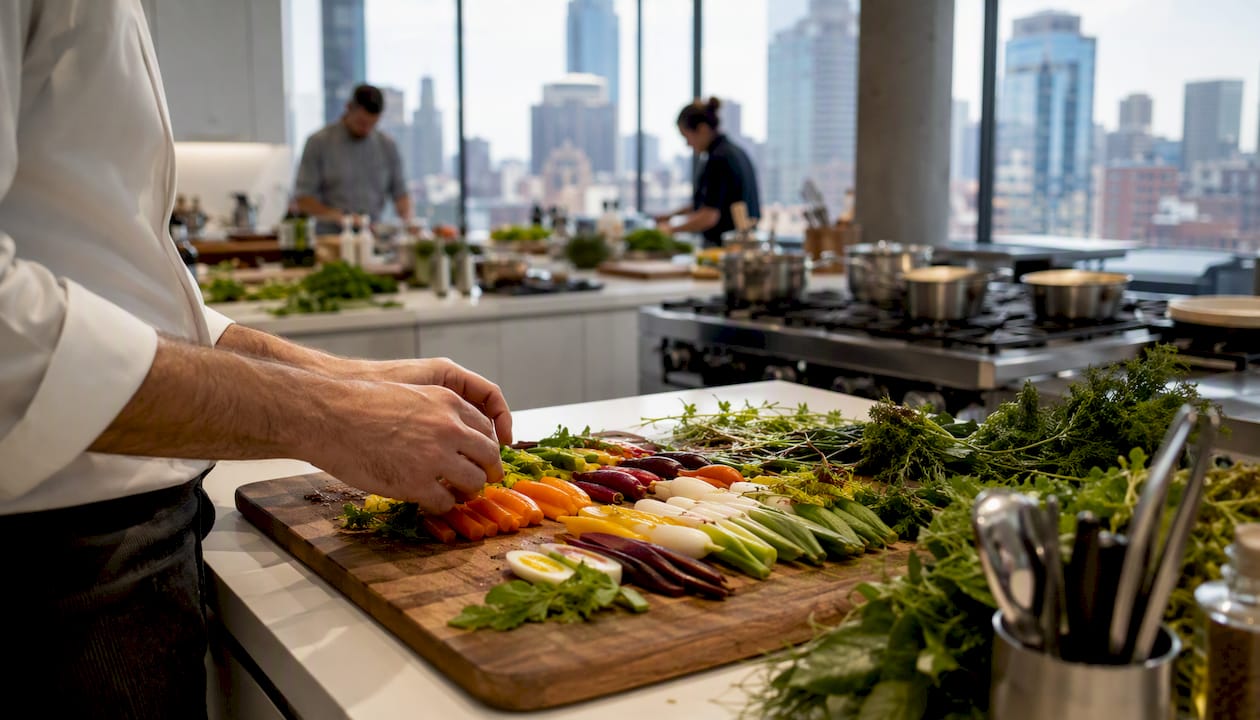
Venue and equipment. Multiple induction burners running at once draw more power than most standard event spaces are wired for. Event logistics specialists consistently flag this as the most common last-minute failure point, since many rooms simply lack enough dedicated circuits for four or five cooking stations firing at once. Confirm circuit capacity, whether extraction or ventilation is needed for anything beyond light sautéing, and how many prep tables the room can actually fit without crowding.
Food safety and dietary needs. Ask the provider how they handle allergies and cross-contamination between stations, and get this in writing, not as a verbal assurance. Vendor insurance should be confirmed before signing, since a corporate event with open flames and shared knives is not the place to discover a gap in coverage.
Pricing shape. Per-person costs vary with group size, menu complexity, and location, and providers commonly structure these as chef-led programs running about one and a half to two hours, scaling by adding parallel cooking stations with dedicated chef facilitation rather than cramming more people into one station. Custom menus, chef travel to your office instead of a dedicated venue, and premium ingredient sourcing all push price up. A deposit is standard practice to hold your date, with the balance typically due closer to the event based on final headcount.
Quick checklist for the operations side:
- Confirm total power draw against the venue’s actual circuit capacity, not its advertised capacity.
- Ask whether the provider brings its own induction burners or expects the venue to supply them.
- Get allergy and dietary handling procedures in writing.
- Confirm setup and breakdown windows so you’re not paying overtime for a slow teardown.
- Verify vendor liability insurance before the contract is signed.
How Do You Make a Cooking Competition Work for Every Skill Level?
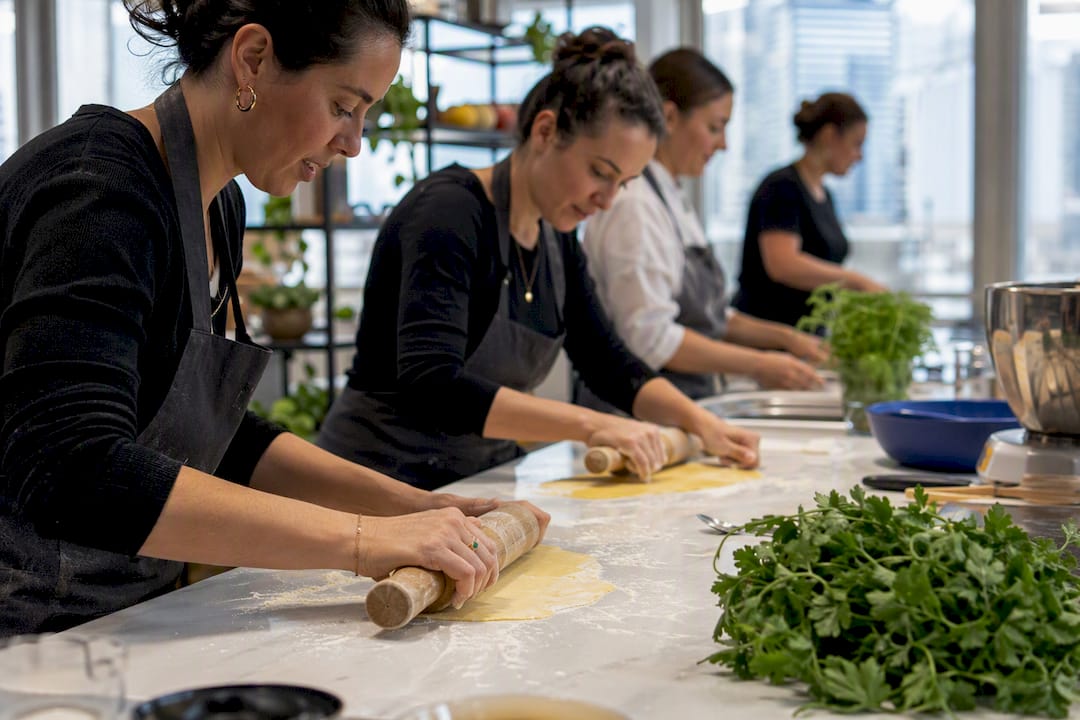
The best competitions are won on strategy, not knife skills, which is exactly what makes them fair for a mixed group. Design the roles so a non-cook can carry real weight on the team.
Assign strategic roles deliberately: an ingredient manager who tracks what’s available and negotiates trades, a timekeeper who calls out the clock, and a presenter who pitches the finished dish. None of these require chopping skills, and all three are often the difference between winning and losing.
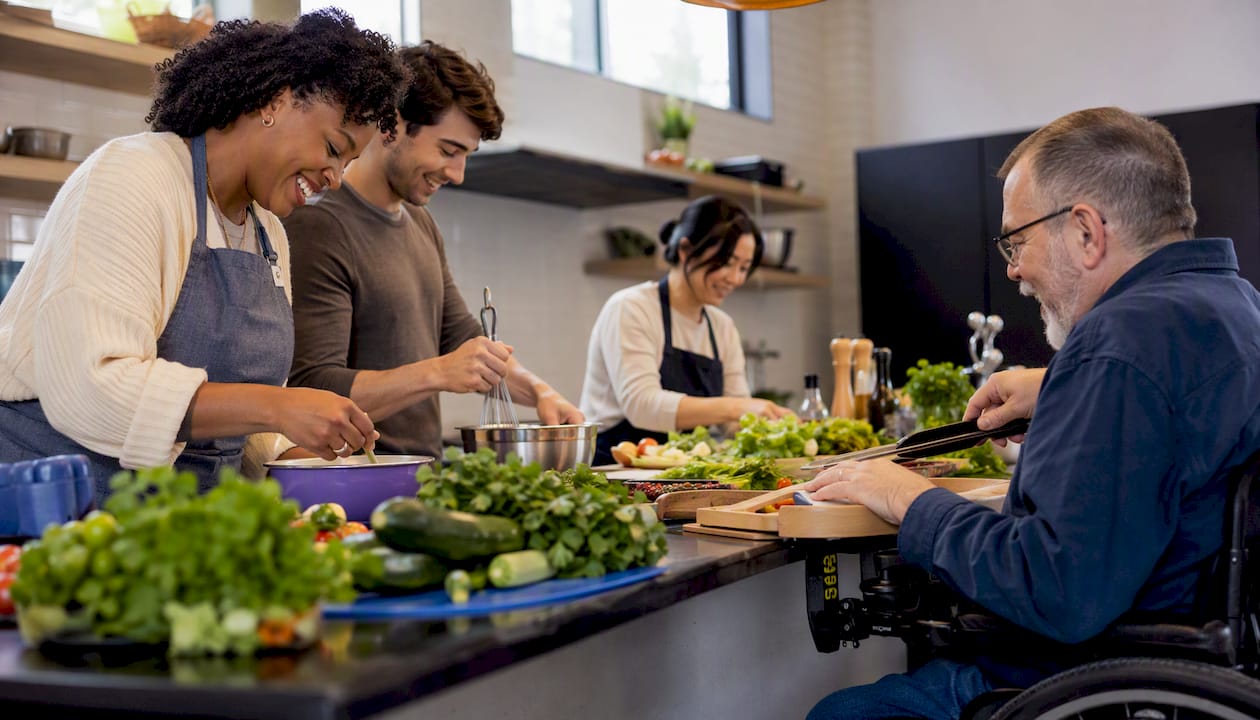
Menu substitutions handle most dietary situations without singling anyone out. Have the chef pre-plan swaps for common allergens (nuts, dairy, gluten) so a team member with a restriction gets an equivalent ingredient rather than a workaround dish. Adaptive tools, seated prep stations, lighter utensils, adjustable counter heights, cover physical limitations without making a production of it.
- Rotate roles halfway through so no one is stuck holding the same job for the whole event.
- Add trivia or bonus-point mini-challenges mid-round so less confident cooks can win points through knowledge rather than technique.
- Brief the chef ahead of time on any specific accommodations so it’s handled quietly, not announced to the room.
Pro Tip: Ask your provider how they balance skill gaps before you book, not during the event. A well-designed challenge lets a strategic, non-cooking team beat a kitchen full of confident home cooks, and that’s exactly the kind of upset that makes people talk about the event for months.
Why Chef Facilitation Is the Difference Between Chaos and a Great Event
A trained chef running the room changes three things at once: safety, pacing, and what people actually take away from the event. Untrained facilitation means someone is guessing about knife safety, burner handling, and how to keep four teams moving at the same pace, and guessing with open flames in the room is not a risk worth taking.
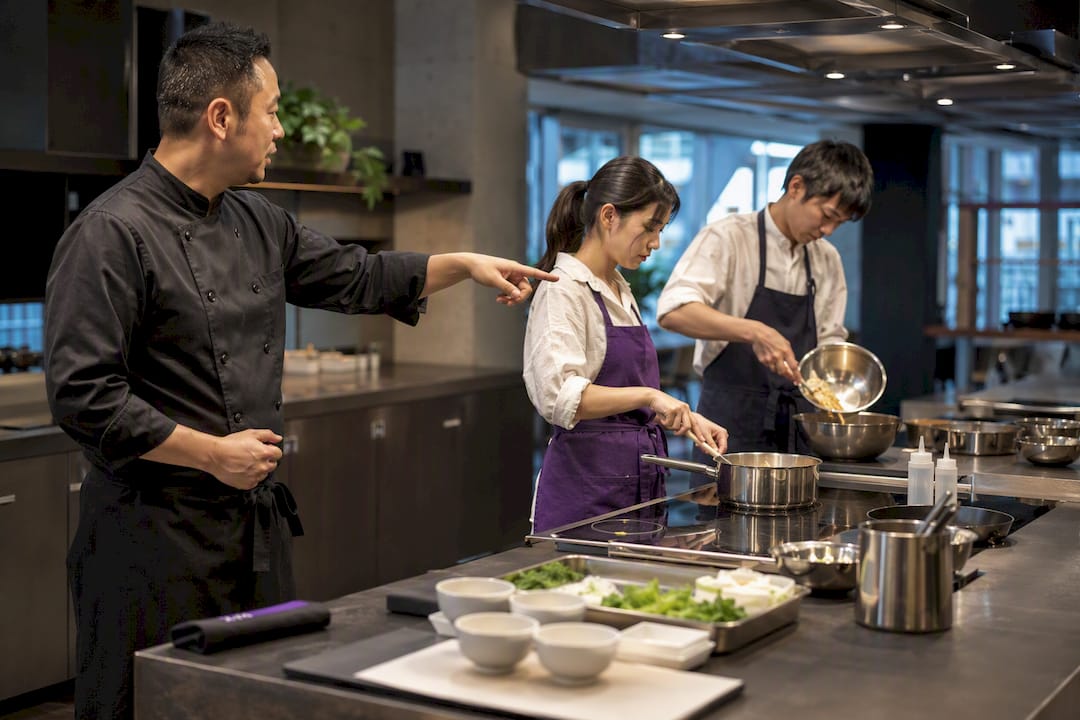
A skilled chef-facilitator reads the room in real time, tightening the clock when a team is coasting, easing pressure when someone looks overwhelmed, and steering the debrief toward the moments that actually connect to how the team works. That connective work, tying a kitchen decision back to a real workplace pattern, is what separates a memorable event from a nice afternoon everyone forgets by Friday.
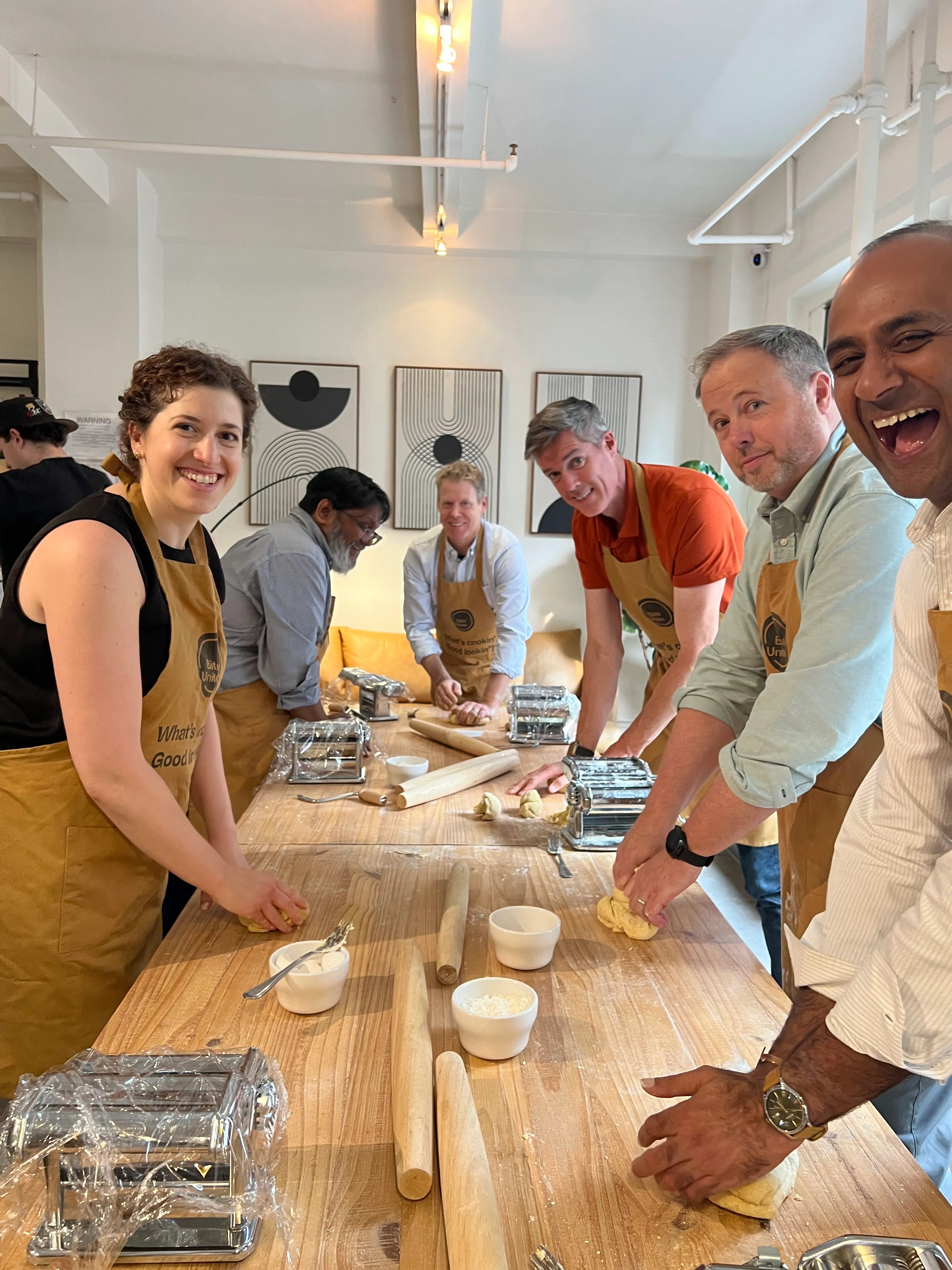
Hands-on, chef-led cooking classes and team-building experiences are offered in multiple cities, with both in-person and online formats. Every session is led by a professional chef, not a generic activity coordinator, which matters when you’re running open flames and knives for a room full of people who don’t cook for a living.
A few signals worth checking with any provider, Biteunite included:
- Confirm the chef-to-guest ratio for your group size before booking.
- Ask whether the same chef facilitates the whole event or hands off between rounds.
- Check how the debrief is structured. A good provider ties the cooking round back to workplace behavior, not just a recap of who won.
If you’re weighing this against a generic team-building option, a culinary team building overview is a useful starting point for understanding how food-centered events compare to escape rooms or trivia nights on actual engagement.
What Other Formats and Twists Can Keep the Concept Fresh?
Booking the same format twice in a row is how a great team-building activity turns into an obligation. A few variations worth rotating in:
- Charity cook-off. Teams compete to prepare meals that get donated afterward, which adds purpose without losing the competitive edge.
- Themed cuisine rounds. Assign each team a different regional cuisine, Thai, Italian, Japanese, and let the contrast in techniques become part of the fun.
- Ingredient trading markets. Teams start with limited supplies and have to negotiate trades with other teams mid-round, which pushes cross-team communication instead of just internal teamwork.
- Dessert-only showdowns. Lower stakes, shorter time windows, good for a lighter closing activity after a longer offsite.
- Cultural exchange rounds. Pair the cooking challenge with a short story or technique lesson from the cuisine’s country of origin, adding a learning layer to the competition.
- Speed tapas rounds. Multiple five-minute micro-challenges keep energy high for groups that get restless during longer builds.
- Trivia bonus rounds. Teams earn extra points or ingredient advantages by answering questions, which rewards knowledge alongside cooking.
- Blind tasting judgment rounds. Teams also judge each other’s dishes blind, adding a layer of critical thinking on top of the cooking itself.
Each of these shifts the dynamic slightly: trading formats reward negotiation, trivia rewards knowledge, and dessert-only formats lower the pressure for a group that’s earlier in its team-building journey together. Implementing any of them safely just means briefing the chef ahead of time so ingredient swaps, timing changes, or judging structure don’t catch the facilitator off guard mid-event.
What Should You Ask Before You Book a Provider?
A short list of questions on your first vendor call saves you from a much longer list of problems on event day.
- What’s your chef-to-guest ratio, and does it change with group size? A single chef running twenty stations alone is a red flag.
- How flexible is the menu, and can it accommodate common allergens without singling anyone out?
- What insurance do you carry, and can you provide proof before the contract is signed?
- What are your power requirements, and do you bring your own induction burners or expect the venue to supply them?
- What’s your cancellation and rescheduling policy if weather, illness, or a venue issue forces a change?
- What’s the deposit amount, and when is the final headcount deadline?
On the operational side, confirm setup and cleanup windows in writing, ask who handles waste disposal, and get an exact count of burners and prep stations the provider is bringing versus what the venue needs to supply. Vague answers to any of these are the clearest sign to keep looking.
Pro Tip: Ask for a contingency plan for the day before you sign anything, not the day something goes wrong. A provider with a real backup plan for a sick chef or a broken burner will tell you exactly what it is without hesitating.
A Final Take on Why This Format Sticks
The moments that stay with people from these events are rarely about the food. They’re the ten seconds when someone quiet on the team suddenly starts calling the shots because the clock is running out and nobody else has moved. That’s the actual product you’re buying, not the dish, the flash of leadership or coordination you didn’t know was in the room.
Treat the debrief as seriously as the cooking round itself. A chef who can name the specific moment your team fell apart or came together is worth more than a slightly fancier menu. Use the booking checklist above before you sign anything, and if you want a provider that already runs this format with trained chefs, Biteunite is a reasonable place to start.
— Patta
Book a Chef-Led Cooking Competition With Biteunite
Hands-on, chef-led cooking competitions and team-building experiences for corporate groups are available in several major cities, with online formats available for remote or hybrid teams.
Instead of piecing together a venue, a chef, and equipment rental separately, the whole event can be handled as one booking, mystery-box and Iron Chef style formats included, with a professional chef running every station from briefing through the final tasting. That means you skip the power capacity guesswork and vendor insurance chase entirely, since it’s built into the package from the start.
Whether you’re planning a session for a twelve-person leadership team or a company-wide offsite, check available dates and request a proposal for team building workshops in San Francisco, or explore options for a New York group cooking class if your team is on the East Coast. Confirm your group size and any dietary needs when you reach out, and run through the booking checklist above before you finalize the date.
Sources
- Frontiers in Public Health — experiential learning / group activities (PMC8071848)
- HelpGuide — Cooking at home
- Teamland — 15 cooking team building activities
- Easy Event Hire — Setting up your pop-up kitchen





























.webp)






.webp)
.webp)
.webp)

