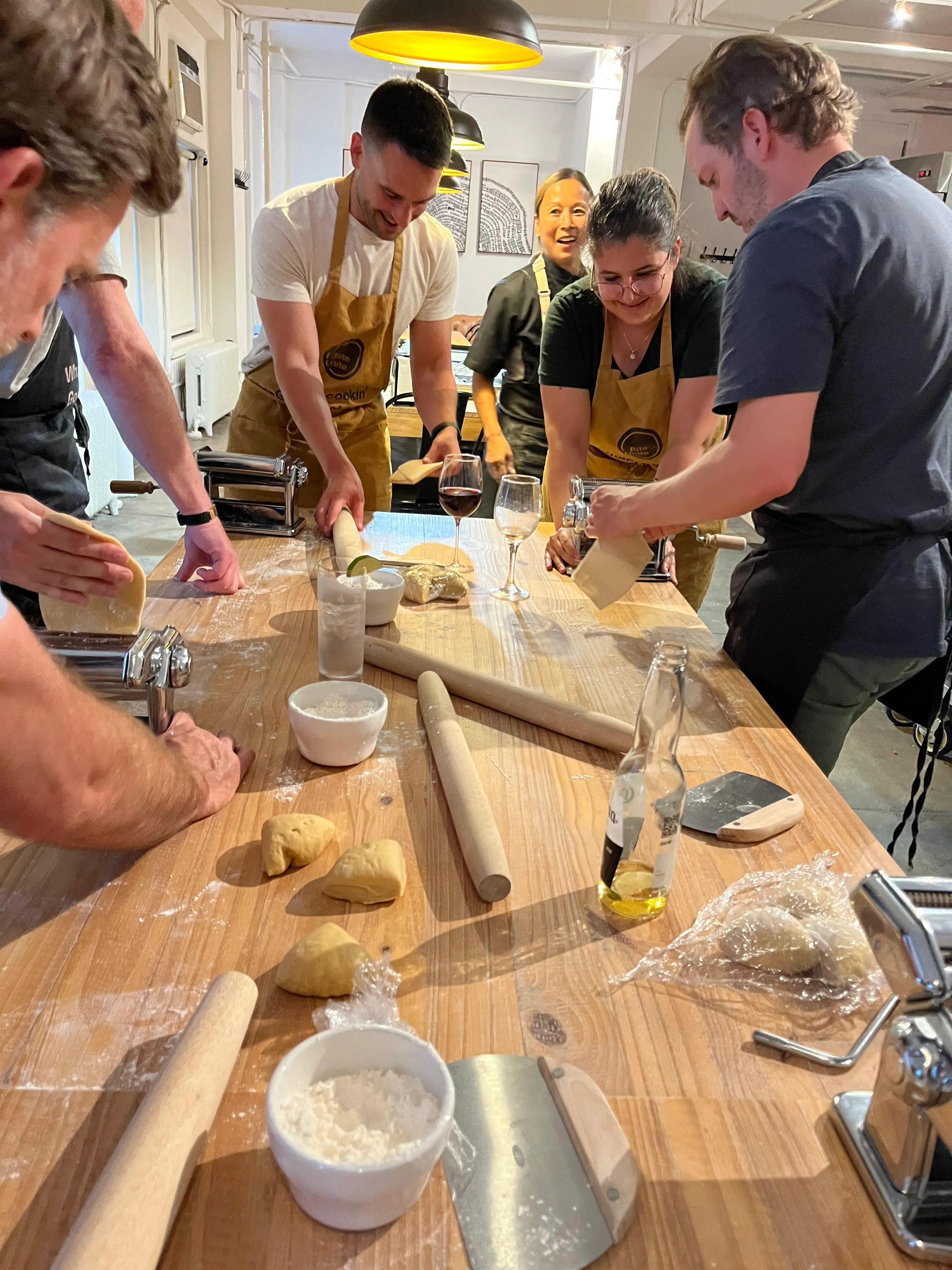
Cooking Class Prices: What to Expect Before You Book
Most cooking classes run $59 to $150 per person for a recreational group session, while private lessons average $408 nationally with a typical range of $231 to $722, according to Thumbtack. Online classes tend to sit lowest, corporate and private events go highest, and where you land depends on instructor caliber, group size, and how fancy the menu gets.
Here’s the quick breakdown before you dive deeper:
- Community or entry-level hands-on class: $59 to $95 per person
- Typical recreational group class: $105 to $250 per person or per duo ticket
- Specialty or chef-led private lesson: $231 to $722 per person (national average $408)
- Corporate or private group event: Often priced with a group minimum, landing anywhere from $75 to $200+ per head depending on scale
You’re about to see exactly why those numbers swing so widely, and how to tell a fair price from an inflated one.
Key Takeaways
Cooking class prices depend most on format and group size, ranging from $20 online sessions to $722 private lessons, with corporate events priced by group minimums.
| Point | Details |
|---|---|
| Know your price band | Recreational classes run $59–$250 per person; private lessons average $408 nationally. |
| Watch for hidden fees | Gratuity, admin fees, and ingredient surcharges often sit outside the listed price. |
| Timing changes cost | Weekday sessions are typically cheaper than weekend or holiday bookings. |
| Confirm what’s included | Ask if ingredients, tools, and recipe handouts are bundled before comparing prices. |
| Biteunite for groups | Biteunite prices team-building and private events around chef, venue, and menu complexity, with bookings available in New York and Hong Kong. |
Table of Contents
- How Much Do Cooking Classes Cost by Type?
- What Affects Cooking Class Prices?
- How Are Cooking Classes Priced?
- What Should You Ask Before Booking a Class?
- How Does BiteUnite Price Team-Building and Private Events?
- Balancing Price and Experience
- Want an Easy Way to Book Team-Building or Private Events?
- Frequently Asked Questions
- Sources
How Much Do Cooking Classes Cost by Type?
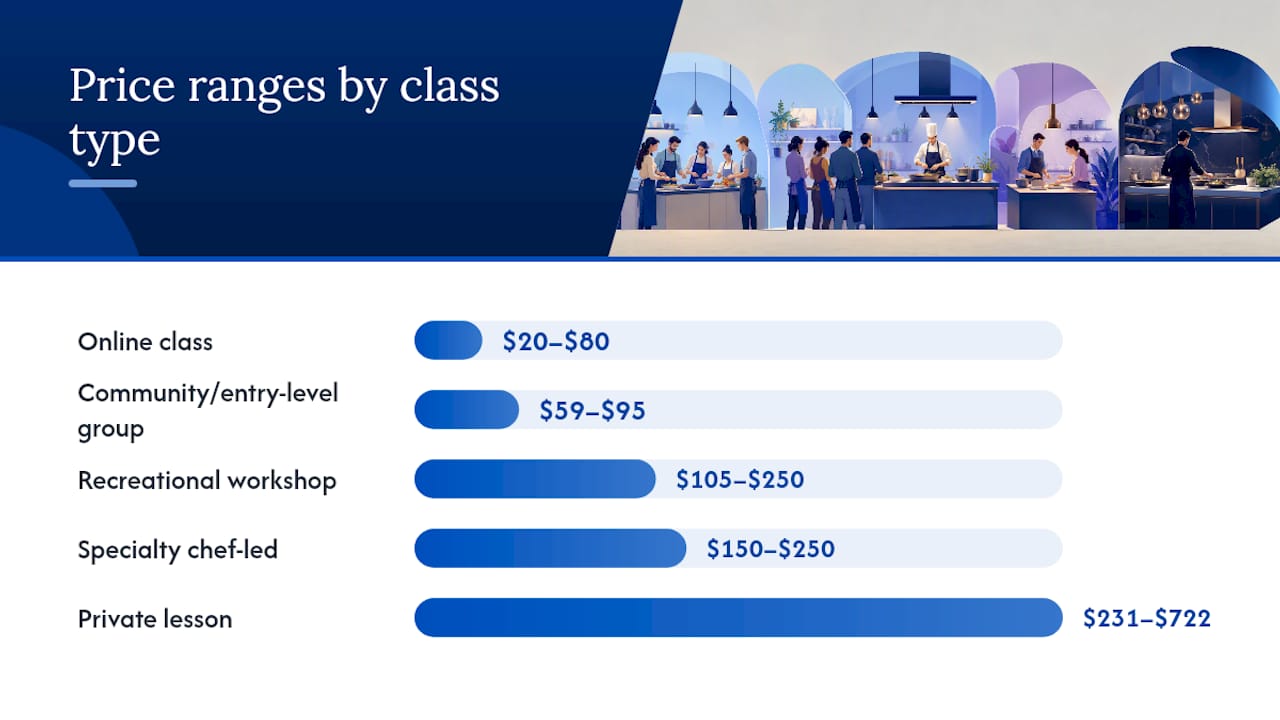
The label matters as much as the location. A “cooking class” can mean a 90-minute knife skills demo or a four-hour private dinner party with a personal chef, and the price tag reflects that gap. Recreational group classes, the kind you’d book for a Tuesday night out or a date, usually fall between $59 and $150 per person. Some providers sell by the ticket type instead of a flat per-person rate. One studio’s duo workshop tickets run $226 to $250 for two people, while a single-person ticket lands closer to $105. That math actually works out cheaper per head when you bring a partner.
Online classes are the budget option, typically $20 to $80 per person since there’s no venue, no shared ingredients, and often no live instructor overhead. Specialty classes (think sushi, pastry, or regional Italian) push higher because of ingredient cost and instructor specialization. Private lessons average $408 nationally, though the range spans $231 to $722 based on cuisine and skill level. Corporate and team-building events often use group minimums rather than a clean per-person number, and kids’ camps and professional culinary school sessions occupy their own separate pricing worlds entirely, usually priced by the week or the full program.
| Class Type | Typical Price Range |
|---|---|
| Online class | $20–$80 per person |
| Community/entry-level group class | $59–$95 per person |
| Recreational group workshop | $105–$250 per person or duo ticket |
| Specialty/chef-led class | $150 to $250 per person |
| Private lesson | $231–$722 per person (avg. $408) |
| Corporate/private event | Group minimum, often $75–$200+ per head |
Metro areas add a premium across every category. A class in San Francisco or New York routinely costs 20% to 40% more than the same format in a smaller city, mostly due to venue rent and instructor rates.
What Affects Cooking Class Prices?
Price isn’t random. A handful of factors do most of the work behind every quote you’ll see.
- Instructor expertise: A trained chef with restaurant credentials commands more than a hobbyist teacher.
- Ingredient quality: Wagyu beef or fresh truffle pushes the bill up fast compared to pantry staples.
- Location: Metro cities carry higher venue and labor costs than suburban or rural areas.
- Duration: A 90-minute demo costs less than a four-hour hands-on multi-course experience.
- Class size: Smaller groups mean more individual attention, and usually a higher per-person rate.
- Cuisine complexity: Hand-pulled noodles or laminated pastry dough takes longer to teach than a simple stir-fry.
- Timing: Weekend and holiday sessions often carry premium pricing compared to weekday slots.
Watch for add-ons that aren’t in the headline price. Gratuity is a common one. One studio’s $59 starting price doesn’t include a 15% gratuity charge, which quietly adds real cost. Administrative fees, premium ingredient surcharges, and cancellation deposits can also sneak onto your final bill.
Pro Tip: Book a weekday afternoon slot instead of a Friday or Saturday night. Instructors and venues often price those hours lower simply because demand is thinner, and you get the exact same instruction quality.
How Are Cooking Classes Priced?
Providers don’t all charge the same way, and understanding the model helps you compare listings that look wildly different at first glance.
- Per-person station pricing. Each guest pays a flat rate for their own cooking station, tools, and ingredient portion.
- Duo or table tickets. Some studios sell by the pair or the table rather than the individual, which can lower your effective per-head cost if you bring a partner.
- Flat group or private fee. Private bookings often carry a flat rate for the whole session rather than per-person math.
- Hourly minimums for private chefs. In-home private lessons frequently require a minimum spend or minimum group size regardless of how many people actually show up.
Most listed prices include ingredients, use of tools and equipment, a recipe handout, and non-alcoholic beverages. What they usually leave out: gratuity, alcohol, and travel fees for in-home private chefs. A community-education example shows private classes starting at $95 per person with instructor, ingredients, tools, and a take-home recipe book bundled in, a solid benchmark for what “included” should actually mean. Private event minimums matter too: if a venue requires a $600 minimum and only four people show, your real per-person cost just tripled.
What Should You Ask Before Booking a Class?
Comparing two listings side by side only works if you’re comparing the same things. Run through this checklist first:
- Class type and format (demo vs. fully hands-on)
- Session duration
- Instructor background and credentials
- Group size and student-to-instructor ratio
- Menu complexity and cuisine style
- Cancellation and refund policy
- Any extra fees beyond the sticker price
Then ask the provider directly:
- “Is gratuity included in the listed price?”
- “Are all ingredients and equipment provided?”
- “What happens if I need to cancel or reschedule?”
- “Is there a minimum group size or spend for private bookings?”
- “Does the weekday rate differ from the weekend rate?”
Booking a weekday slot often gets you a lower rate and a smaller group, which usually means more one-on-one time with the chef. For private events, confirm the minimum spend upfront so you’re not surprised by per-person math that changes based on final headcount. A traveler’s guide to culinary experiences makes a similar point: knowing exactly what “experience” you’re paying for, demo, hands-on, or full dinner, changes what a fair price actually looks like.
How Does BiteUnite Price Team-Building and Private Events?
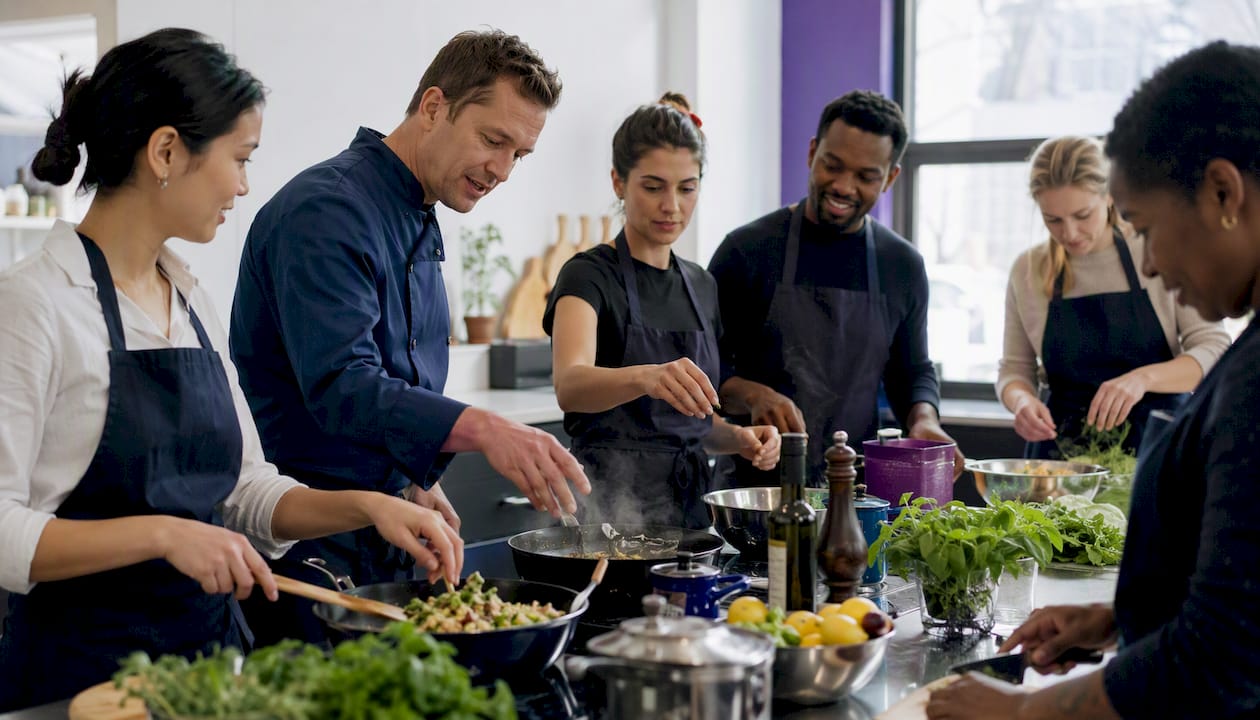
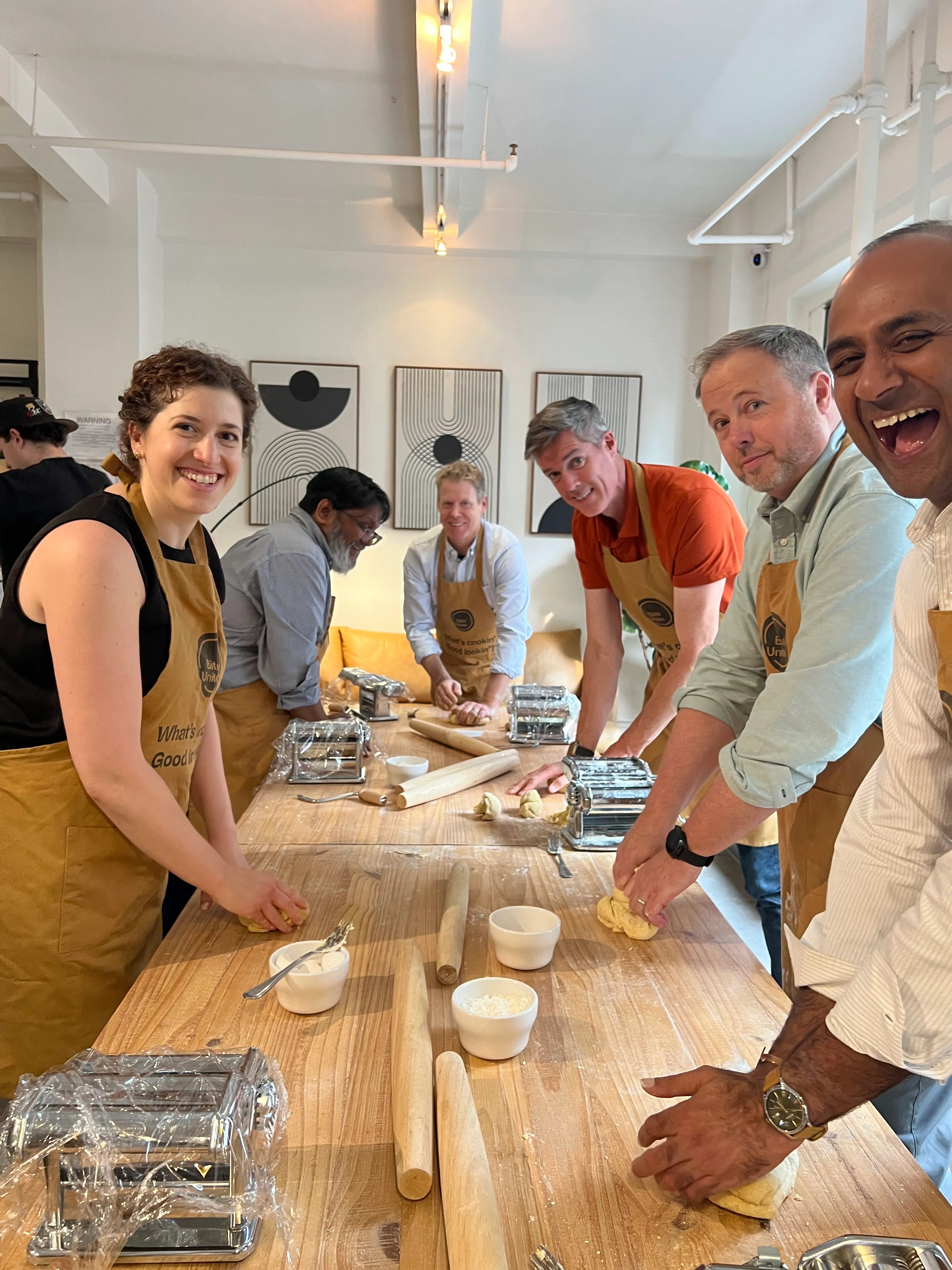
Biteunite structures team-building and private event pricing around a few clear levers: the chef leading the session, venue selection, menu complexity, and the number of cooking stations your group needs. A 12-person team night looks nothing like a 60-person holiday party on paper, so pricing scales with headcount and format rather than a single flat number.
For groups exploring options, Biteunite’s New York and Hong Kong pages lay out what’s typically bundled into a group booking, including expert chef instruction, ingredients, and hands-on stations for every guest.
- Larger groups often get a better per-person rate than small private bookings
- Menu complexity (a multi-course tasting vs. a single dish) shifts total cost
- Venue choice affects the final quote alongside headcount
Pro Tip: Book corporate events on a weekday and give the team at least two to three weeks’ lead time. You’ll typically get better date availability and a smoother planning process.
Balancing Price and Experience
Here’s my honest read after digging through these numbers: the cheapest class isn’t always the better deal, and the priciest one isn’t automatically worth it either. Paying more makes sense when the outcome matters, a corporate outing meant to build real team rapport, or a specialty class taught by a chef with genuine restaurant chops. For a casual weeknight date or a first-time cooking experiment, a budget-friendly option works just fine. Whatever you choose, check instructor credentials and recent reviews before you book. That single step tells you more than the price tag ever will.
Want an Easy Way to Book Team-Building or Private Events?
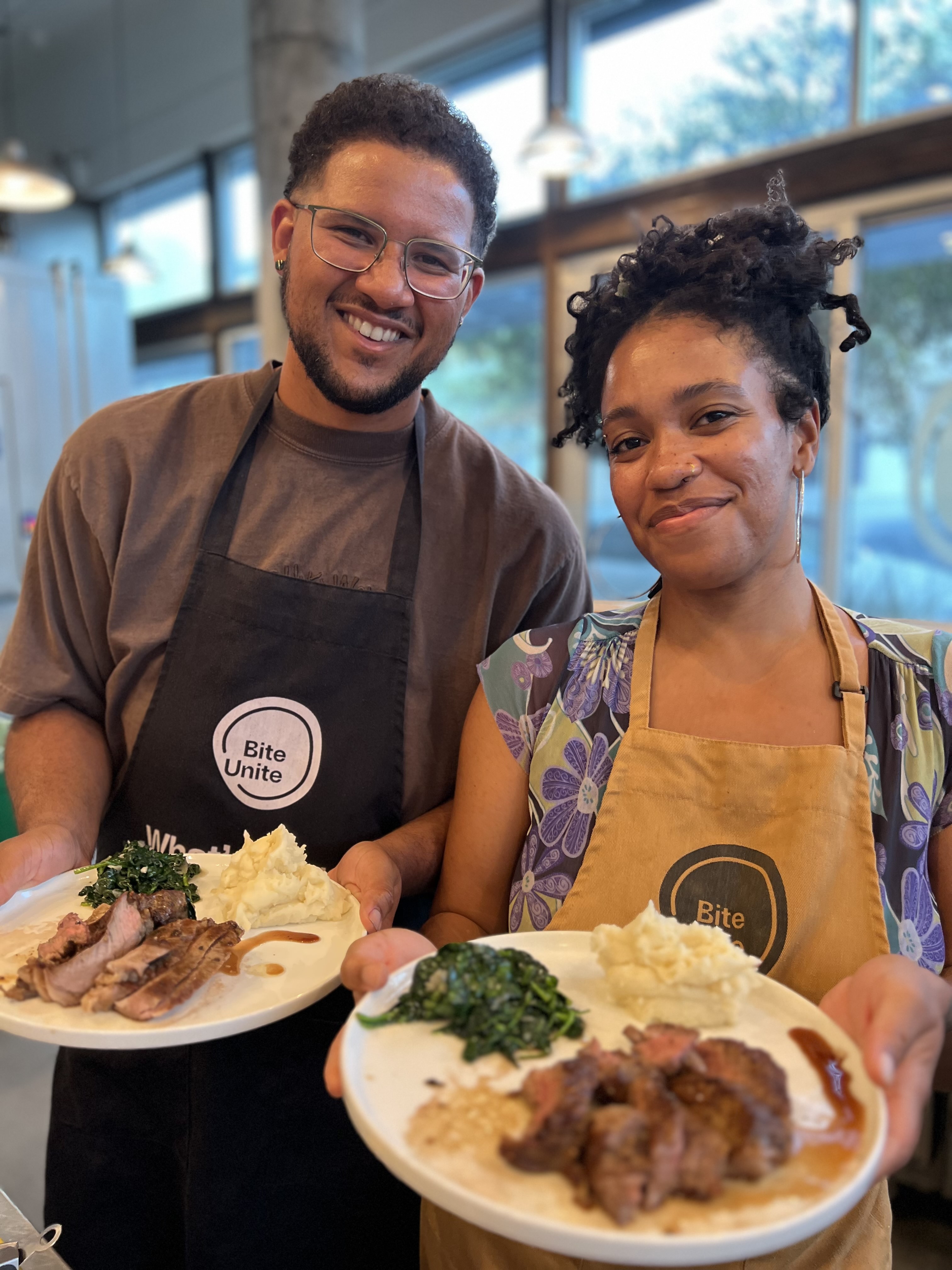
Planning a team outing or private dinner shouldn’t mean chasing quotes from five different venues and hoping the ingredients are actually included. Biteunite bundles the chef, the ingredients, the tools, and the venue coordination into one straightforward booking, so you know your total cost upfront instead of discovering gratuity and admin fees after the fact.
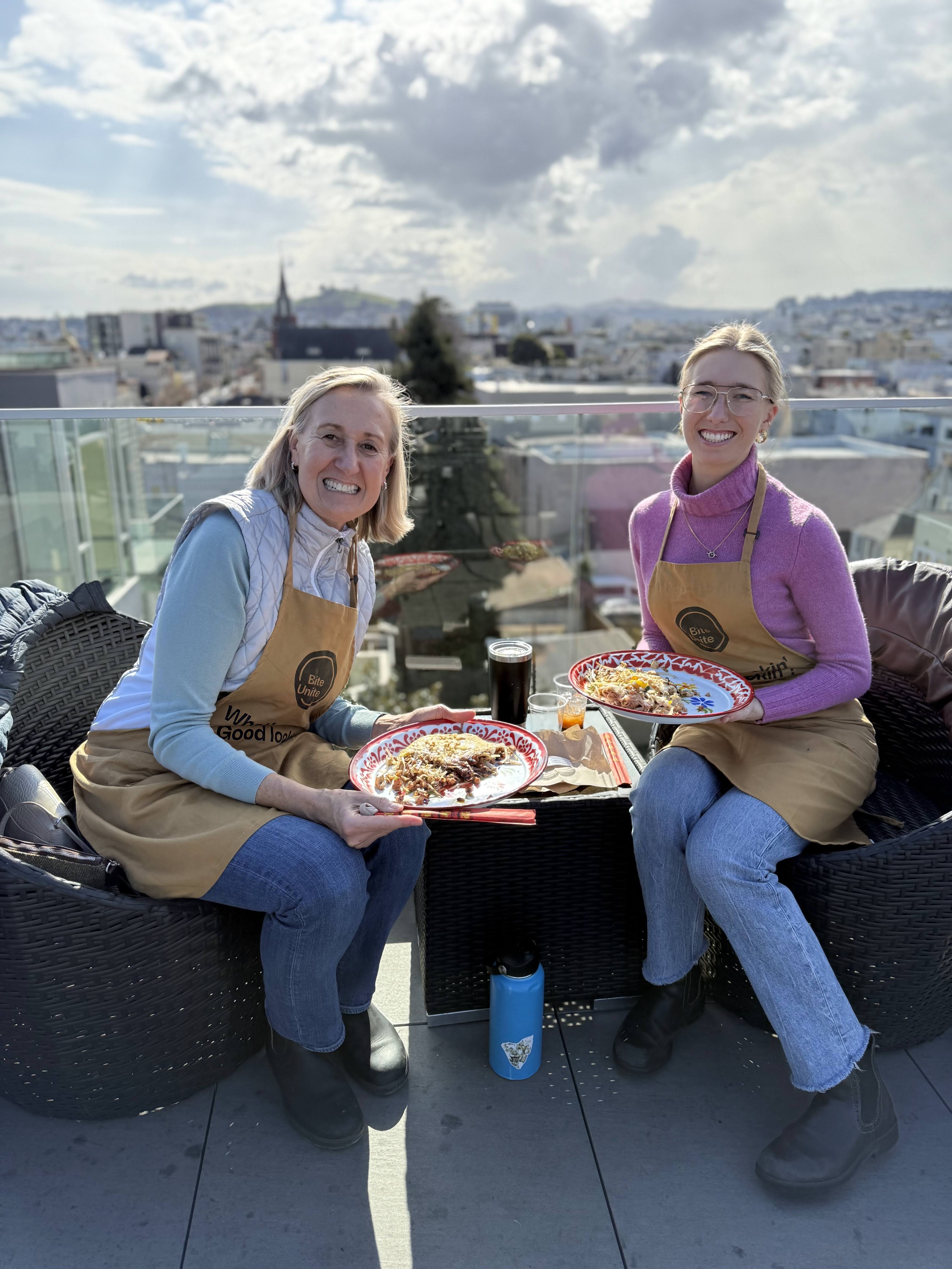
Whether you’re planning a team night in Manhattan or a private celebration in the Bay Area, Biteunite’s expert chefs handle the menu, the setup, and the hands-on instruction so your group can just show up and cook. Browse the Manhattan group class page or the San Francisco Bay Area listings to see available dates and get a quote for your group size.
Frequently Asked Questions
What is the average cost of a cooking class? Recreational group classes typically run $59 to $250 per person, while private lessons average $408 nationally, with a range of $231 to $722 depending on cuisine and group size.
Are online cooking classes cheaper than in-person ones? Yes. Online classes generally cost $20 to $80 per person since there’s no venue rental or shared ingredient sourcing involved.
Does gratuity come included in cooking class prices? Not always.
How much should a private event or corporate cooking class cost? Private and corporate events are often priced with a group minimum rather than a flat per-person rate, commonly landing between $75 and $200+ per head depending on menu complexity and headcount.
Can I save money by booking on a weekday? Yes. Weekday sessions are frequently priced lower than weekend or holiday slots since demand is lighter during the week.
Sources
- 2026 Private Cooking Lessons Cost | Get Estimates
- How much do your classes cost? - Tablespoon Cooking Co Knowledge Base
- Private classes — Walnut Hill College Community Education
- Cooking Classes at Kitchen Culinary Studio in Atmore | Wind Creek Hospitality
































.webp)